An active lifestyle in senior living doesn’t have to mean daily workouts or a strict fitness routine. For many older adults, it means having easy access to movement, wellness programs, social activities, nutritious dining, and support that helps them stay strong, confident, and engaged.
At Waterstone, residents can build routines that match their goals, abilities, and preferences. Some people exercise daily. Others join a class now and then. Plenty of residents prefer to avoid the gym altogether, and that’s okay!
Some mornings, Waterstone at Wellesley’s Executive Director, Mike Allen, gets his own workout in before the day fully begins. Mike sticks to this routine because he feels it helps him preserve a positive outlook on the day.
After that, he starts noticing the small routines of the community.
A resident stops by Mike’s office each day for a quick warm-up. They shadowbox to loosen up before the resident heads into the gym. A little later, a group of residents heads toward the indoor pool, energized and ready to start the day with laps.
“Residents are in and out of the gym throughout the day,” Mike says. “Some work out with a trainer or attend a class, while others have developed their own personal routines. Most residents find a way to stay active in some way.”
One thing matters enough to say upfront. The goal is never pressure or perfection, but encouraging movement in ways that feel realistic and personally motivating. Many residents like knowing the options are there should the fitness bug bite.
In a senior living community, an active lifestyle may include walking, swimming, strength training, balance work, group exercise classes, social activities, wellness-focused dining, and quiet routines that support emotional well-being. The best approach is flexible: residents should be able to participate at their own pace and choose what feels right and enjoyable to them.
In this post, we’ll share practical, senior-friendly ways to stay active. We’ll also describe what Waterstone at Wellesley offers through amenities, group classes, and our relationship with Train Boston.
What Are the Benefits of Exercise for Seniors?

Regular physical activity helps older adults maintain strength, balance, and endurance, while also supporting brain health, emotional well-being, and overall independence.
The takeaway here should be that even small routines can have a significant impact on both your mood and your physical health.
Barbara, an 82-year-old Waterstone at Wellesley resident, is keenly aware of the benefits of exercise. She has read all about the importance of staying active at this stage of life, especially to “protect our muscle mass.”
Put simply, she doesn’t want to start slowing down any time soon.
Train Boston personal trainer Christopher, who offers classes at Waterstone at Wellesley’s gym, shares that perspective. He sees how movement can change both body and mindset, describing a familiar pattern. When people exercise less regularly, they become fatalistic as confidence seeps away. An internal story starts to form: “I can’t do that anymore.”
Yet, when someone returns to regular movement, that story changes. It can shift quickly once a person tries a few times and realizes, “Oh, I can do that again.” Christopher sees this repeatedly: the uplifting feeling that comes alongside that kind of progress.
Quick Takeaways: Benefits of Exercise for Seniors
Regular movement can help support:
- Greater confidence in everyday movement
- Strength for daily tasks, such as standing up, using stairs, or carrying items
- Better balance and steadier walking
- More mobility and flexibility
- Improved mood and stress management
- Cognitive health and overall engagement
- Social connection through classes, walks, or shared activities
What Types of Exercise Are Best for Seniors?

Good movement for seniors is consistent, safe, and adaptable. It does not need to be intense; “realistic” is the guiding principle.
A well-rounded senior fitness routine often includes strength training a few times a week, balance and mobility work most days, and low-impact cardio regularly throughout the week, as much as you can tolerate.
A strong routine does not have to look the same for everyone. The best plan is the one you will do consistently, in a way that feels safe, realistic, and enjoyable, with adaptations as needed to help the routine stay sustainable.
Many health organizations, like the CDC, recommend that older adults include a mix of aerobic activity, strength training, and balance work, with adjustments based on ability, health history, and comfort level.
Let’s look closer at those three pillars.
1. Strength Training for Seniors
Senior-friendly strength moves include:
- Sit-to-stands from a sturdy chair
- Wall or counter push-ups
- Resistance band rows
- Light dumbbell work with guidance on form
Tip from Chris: “Start with a small, repeatable routine. If you are unsure what is appropriate, working with a trainer can help you choose movements that match your goals and your current abilities.“
If you don’t have access to a trainer, there are other places to find resources. Silver Sneakers offers helpful guides with example exercises to try.
2. Balance and Mobility Exercises for Seniors
Balance and mobility exercises can look and feel gentle, but don’t be fooled. The results of consistent practice can really pay off in everyday life.
Barbara says balance is an area she focuses on.
“I have poor balance. We identified that, and that’s why we work on it together.”
Simple ideas to build steadiness include:
- Chair-supported single-leg stands
- Heel-to-toe walking near a counter
- Slow marching in place
- Gentle mobility work for ankles, hips, and shoulders
A personal trainer can help provide ideas for gentle mobility work, tailored to your comfort level. Once again, if you don’t have access to a trainer, don’t let that stop you. Silver Sneakers also provides a list of balance exercises to improve stability.
3. Low-Impact Cardio for Seniors
Cardio supports stamina and heart health. If you are struggling with energy levels through slumps in the day, you may need to work on cardio.
Cardio is any activity that raises your heart rate into a moderate zone for a sustained period. A common rule of thumb for your moderate zone is around 50 to 70 percent of your estimated maximum heart rate.
In other words, this does not need to feel athletic. A 15-minute walk at a brisk, comfortable pace can count as cardio if your breathing picks up a bit and you can still talk in short sentences.
Many people find low-impact cardio easier to stick with. Walking, cycling, swimming, and beginner-friendly fitness classes can all fit well. You can find opportunities for low-impact or more strenuous cardio at Waterstone communities.
How Can Seniors Stay Motivated to Exercise?
Motivation lasts when exercise feels personal, doable, and connected to real life.
People also tend to stick with routines that connect to a purpose. Enjoyment helps too, and social support often makes it easier to show up. Starting small can be the difference between a plan that fades and a daily habit.
Let’s face it, we’re all made differently. Christopher recognizes that some people have been active their whole lives and love the experience of working out. For others, exercise has always felt like a chore.
For Christopher, the biggest difference-maker is not a perfect workout plan.
“We focus on helping someone find a reason that matters to them. This reason becomes the ‘why’ — the motivation that makes them show up when they may be tempted to skip a class.”
A common reason for many residents is that they want to stay healthy and fit enough to keep up with the grandkids and move around with confidence.
“With this framing, exercise stops feeling like something you are supposed to do and starts to feel like something that protects the life you want,” says Christopher.
It also becomes easier to come along when you see those real-world benefits — when two flights of stairs feel less intimidating, or you feel much steadier getting in and out of the bath.
Christopher also brings an honest perspective to the role. Early on, he imagined a different career path. He played a lot of rugby, and he pictured himself helping collegiate athletes chase personal bests.
Over time, he came to love working with seniors. Progress shows in practical ways, and it feels personal, even emotional, to see the real-world benefits of simple, regular movement.
Barbara also offers a different motivation strategy. She pairs exercise with something she already enjoys.
Of course, when she works out with Christopher, she chats happily; they have become friends. When she works out alone on her exercise bike, she often needs a different distraction. So, she pairs her workout with something to pass the time, like listening to audiobooks.
Exercise Motivation Tips That Actually Work
- Choose a purpose, such as stairs, travel, energy, grandkids, or independence
- Start small so you can be consistent and build a habit
- Pair movement with something enjoyable, like music, podcasts, or audiobooks
- Add a social element through classes, walking groups, a trainer, or a friend
- Track one simple metric, such as days per week, balance time, reps, or how you feel
- Notice the positive differences you are making
What Safety Tips Should Seniors Follow When Exercising?
Begin slowly, pay attention to how your body responds, and adjust as needed. The goal is steady progress without setbacks, because there’s nothing worse than having to pause due to a self-inflicted injury.
Professional guidance can help you stay confident while you build this consistency, offering modifications for exercises as needed.
Barbara says it simply.
“You just adapt to what you can do.”
She shares how she adjusts exercises around a torn rotator cuff. She changes what she does on one side rather than forcing something that does not feel right.
Christopher reinforces the same idea. He wants residents to pay attention to how their bodies react to movements and exercises. The goal is not to push through everything. He wants movement to feel safe and repeatable. He certainly doesn’t want you to end up heading to a physical therapist unnecessarily.
Barbara is 82. What she does today will not look like what she did decades ago as an eager tennis player. That is normal and a fact of life; a good routine evolves alongside your needs.
Senior Exercise Safety Checklist
- Start slow and build gradually
- Warm up and cool down
- Prioritize form over intensity
- Use stable footwear and a safe surface
- Modify around joint issues
- Stop and ask for help if you feel dizzy, faint, or have sharp pain
- Ignore unhelpful sayings like “no pain, no gain”
What Wellness Programs Are Available at Waterstone?

Wellness at Waterstone is approachable and optional. Residents can use amenities like fitness spaces, an indoor pool, and group classes when they want them. Classes include Rise Up classes, led by Train Boston, designed to help with movement. There are also slower-paced meditation and tai chi classes.
Some residents enjoy the structure of professional coaching and guidance. Signing up for a class also encourages accountability. Others prefer to do their own thing.
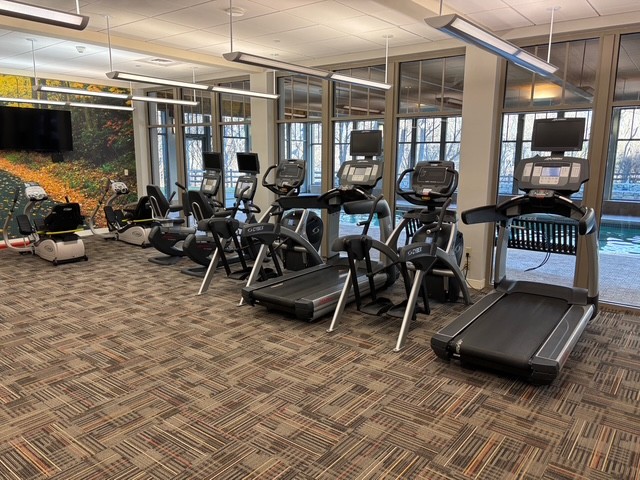
The fitness center at Waterstone at Wellesley is designed to feel welcoming, modern, and supportive for all fitness levels.
At Waterstone, our goal is not to tell residents how they should live. We want residents to thrive in our communities, but leave it up to them to define what that means.
Some residents are happiest with a slower pace. They might prefer a comfy seat in the library to an exercise mat. There’s nothing wrong with that.
But for residents who want to prioritize movement, Mike says the community’s options feel reassuring.
“People appreciate that many offerings are professionally led and social. The indoor pool is a highlight for many.”
At Waterstone at Wellesley, residents can take advantage of wellness amenities and programming without feeling that fitness has to become the center of their daily life.
How Does Personal Training for Seniors Work at Waterstone?
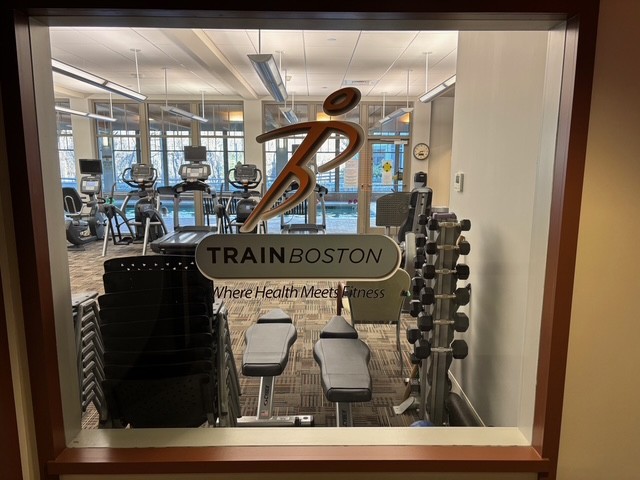
Train Boston is a professional personal training team that helps individuals build strength, mobility, and confidence through safe, goal-based exercise. In partnership with Waterstone, Train Boston supports residents through complimentary introductory sessions, group classes, and optional one-on-one training.
Christopher explains that Waterstone residents receive two complimentary sessions with Train Boston. These sessions help residents feel comfortable and confident, especially if they are returning to exercise after time away.
Personal training begins with an individual assessment and evolves into a customized plan focused on safety, strength, balance, and personal goals. If you choose additional sessions, you’ll then benefit from one-on-one training to implement the plan you’ve created together.
Train Boston also leads group classes in the community that any resident can join for free.
Otherwise, trainers are often available in the fitness space to answer questions or offer guidance. Residents can get ad hoc support, including guidance on how to use a machine or adjust form to prevent strain.
Mike Allen adds that the partnership works proactively. Trainers encourage new faces in classes to use the complimentary sessions. The program also complements on-site therapy support by offering a pathway to keep building strength and confidence over time.
How Does Nutrition Support Senior Fitness and Brain Health?

Wellness is about more than getting into the fitness center. Nutrition plays a role as well, especially when it comes to supporting energy, recovery, and brain health.
For older adults, balanced nutrition can support muscle maintenance, daily energy, recovery after activity, and overall cognitive wellness.
At Waterstone, residents can choose what feels right for them. If you are focused on fitness, brain-healthy choices are a permanent fixture on the menu. You’ll find fresh, seasonal ingredients and options that tend to align with Mediterranean-style eating patterns.
Many residents look for balanced meals with protein, healthy fats, grains, and leafy vegetables. Meals are made to order, and the team can often accommodate specific requests.
A gourmet burger day is welcome too. The point is simple. The healthier options are available whenever you want them, and there is no pressure to choose one style of eating every day.
Do Residents Have to Use the Gym or Join Fitness Classes?
No. There is no pressure at all.
At Waterstone, your choices come first. You can be as active or as relaxed as you want. Many residents find it comforting to know that the gym, pool, classes, and coaching are there if they decide they want them.
The philosophy is straightforward. You are in charge. Rest when you want. Indulge when you want. Move when you want.
If you’re exploring senior living for yourself or someone you love, we invite you to experience firsthand how wellness and movement are supported every day at Waterstone.
Contact us to learn more or schedule a tour. You can also fill out the form at the bottom of the page.
FAQs: Fitness in Senior Living
What is an active lifestyle in senior living?
An active lifestyle in senior living means having regular opportunities to move, socialize, participate in wellness programs, enjoy nutritious meals, and stay engaged in daily life. It can include exercise classes, walking, swimming, balance work, hobbies, events, or simply routines that help residents feel well and connected.
Do seniors need to exercise every day?
Not necessarily. Many older adults benefit from regular movement throughout the week, including aerobic activity, strength training, and balance work. The right routine depends on each person’s health, comfort level, and goals.
What types of exercise are best for seniors?
Helpful exercises for seniors often include low-impact cardio, strength training, balance exercises, mobility work, swimming, walking, tai chi, and chair-supported movements. The best routine is one that feels safe and sustainable.
Can senior living help residents stay active?
Yes. Many senior living communities support active lifestyles through fitness centers, walking areas, pools, group classes, wellness programming, social events, and access to professional guidance.
Is personal training helpful for older adults?
Personal training can help older adults exercise safely, build confidence, improve strength and balance, and adapt movements around injuries or mobility concerns. It can be especially helpful for people returning to exercise after time away.
Do residents have to participate in fitness classes?
No. At Waterstone, fitness and wellness opportunities are optional. Residents can choose the activities and pace that feel right for them.