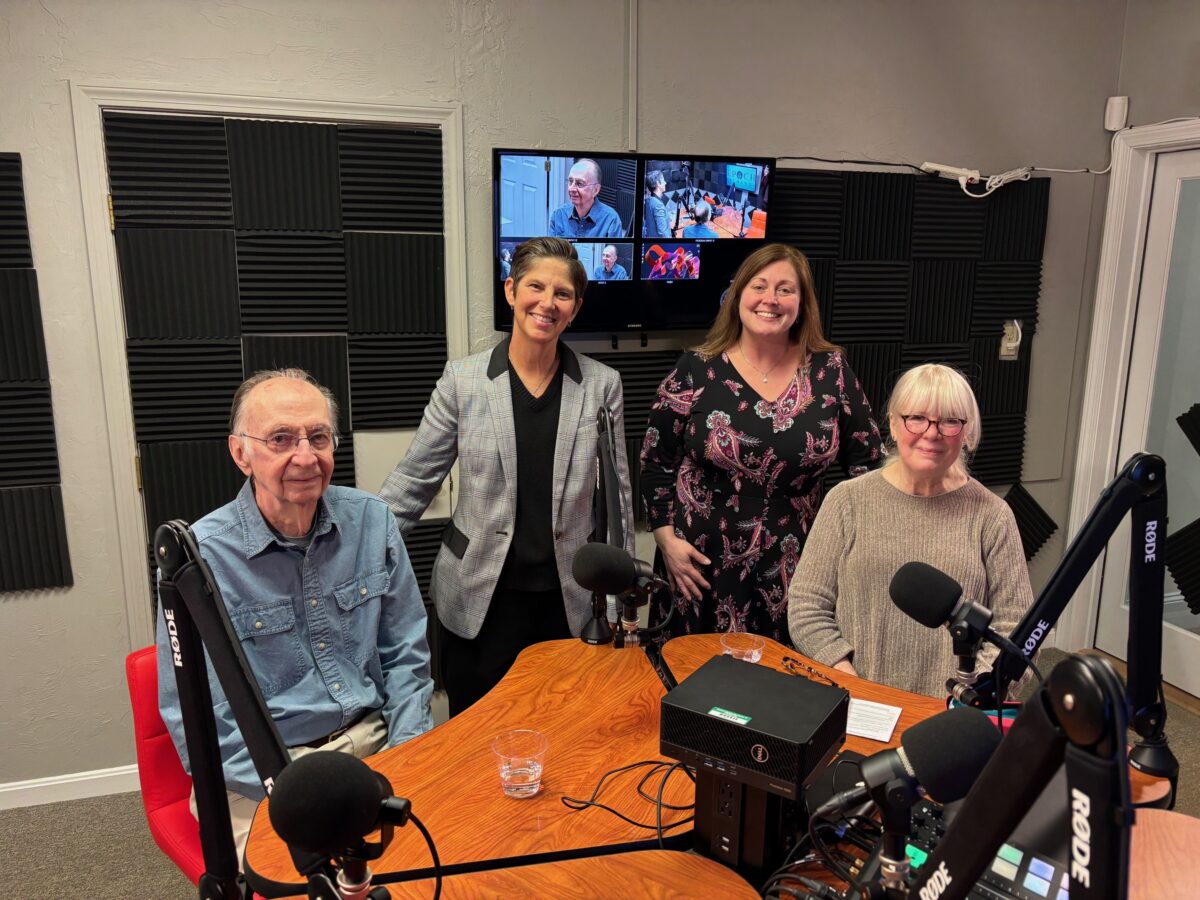
Listen to Andrea Bodo and Tom Zimmer discuss life at Waterstone of Lexington in the podcast below. They also share their efforts to support the Ellen Stone Building in Lexington, MA. Alternatively, scroll down to read the full article.
When Tom Zimmer and Andrea Bodo moved to Waterstone of Lexington, they had several reasons for doing so, but they were not looking to slow down into an idle retirement.
For Andrea, the move was about finding a setting that would be supportive for her husband as they entered a later phase of life. As he aged, it became clear that they needed to ease the burdens of homeownership, and Waterstone offered a community that appealed to them. For Tom, it was a similar picture.
They wanted freedom from the upkeep and complexities of maintaining a home and property. Moving to Waterstone gave them that convenience, along with a new social network and a range of amenities. It also gave them the time, energy, and, eventually, the opportunity to take on a project.
A couple of years after they moved to Waterstone, both lost their spouses. They found themselves facing a void in their lives when an opportunity came along to join a meaningful project, one that gave them a sense of purpose and the chance to meet new friends.
Today, Tom and Andrea are helping a local historic preservation effort through the Lexington Lyceum Advocates (LLA), a volunteer group working to protect and restore Lexington’s historic Ellen Stone Building.
The impetus and motivation to join the group were entirely their own, but their story shows what independent living can make possible when daily life becomes simpler, and there is still room to grow.
Life at Waterstone
Andrea and Tom both describe life at Waterstone in practical terms.
The team at Waterstone of Lexington handles maintenance and landscaping. Chefs prepare restaurant-quality meals each day. Housekeeping helps with routine cleaning every week. Andrea and Tom can come and go as they please, staying active in the broader Lexington community without spending their time on the constant list of chores that once demanded attention. Andrea puts it simply: she has not cooked in three years.
For her first two years at Waterstone, Andrea’s days revolved around caring for her husband. After her husband died, her focus began to shift. She spent more time in the art studio, where she worked on her oil painting and watercolor skills. Each evening, she enjoyed dinner with friends. Tom experienced something similar as his wife’s health declined after they moved to Waterstone, and he focused on caring for her.
Tom says this freedom from chores has given residents something even more valuable than time. It has given them energy. He wryly states that, for octogenarians, it’s important to harvest your energy and use it well.
With fewer daily demands, they can put more of themselves into whatever they care about most, whether that means family, friends, activities, staying fit, or contributing to causes.

Finding a Supportive Community
For both Tom and Andrea, the community also became deeply important in times of loss. Both reflected on the support they received from other residents through difficult periods.
Andrea recalls people checking in and inviting her to meals, making sure she was not alone. Tom describes the comfort of being part of a group of interesting, engaged new friends who knew him and his wife.
That support helped both through the grief of losing a life partner. It gave them an understanding community of peers that helped them step into a new chapter.
That chapter took on new meaning when Waterstone’s activities director, Susan Dearborn, invited the Lexington Lyceum Advocates group to speak at the community.
Lexington Lyceum Advocates and the Stone Building
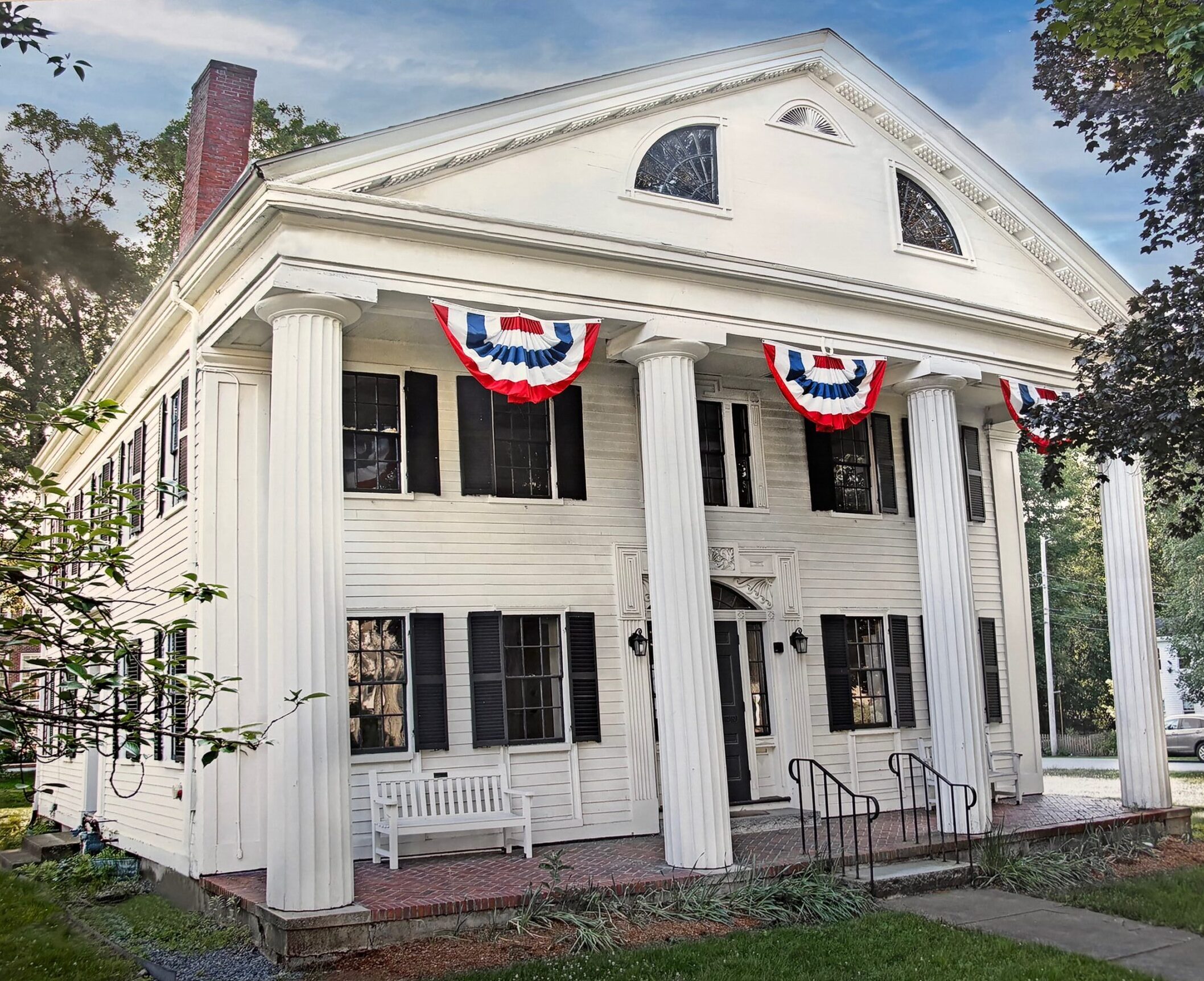
The group had been working to preserve the Stone Building in East Lexington, a town-owned building with a rich history at risk of falling into disrepair.
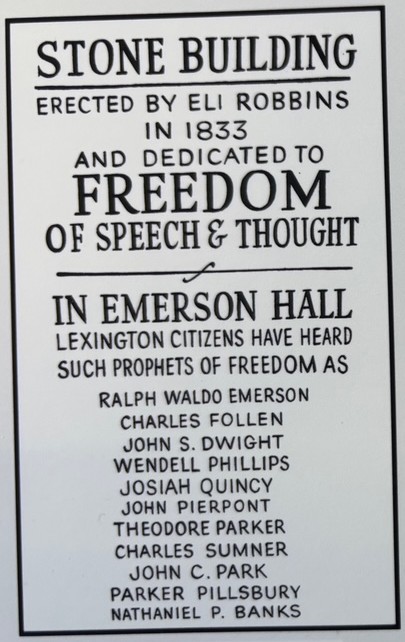
Built in 1833 by civic leader Eli Robbins, the building served as one of the first lyceum lecture halls in America. In the early nineteenth century, the national lyceum movement, which originated in Massachusetts, flourished as a form of adult education built around public discussion, programs, and lectures.
Lyceums were intended to serve as civic spaces central to community life. In these spaces, people could meet to debate ideas, hear visiting speakers, and take part in educational programs. The goal was a better-informed, more reflective public and an uplifted community. The Stone Building fulfilled this role in East Lexington.
The Stone Building also has a religious history. Ralph Waldo Emerson preached there when it was used as a church. Over time, the building became linked to political and social currents in American thought and reform. Abolitionists and advocates for women’s rights spoke there, including Charles Sumner, Wendell Phillips, and Lucy Stone. Emerson later returned with other local transcendentalists to share their perspectives.
The larger lyceum tradition helped spread this culture of democratic discourse as citizens of a still-young country sought to shape public life. This is not just Lexington history. It is American history.
That legacy helps explain why the building still matters. For the Lexington Lyceum Advocates group, preserving the Ellen Stone Building is more than saving an old landmark, a handsome early Greek Revival building on Mass. Ave. in East Lexington, about two miles from the famous Battle Green. It is also about protecting a place tied to open inquiry. Those noble ideas are still relevant, even critical to the current moment, and the group wants the building’s next chapter to reflect them.
Andrea and Tom See an Opportunity
For Andrea, the project struck a chord. Historic preservation had already shaped her life. When Andrea and her husband retired in 1995, they moved to a property in Durham, New Hampshire, located in Durham’s National Register Historic District. They became actively involved in historic preservation issues, and Andrea served on the local Historic District Commission for 17 years. She became very familiar with the rules and regulations of owning property in a designated historic district.
When Andrea heard about the Stone Building, she recognized both its value and the challenges the LLA faced. She also knew she had skills to bring to the table that could help move the project forward.
Tom brought his own background to the effort. A retired business lawyer, he has a methodical mind and an eye for detail. He lived in Lexington for many years, close to the Battle Green. After moving to Plymouth, he became a trustee at Pilgrim Hall Museum. A lifelong love of history ran alongside his career.
As Andrea and Tom left the LLA talk at Waterstone, they both felt an urge to get involved. In Tom, Andrea found an enthusiastic, capable partner. Together, they would make a formidable team with the skills to make a difference in the campaign.
They volunteered and got to work.
The Building Gains Protected Status
Andrea contributed to the group through her experience serving on a Historic District Commission and her familiarity with the historic property designation process. Tom brought his legal experience, and both had a keen interest in the Stone Building’s historical narrative.
Together, they contributed to the group’s efforts to build momentum around the project.
One major milestone came when they helped advance an application to Preservation Massachusetts, a nonprofit organization that works statewide to protect historic places.
Thanks to the group’s efforts, the Stone Building was named one of the Commonwealth’s Most Endangered Historic Resources for 2025. That recognition raised the building’s profile and gave the project new visibility.
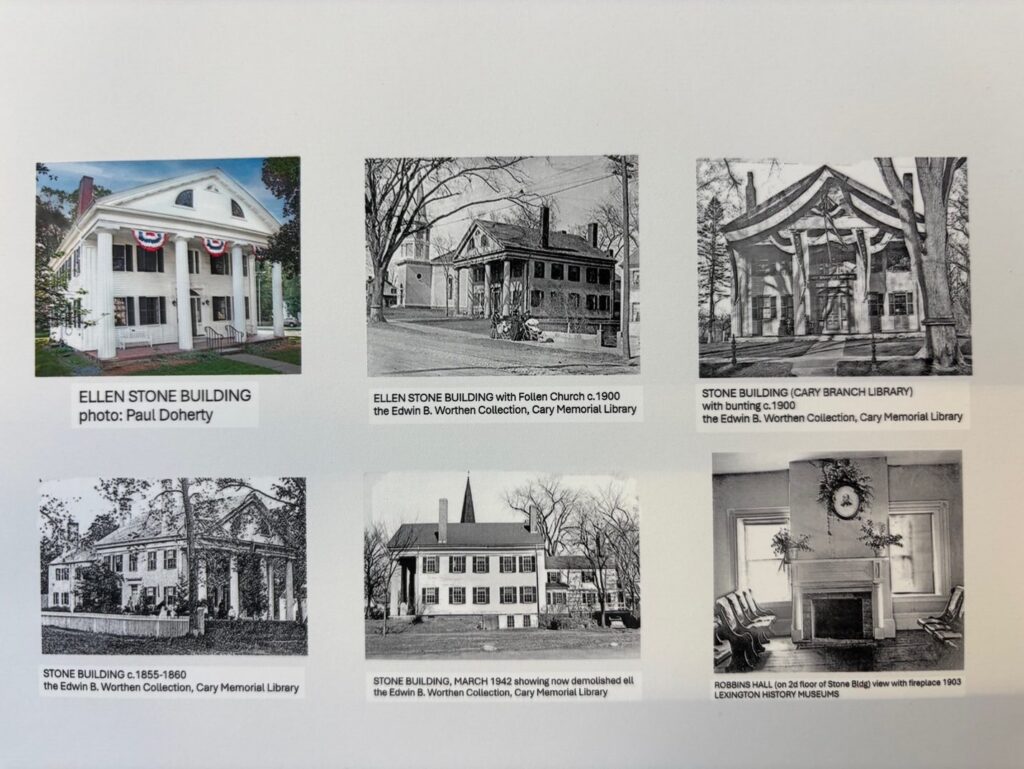
Andrea and Tom also brought the story back to Waterstone. They helped create an exhibit of historic photos in the community’s gallery space that shared the building’s history with residents and visitors. They later hosted a gallery talk that drew even more interest, due in part to the pair’s infectious enthusiasm for their work.
What began as a presentation on the Waterstone activities calendar has blossomed into a wider conversation inside the community.
A Supportive Community at Waterstone
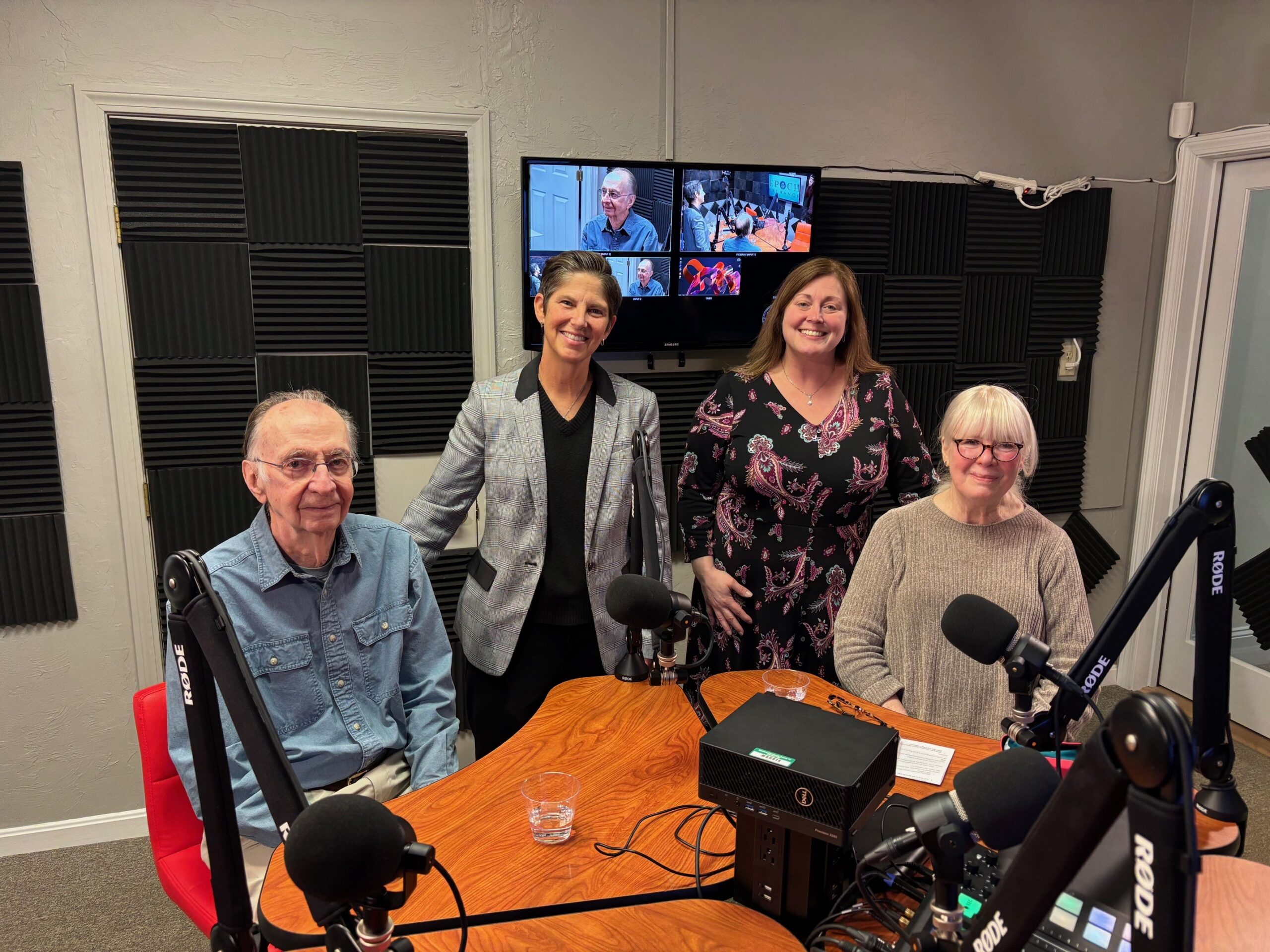
The community response says a great deal about life at Waterstone. Tom and Andrea weren’t passive; they didn’t just hear about the project, they got involved. The team supported it and asked what else could be done to help build momentum.
The community gave Tom and Andrea a place where their work could be shared and celebrated, while other residents asked about progress over the dinner table.
Their story also challenges a common assumption about what later life should look like. Tom and Andrea are doing work that matters to them. They brought new energy to a longstanding preservation effort, and others noticed. At one meeting, members of the advocacy group described them as a breath of fresh air.
That phrase stayed with Andrea. It reminded her that useful experience and fresh energy can come from anyone, of any age, ready to contribute.
At Waterstone, independent living has given Andrea and Tom the room and energy to stay engaged, build friendships, move through loss with support, and invest in something they believe in.
The Ellen Stone Building still faces real challenges, and the path forward remains under debate as questions about funding and restoration continue. But Tom and Andrea, alongside the Lexington Lyceum Advocates, plan to keep fighting for the building and the civic legacy it represents.
To learn more, browse upcoming events, donate, or find ways to get involved, visit Lexington Lyceum Advocates at lexlyceum.org.
To learn more about life at Waterstone or schedule a tour, contact us today.
Check out our other communities in Boston, MA, Stamford, CT, Wellesley, MA, and White Plains, NY.