A continuum of care in senior living is when a community offers different levels of support as a resident’s needs change.
The exact meaning of a continuum of care can vary by community. Some senior living communities may include services such as skilled nursing, rehabilitation, or long-term nursing care. Waterstone on High Ridge in Stamford, Connecticut, offers a continuum of care that includes independent living, assisted living, and memory care, all within one connected luxury senior living community.
Residents can enjoy independence as they build friendships with neighbors across different care levels. They become familiar with the shared team and setting. If their needs change, they can add support without starting over somewhere completely new.
Wendy Kaufman, Executive Director of Waterstone on High Ridge, explains the clear benefit: “You don’t want to move twice”.
For many residents and their loved ones, the simplicity of one major transition is the real value of a community that offers a continuum of care.
Independent Living: “You Run Your Own Day”
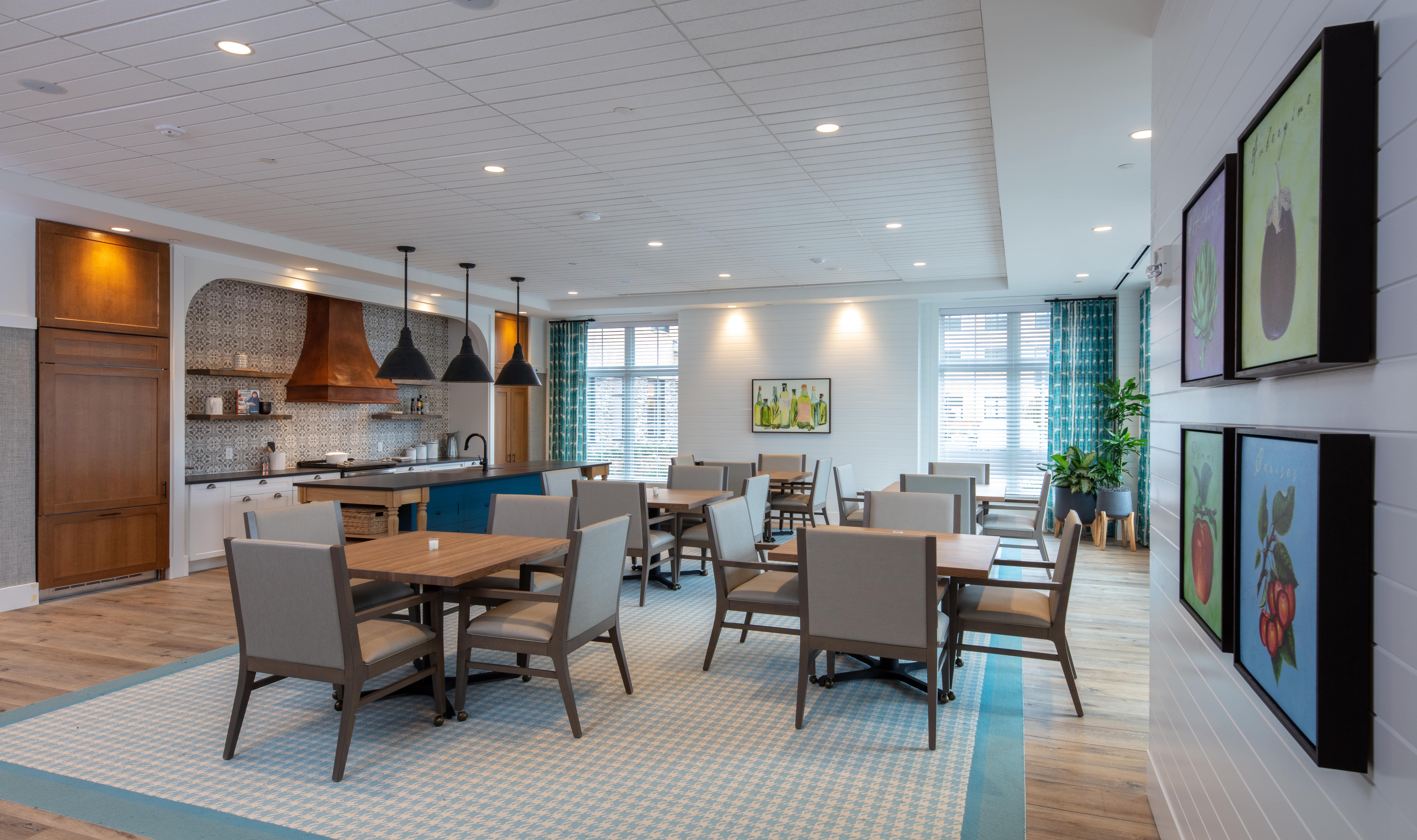
Independent living at Waterstone on High Ridge is designed for people who want freedom, privacy, and choice alongside a whole host of day-to-day conveniences.
Residents may drive into the garage, head up to their apartment, go out for the day, enjoy dinner with friends, play tennis, work, visit family, or spend a quiet afternoon at home. Some people get involved in every aspect of community life, while others keep more to themselves.
As Wendy says, “In independent living, you run your own day, and we let you get on with it. If somebody was a homebody their whole life, they’re not likely to get involved in everything in their retirement.”
Independence is supported by helpful services and amenities, including housekeeping, dining, a black car service, life enrichment programming, a gym, a pool, personal trainers, and concierge support.
“The goal of independent living is to stay in independent living,” Wendy says. “That’s why wellness, movement, dining, and social connection matter so much. The community is built to help residents keep doing what they enjoy for as long as possible.”
Community life offers the foundation for healthy aging, but it’s up to residents what they want to do with these opportunities.
At the same time, independence doesn’t mean no one is paying attention to resident wellbeing. If someone stops coming to meals, stops picking up mail, or seems to be changing their routine, the team notices and will politely check in.
Wendy jokes that the dining manager can become one of her “detectives,” letting her know when something may need a closer look. The team is attuned to telltale signs that someone may need assistance. They won’t hesitate to reach out to check everything is okay.
Assisted Living: Support That Fits the Person
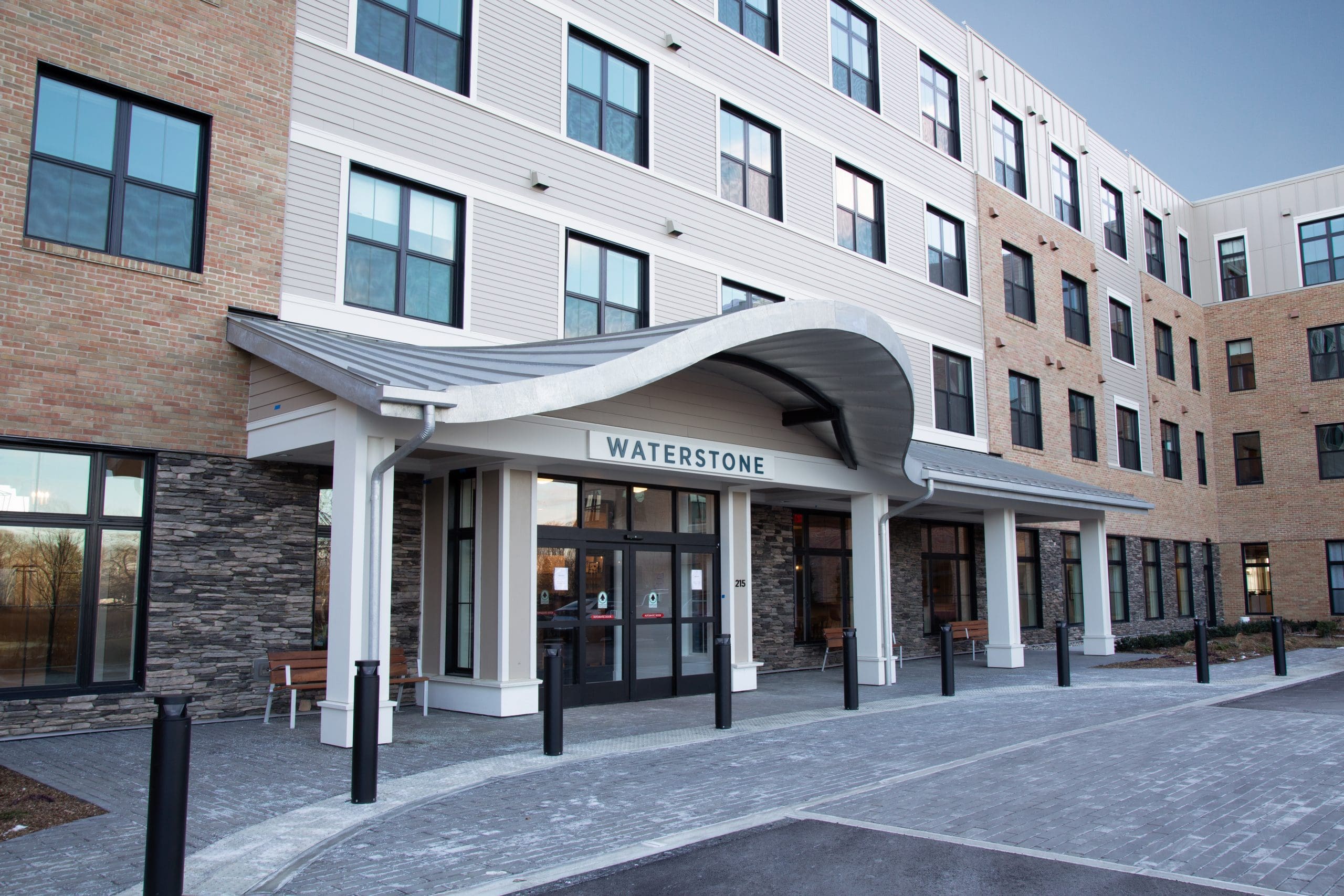
Assisted living at Waterstone on High Ridge offers more daily support while still preserving as much independence as possible. Holly Davis, Wellness Director and RN, says it simply:
“It can be as much care as you need or as little. That is the guiding principle.”
That could mean help with medication management, bathing, dressing, toileting, transferring, escorting, or other activities of daily living. For one resident, support may be as simple as medication reminders and help with tying shoes. For another, it may involve more hands-on care every evening to help settle in for the night.
“The service plan is specific for that resident,” Holly explains. “We try to individualize as much as we can, but want to maintain their autonomy wherever possible.”
That phrase, maintaining autonomy, is critical across all assisted living communities. Assisted living should make daily life safe and more manageable without erasing a person’s preferences or personality. This mantra guides everything the team does at Waterstone.
With a continuum of care setting, assisted living is connected to the rest of the community. There’s no feeling of separation.
Wendy describes the design as flowing through all three neighborhoods at Waterstone on High Ridge. As you walk through each care level, you see the same modern farmhouse feel, the same dining team, and the same attention to the daily experience, and a commitment to helping residents thrive.

If someone loves art, moving to assisted living doesn’t mean that their hobby disappears. As Wendy points out, assisted living residents still have access to the art room, art shows, and the gallery.
Personal trainers also work throughout the community, touching base with every single resident to offer personalized opportunities to get moving, whether in 1:1 scenarios or as part of a class.
In other words, with an effective continuum of care, the support changes without limiting access to community life. You also gain the benefits of extra care without a drastic, potentially traumatic difference in surroundings. There is continuity, and this is comforting.
Familiar Faces Make Transitions Easier
If a resident moves from independent living to assisted living, they may already know the nurses, dining team, life enrichment team, wellness staff, and neighbors, since they encounter them throughout the community every day. The assisted living setting doesn’t feel foreign to them.
Holly sees this benefit every day. Residents may say, “Oh, yes, I’ve seen you. I’ve seen your staff. I’ve seen your nurses.”
That familiarity also helps loved ones feel more comfortable because they’re not suddenly handing care over to strangers, but known team members they have already encountered.
Wendy sees the same benefit socially. Residents who move from one level of care to another don’t have to lose the friendships they have built.
“They don’t lose their friends,” she says. “They don’t lose their dining companions or their favorite programs, either. This keeps things stable for them even as their needs change.”
Bridges Memory Care at Waterstone
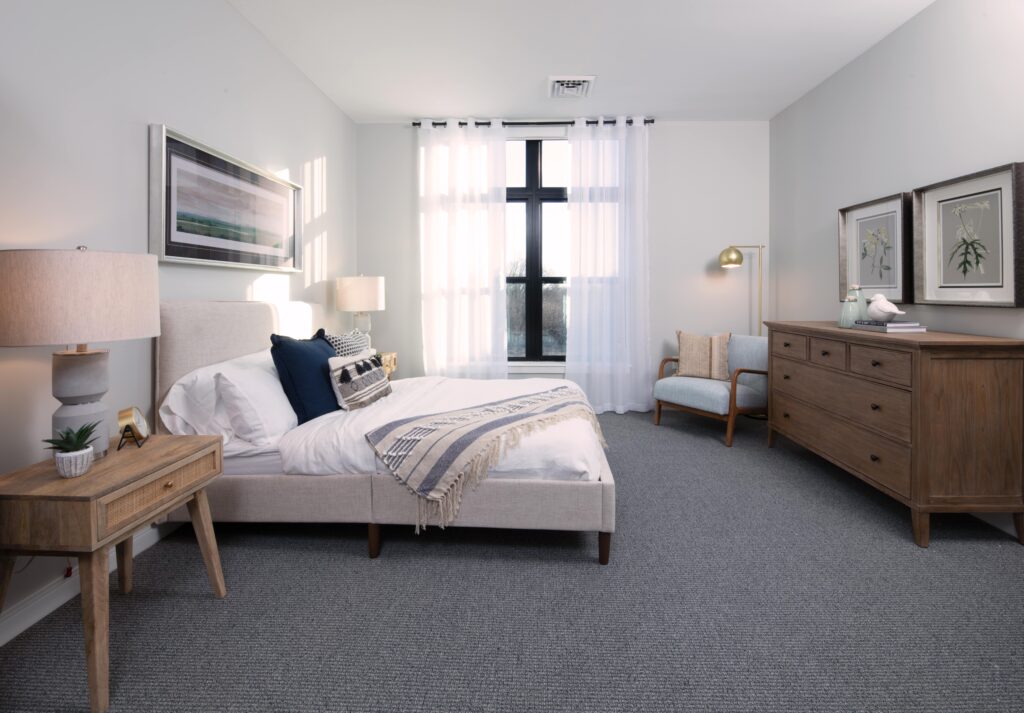
Memory care is designed for residents who need a more structured and secure environment because of dementia or other cognitive changes. A continuum of care will sometimes offer a specialized memory care environment.
At Waterstone on High Ridge, memory care is offered through the Bridges neighborhood. Bridges refers to the expert memory care provided by Bridges by EPOCH. But when might this be necessary? Wendy and Holly both come back to the same starting point:
“Safety first.”
Some signs that a person may need memory care include wandering at night, becoming lost in the community, repeated confusion, increased anxiety, or difficulty managing the flow of the day. Holly notes that residents experiencing cognitive decline may still have awareness of what is happening, which can create fear and apprehension.
A smaller, more supportive memory care setting can ease that fear.
“The great thing about our memory care community is it’s small, it’s very intimate, but there’s always a presence of somebody,” Holly says. “That presence may be another resident or a team member, but the result is the same: residents feel less alone.”
“They feel like they belong,” Holly adds. “They feel like they’re in the right place.”
Wendy also pushes back against a common misconception about memory care.
“It’s not ‘locked down’, but it is secure,” she says. “I think this is an important distinction. Behind that door, there is more freedom than people realize, and the whole neighborhood is their home.”
Access and movement are managed for resident safety, while the neighborhood is designed to allow freedom within a secure environment.
With the right support, the residents get to enjoy enriching trips, too. Wendy mentions a recent trip to the Bruce Museum in Greenwich, something that made her feel proud of what the team could support.
Memory care is about creating the right environment so residents can keep participating safely, rather than confining or restricting them to a sanitized, safe environment.
Read more about the Bridges approach to memory care.
How the Continuum of Care Supports Couples
A continuum of care can be especially helpful for couples because two people rarely need the same level of support at the same time. One spouse may be independent while the other needs assisted living or memory care. It’s often the case that one may be caregiving quietly for the other and finally needs more help.
Wendy is honest about how emotional this can be.
“It’s very common that one person is in a different place than their partner,” she says. “We see this all the time.”
At Waterstone on High Ridge, support for couples often involves a lot of reassuring communication.
“A lot of meetings,” Wendy says. “A lot of phone calls, a lot of texts, and just letting them know it’s okay.”
Sometimes families need to try an arrangement before they know what works. The team may have a clinical opinion about what is safest, but they also understand the love and emotion involved.
Wendy explains that a couple recently experimented and took a while to land on the right solution, with one ending up in independent living and the other in memory care. There is room for that kind of trial at Waterstone, where possible.
“We’re a family,” Wendy says. “We see them more than their family does, so I have to respect that, and work with them as we determine the best placements for everyone.”
Planning Before a Crisis
One of Wendy’s clearest messages to families is this: learn about your options before there is an emergency.
“Knowledge is power,” she says.
If a fall, hospitalization, memory change, or medication issue happens suddenly, loved ones often have to make decisions quickly. This is the worst time to have to learn your options. Those decisions become easier when everyone already understands the levels of care, the apartments, the team, and the support available.
Many people don’t want to talk about different care levels. Wendy understands that.
“We see it all the time; people don’t want to know about assisted living until they need assisted living,” she says.
So, the team tries to read the room. If a resident or family starts to shut down when clinical services come up, the conversation may shift to dining, amenities, or daily life. Wendy and Holly both know that some trust might need to be built up first.
Over time, when they’re comfortable, the family can ask more questions. Holly may complete an assessment. The team gets to know the resident. Everyone has a clearer picture of what support may be helpful now or later, and everyone can plan together.
What Families Should Ask About a Continuum of Care

If you’re exploring senior living for yourself or someone you love, it helps to ask direct questions about how the continuum works.
Helpful questions include:
- What living options are available in the community?
- What does independent living include?
- What support is available in assisted living?
- How are service plans created and updated?
- How is medication management handled?
- What signs may suggest someone needs more support?
- What memory care services are available?
- Can couples remain close if their care needs are different?
- Will residents still have access to dining, programs, wellness, and amenities if they move to a higher level of care?
- How does the team communicate with loved ones?
- Can we visit, have lunch, speak with other residents and families, or try an experience stay?
These questions help families understand the services offered in any community. Answers will also give insight into how they adapt when changes arise.
Come See What Waterstone Feels Like

For people who are unsure what senior living really looks like, Wendy encourages them to come in for an experience.
“It’s not scary,” she says. “It’s really not scary.”
Waterstone on High Ridge offers experience stays, giving prospective residents a chance to spend time in the community, enjoy meals, meet people, and see daily life firsthand. This often assuages any fears prospective residents have.
Wendy’s advice is practical: “Come in, take a look, do some research.”
She also encourages prospective residents to read reviews, talk with other families, and ask questions. A good visit should make the idea of senior living feel less confusing.
The Continuum of Care at Waterstone on High Ridge
Waterstone on High Ridge offers independent living, assisted living, and memory care in Stamford, Connecticut. The community is designed to support residents through different stages of life.
What makes the continuum meaningful is the presence of different care levels and how they work together.
Residents can begin in independent living, enjoy the lifestyle and amenities, build friendships, and get to know the team. If needs change, assisted living can provide the same Waterstone lifestyle with more daily support. If memory care becomes the right fit, Bridges offers a secure, intimate neighborhood with structure, safety, and belonging.
Throughout those changes, the goal remains the same: help residents live as fully and confidently as possible.
To learn more, schedule a visit to experience the community for yourself.