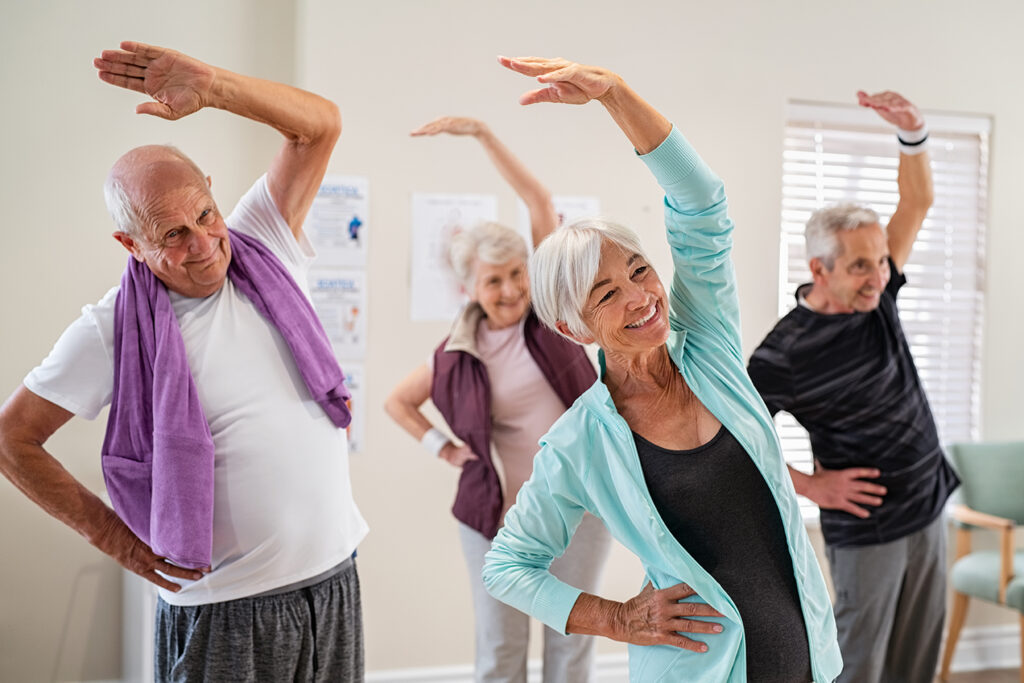
Yoga is not only for the young and flexible. At its best, yoga is adaptable, meaning its benefits are accessible to everyone. It can be practiced on a mat, seated in a chair, or with the help of a wall, counter, strap, or instructor.
For older adults, gentle yoga can support flexibility, strength, balance, breathing, and relaxation. It can also be a helpful way to move with more confidence, especially when poses are adjusted to match each person’s comfort level and mobility.
Gentle yoga, senior yoga, and chair yoga classes can be good options, especially for people with limited mobility or health concerns.
Below, we’ll look at the benefits of yoga for seniors, safety tips to keep in mind, and nine gentle yoga poses that can be practiced on a mat or adapted with a chair.
What Are the Benefits of Yoga for Seniors?
Yoga combines gentle movement, stretching, balance, and breathing. For seniors, this can make it a useful addition to a broader wellness routine. Regular yoga practice may help support:
- Flexibility: Gentle stretching can help muscles and joints move more comfortably.
- Strength: Many poses ask the body to engage the legs, core, back, shoulders, and arms.
- Balance: Standing and seated poses can help improve body awareness and steadiness.
- Mobility: Yoga encourages controlled movement, which can support everyday tasks.
- Stress relief: Breathing and mindful movement can help calm the nervous system.
- Mental well-being: A regular practice can create a peaceful routine and a sense of focus.
- Breathing: Yoga often includes slow, intentional breathing, which can encourage relaxation.
The CDC recommends that adults 65 and older include aerobic activity, muscle-strengthening activities, and balance work as part of a regular physical activity routine. Yoga can be one gentle way to support some of these goals, especially when you adapt the poses and routines so that they are accessible for your level.
Yoga Safety Tips for Seniors
Yoga should feel supportive rather than forced. Attempting to do too much too soon is intimidating and is a surefire recipe for things to go wrong.
Before beginning any new exercise routine, speak with a healthcare provider, especially if you have balance concerns, joint pain, osteoporosis, recent surgery, heart conditions, or any chronic health issue.
Keep these tips in mind:
- Start with a beginner-friendly class. Look for gentle yoga, senior yoga, or chair yoga.
- Use support. A chair, wall, yoga block, strap, or sturdy countertop can make poses safer.
- Avoid pain. Mild stretching is normal. Sharp pain, dizziness, or discomfort isn’t. “No pain, no gain” isn’t a phrase associated with yoga.
- Move slowly. Give your body time to adjust as you enter and leave each pose. Fast, jerky movements often lead to injury.
- Keep breathing. Don’t hold your breath while moving or stretching. An instructor can help guide proper breathing practice.
- Practice in a clear space. Remove clutter, loose rugs, or anything that could cause a trip.
- Ask for help with balance poses. Use a chair or wall until you feel steady.
Yoga is not about doing a pose perfectly. It is about moving in a way that feels safe, useful, and realistic for your body.
9 Gentle Yoga Poses for Seniors
These yoga poses for seniors can be practiced on a mat or adapted with a chair. If you are new to yoga, begin with the chair versions or practice with an instructor until you feel comfortable.
1. Mountain Pose
What it helps with: Posture, body awareness, steadiness
Mountain Pose may look simple, but it is a helpful foundation for balance and posture.
To practice on a mat, stand with your feet hip-width apart. Let your arms rest by your sides, with palms facing forward. Lengthen through your spine, relax your shoulders, and imagine your feet rooted into the floor. Take several slow breaths.
Chair adaptation: Sit tall in a sturdy chair with your feet flat on the floor. Rest your hands on your thighs. Lengthen your spine and gently lift through the crown of your head. If comfortable, raise your arms overhead with palms facing each other.
2. Chair Pose
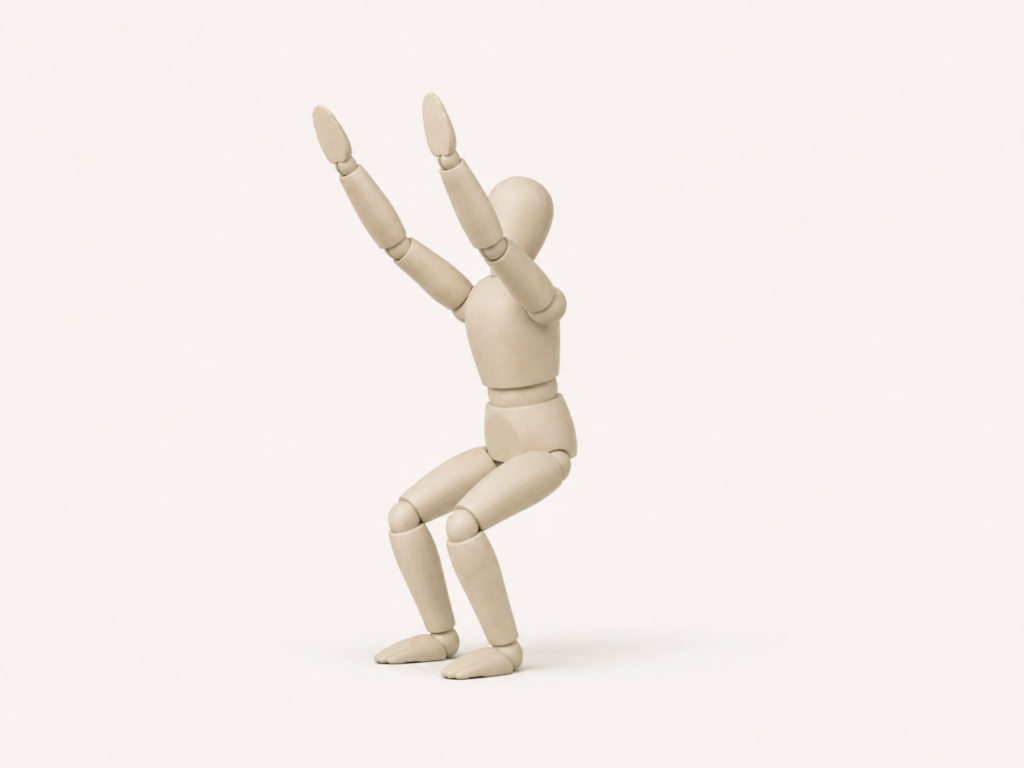
What it helps with: Leg strength, core engagement, balance
Chair Pose can help build strength in the thighs, hips, and core.
To practice standing, begin with feet hip-width apart. Bend your knees and lower your hips slightly, as if sitting back into an invisible chair. Keep your chest lifted and reach your arms forward or overhead.
Chair adaptation: Begin seated with feet flat on the floor and knees aligned over ankles. Inhale and raise your arms overhead. Exhale and engage your core. If comfortable, press gently through your feet as if preparing to stand, then settle back into the chair.
Use the chair as much as needed. This should feel strengthening, not straining.
3. Cat-Cow Stretch
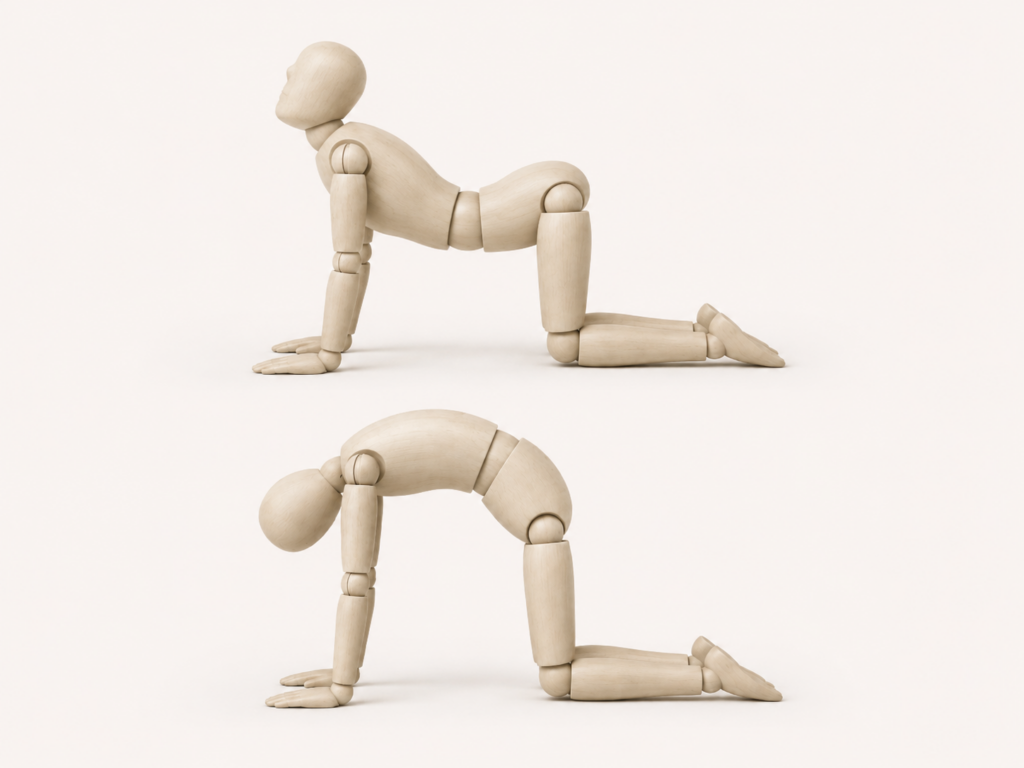
What it helps with: Spinal mobility, posture, gentle back movement
Cat-Cow is a gentle way to move the spine and release tension in the back and shoulders.
To practice on a mat, start on your hands and knees. Inhale as you arch your back slightly and lift your chest for Cow Pose. Exhale as you round your spine and bring your chin toward your chest for Cat Pose. Move slowly with your breath.
Chair adaptation: Sit tall with both feet flat on the floor and hands resting on your thighs. Inhale as you lift your chest and gently arch your back. Exhale as you round your spine and bring your chin slightly toward your chest.
This is a helpful pose for warming up before other movements.
4. Forward Fold
What it helps with: Hamstring stretch, back release, relaxation
Forward Fold can stretch the back of the legs and encourage the body to soften. It should always be gentle.
To practice standing, stand with feet hip-width apart. Hinge from your hips and fold forward, allowing your hands to rest on your thighs, shins, blocks, or the floor. Keep a soft bend in your knees if needed.
Chair adaptation: Sit tall in a chair with feet hip-width apart. Inhale to lengthen your spine. Exhale and hinge forward from your hips, allowing your chest to move toward your thighs. Your hands can rest on your thighs, knees, or reach toward the floor.
Avoid this pose if it causes dizziness. Come up slowly.
5. Seated Twist
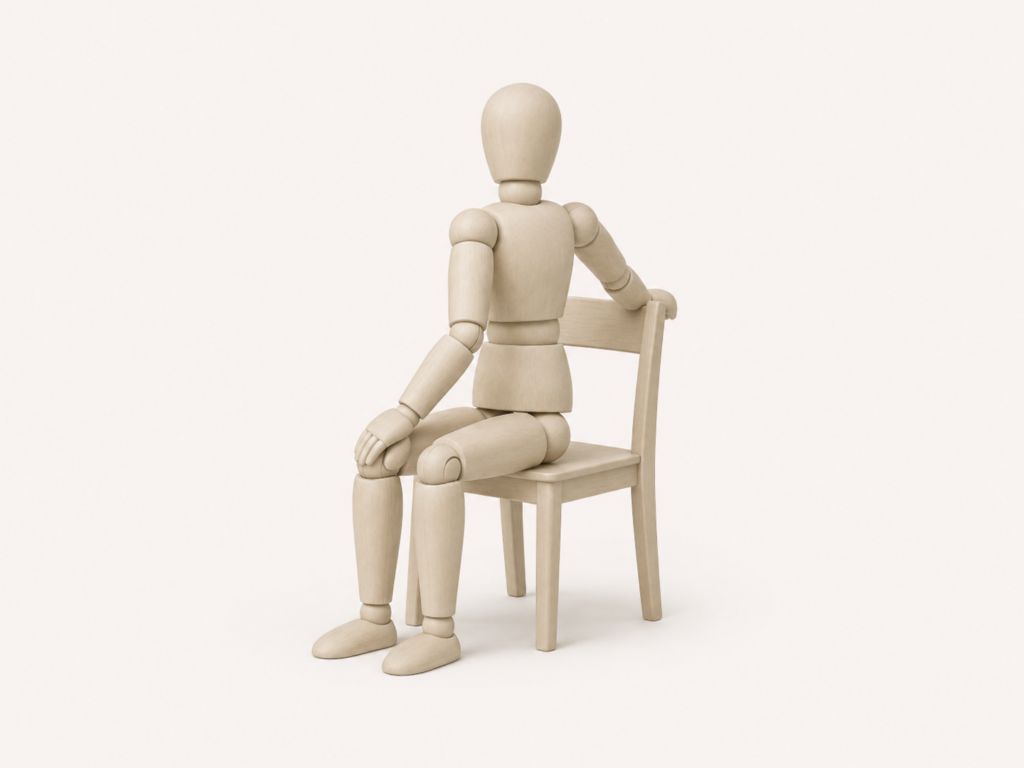
What it helps with: Spinal mobility, posture, gentle core engagement
A seated twist can help maintain mobility through the spine and torso.
To practice on a mat, sit comfortably with legs crossed or extended. Inhale to lengthen your spine. Exhale and gently twist to one side, placing one hand on the opposite knee and the other hand behind you.
Chair adaptation: Sit tall in a chair with feet flat on the floor. Inhale to lengthen your spine. Exhale and gently turn to the right, placing your left hand on your right knee and your right hand on the side or back of the chair. Repeat on the other side.
Keep the twist gentle. Do not force the movement.
6. Warrior I
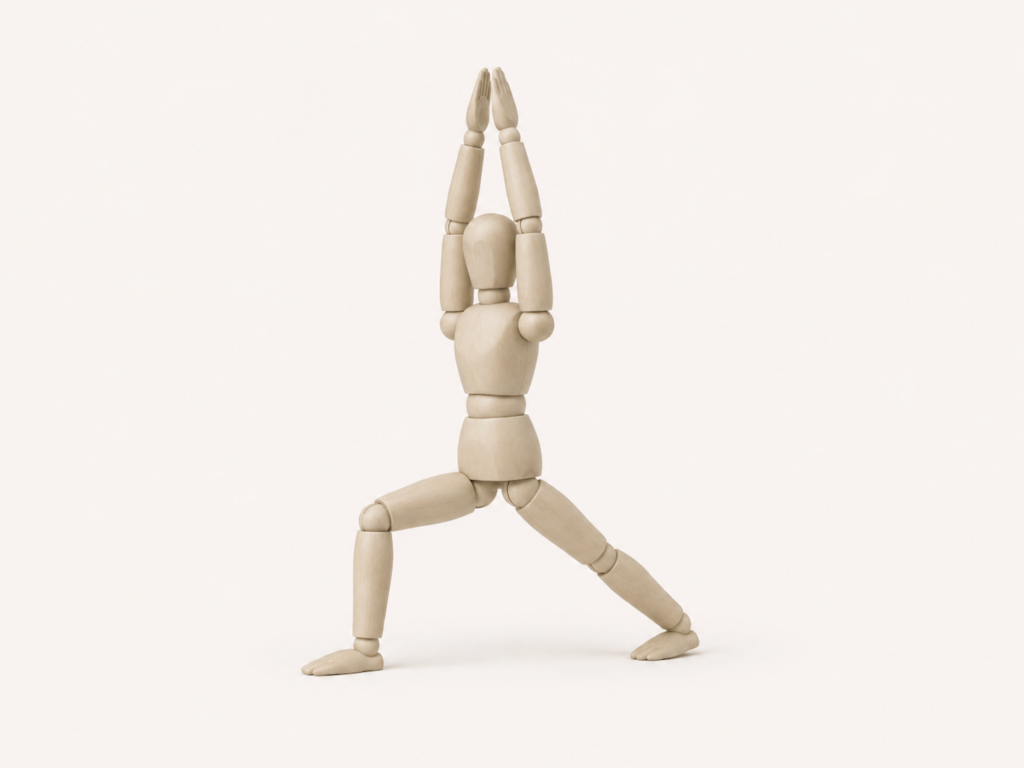
What it helps with: Leg strength, hip flexibility, posture, confidence
Warrior I is a standing pose that can help build strength and stability.
To practice on a mat, step one foot back and bend your front knee. Keep your back foot grounded as much as comfortable. Raise your arms overhead or keep your hands on your hips. Keep your chest lifted.
Chair adaptation: Sit toward the front of a sturdy chair. Keep one foot planted in front of you and step the other foot slightly back or to the side, depending on your comfort and mobility. Raise your arms overhead or rest your hands on your thighs. Switch sides.
Use a smaller range of motion if needed. The goal is stability.
7. Tree Pose
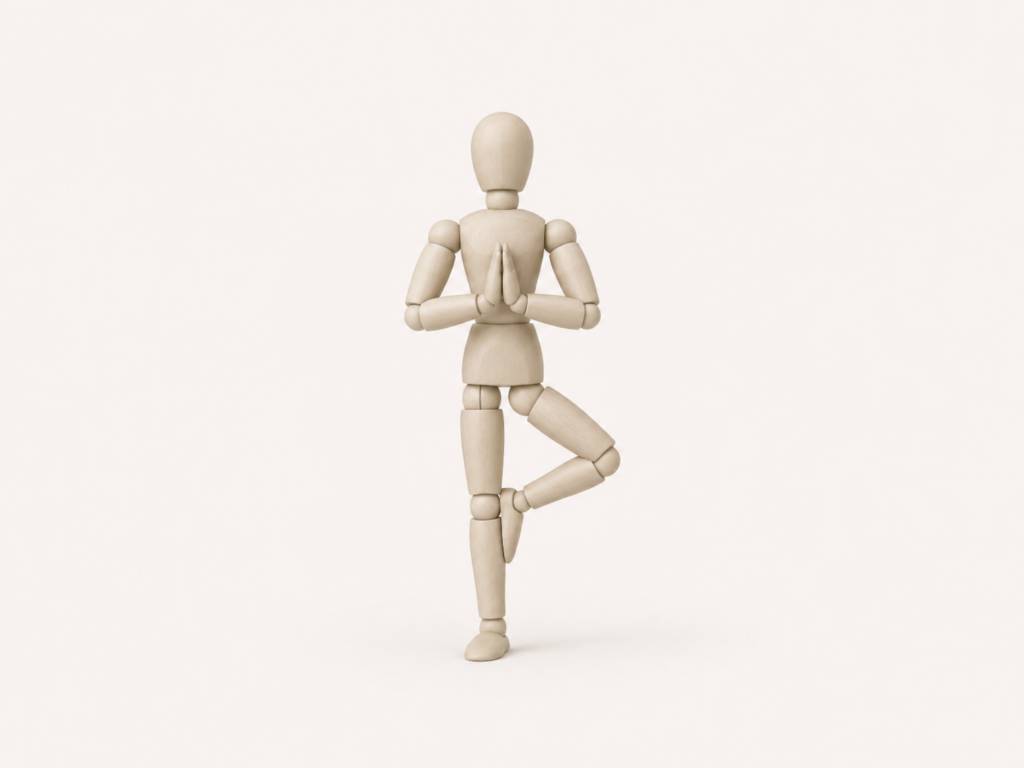
What it helps with: Balance, focus, ankle and leg strength
Tree Pose is a classic balance pose, but it can and should be modified for safety.
To practice standing, stand tall and shift your weight into one foot. Place the other foot against your ankle, calf, or inner thigh, avoiding pressure on the knee. Bring your hands to your heart or rest one hand on a wall or chair.
Chair adaptation: Sit tall with both feet on the floor. Shift your weight slightly onto one foot. Place the other foot lightly against the opposite ankle or calf. Bring your hands to heart center or rest them on your thighs.
You can also practice standing behind a chair, keeping one or both hands on the chair for support.
8. Downward-Facing Dog
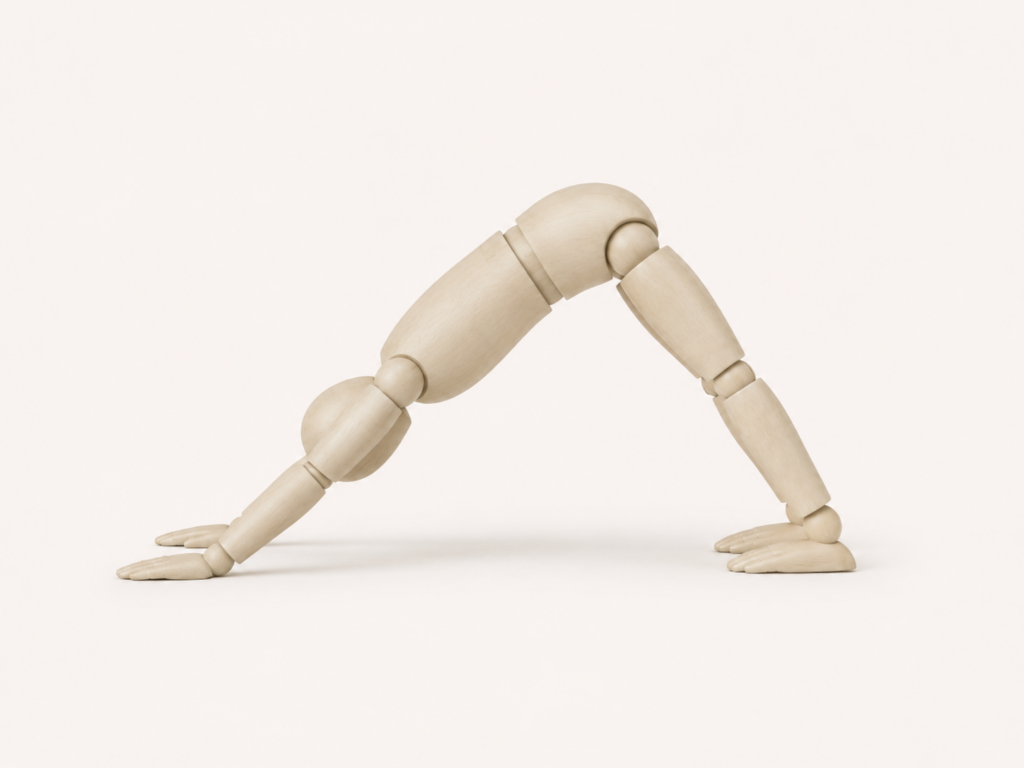
What it helps with: Shoulder mobility, back lengthening, hamstring stretch
Traditional Downward-Facing Dog may not be comfortable for every senior, but a chair version can offer many of the same benefits with less pressure on the wrists and shoulders.
To practice on a mat, start on your hands and knees. Lift your hips toward the ceiling, forming an upside-down V shape. Keep your knees bent if needed and press your hands into the mat.
Chair adaptation: Stand facing the back of a sturdy chair. Hold the chair for support and step back until your arms are extended and your torso lowers slightly. Keep your back long and your knees softly bent. Breathe slowly.
This version can be a good way to stretch the back, shoulders, and legs without getting down on the floor.
9. Corpse Pose
What it helps with: Relaxation, breathing, body awareness
Corpse Pose is usually practiced at the end of a yoga session. It gives the body and mind time to settle.
To practice on a mat, lie flat on your back with arms by your sides and palms facing up. Let your legs relax. Close your eyes if comfortable and focus on slow breathing.
Chair adaptation: Sit comfortably in a chair with feet flat on the floor and hands resting on your thighs. Close your eyes or lower your gaze. Relax your shoulders, soften your jaw, and breathe slowly.
This pose may look like rest, but it is an important part of the practice. It gives you time to notice how your body feels after moving.
Can Seniors Do Yoga in a Chair?
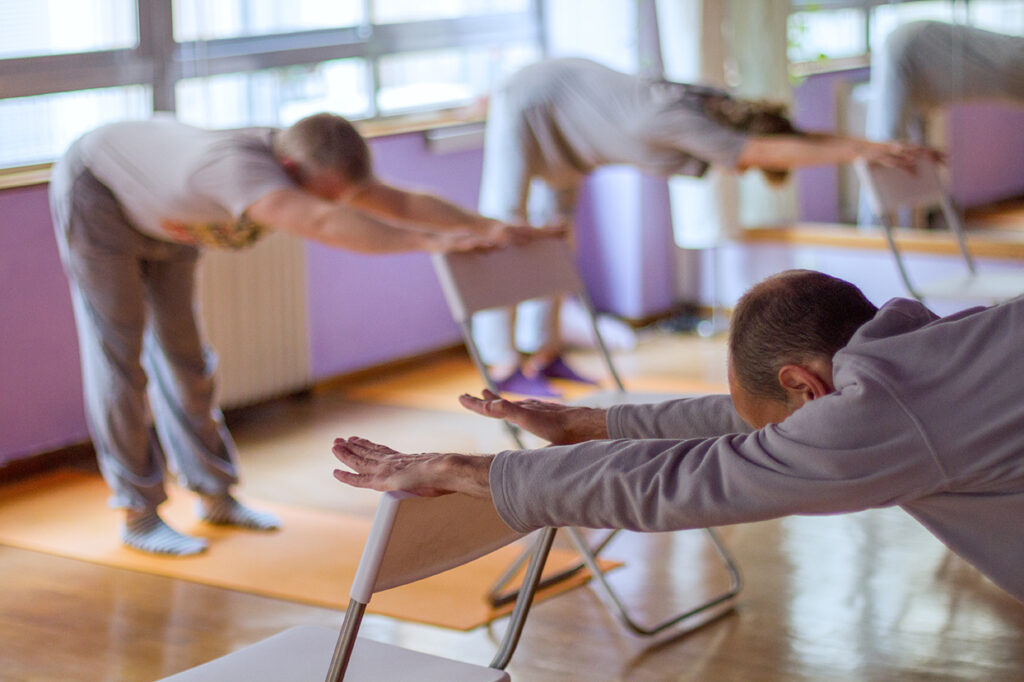
Yes. Chair yoga can be a safe, accessible way for seniors to practice yoga, especially for those with limited mobility and balance concerns. It can also be a great option if you have specific joint pain, or even if you just feel fatigued.
Chair yoga can include seated stretches, breathing exercises, gentle twists, supported balance work, and modified versions of standing poses. It can also be a good starting point for someone who is new to yoga or returning to movement after time away.
A sturdy chair with no wheels is best. If possible, practice with an instructor who understands how to modify yoga for older adults.
How Often Should Seniors Practice Yoga?
There’s no one perfect schedule that works for everybody. Some people enjoy a short daily practice, whereas others may prefer a class once or twice a week. What is best is really something you can stick to over time, something that becomes part of your routine.
For beginners, even 10 to 15 minutes of gentle movement can be helpful. Listen to your body. If you feel tired, dizzy, or uncomfortable, stop and rest.
Waterstone: Supporting Wellness in Senior Living
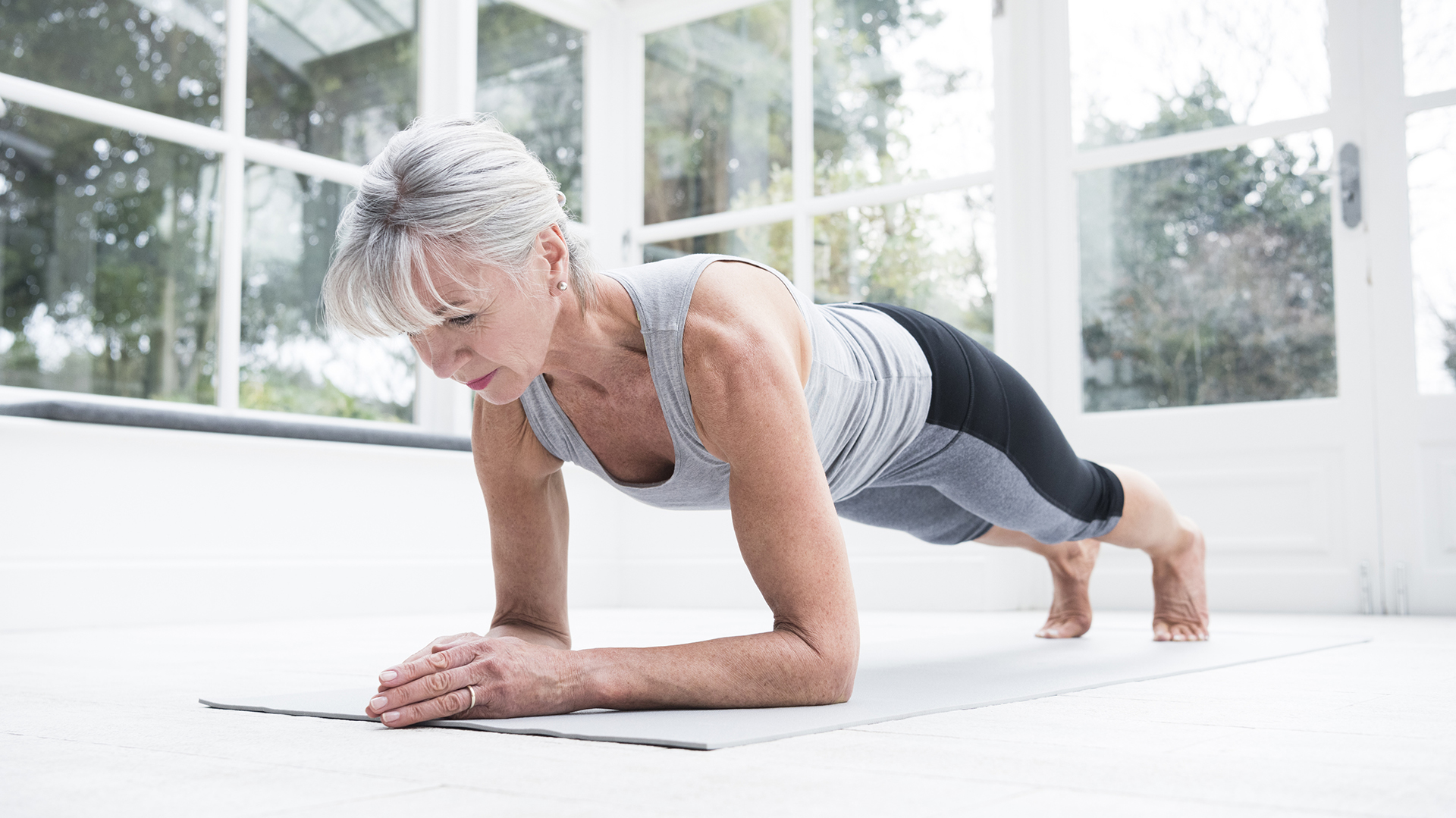
At Waterstone Senior Living, wellness is part of daily life. Residents can stay active in ways that fit their interests, routines, and abilities, whether that means joining a yoga class, working with a trainer, swimming, walking, stretching, or taking part in social and cultural programs.
Waterstone communities are designed to support well-being in its many forms: physical, intellectual, and even emotional. Across our communities, residents can enjoy elegant spaces, dynamic programming, dining, amenities, and opportunities to connect with others.
For many residents, wellness is about having options. Some people enjoy group classes. Others prefer one-on-one support, independent exercise, or gentle movement in a quiet space.
Yoga fits naturally into this approach because it can be adapted. A resident may practice on a mat, use a chair, focus mostly on breathing, or join a class for the social connection as much as the movement.
Learn more about Waterstone’s senior living options, including independent living, assisted living, and memory care. You can also explore Waterstone Senior Living communities to find the location that best fits your lifestyle.
Contact our team to schedule a tour and learn which Waterstone community is right for you.
FAQs: Yoga Poses for Seniors
What are the best yoga poses for seniors?
Some of the best yoga poses for seniors include Mountain Pose, Chair Pose, Cat-Cow Stretch, Forward Fold, Seated Twist, Warrior I, Tree Pose, Downward-Facing Dog, and Corpse Pose. Each pose can be modified with a chair, wall, or other support.
Is chair yoga good for seniors?
Yes. Chair yoga can be a safe and helpful option for seniors, especially those with limited mobility, balance concerns, joint pain, or fatigue. It allows older adults to practice stretching, breathing, posture, and gentle movement from a seated position.
Can yoga help seniors with balance?
Yoga may help seniors improve body awareness, strength, flexibility, and balance. Poses such as Mountain Pose, Tree Pose, Warrior I, and Chair Pose can support steadiness when practiced safely with appropriate support.
How often should seniors do yoga?
Seniors can practice yoga as often as feels comfortable and safe. Some people benefit from short daily sessions, while others prefer one or two classes per week. Beginners may want to start with 10 to 15 minutes of gentle yoga and build gradually.
Should seniors talk to a doctor before starting yoga?
It’s not really necessary, but seniors should speak with a healthcare provider before starting yoga if they have chronic health conditions, balance concerns, osteoporosis, recent surgery, heart concerns, or pain. It’s also helpful to work with an instructor who understands senior-friendly modifications.
What should seniors avoid in yoga?
Seniors should avoid poses that cause pain, dizziness, breath-holding, or strain. Deep twists, intense backbends, unsupported balance poses, and movements that feel unstable should be modified or skipped. Yoga should feel supportive, not forced.