Listen/watch our EPOCH Exchange podcast episode below:
Released May 2026 | Duration: 26:08
In this podcast episode, Sarah and Erica are joined by Detective Ian McEnaney of the Westford Police Department. Together, they explain the prevalence of scams targeting seniors, particularly online. They then discuss how you can attempt to protect yourself against such scams, and what you should do if you think you have been compromised in some way.
We discuss:
- Common scams targeting older adults, including grandparent scams, romance scams, tech support scams, government impersonation, gift card requests, and cryptocurrency schemes.
- Red flags to watch for, such as urgent requests for money, unfamiliar calls or texts, suspicious links, and payment requests through wire transfers, gift cards, or crypto machines.
- How scammers use fear, personal details from social media, spoofed phone numbers, and even AI voice technology to make scams feel believable.
- What to do if you suspect a scam, including stopping communication, not clicking links, contacting your bank quickly, and reporting concerns to local police.
- Helpful resources and prevention habits, including following local police alerts, checking FTC, Mass.gov, and FBI IC3 resources, using antivirus tools, monitoring accounts, and setting bank limits.
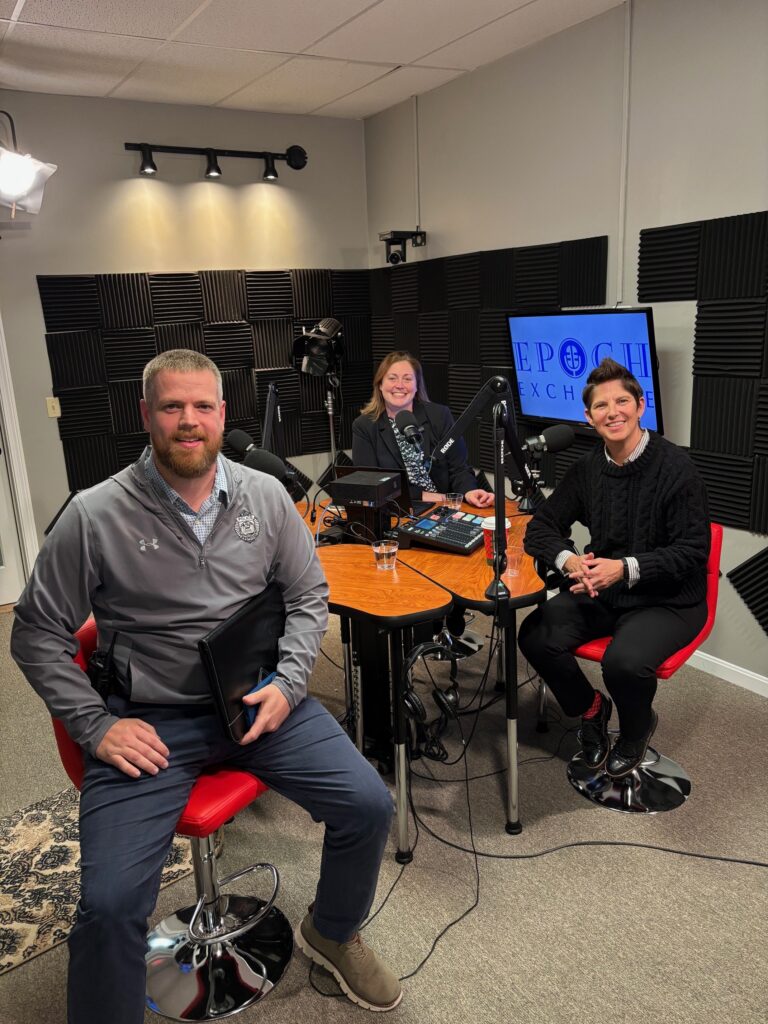
Guest:
Detective Ian McEnaney
Westford Police Department
Episode Transcript
Hello and welcome to the EPOCH Exchange, the podcast where we have real conversations about senior life, senior living, dementia care, and all the amazing people who make it all happen.
I’m Erica Labb, Director of Team Member Engagement and Culture with EPOCH Senior Living, the premier senior living provider in the Northeast.
And I’m Sarah Turcotte, Area Community Liaison for several of our Bridges by EPOCH and Waterstone Communities. Together we’ll be your hosts, bringing you stories, insights, and expert voices from across our organization and beyond.
Whether you’re a caregiver, a family member, a professional, or somebody navigating the early stages of dementia, this podcast probably has something for you. We’re here to share what we’ve learned, spotlight the work happening every day in senior care, and offer ideas and inspiration to support well-being at every stage of aging.
In each episode, we’ll be joined by guests who are making a difference, from community leaders to care team members and clinical experts.
Today, we are delighted to be joined by Detective McEnaney of the Westford, Massachusetts Police Department, who is here to share important information about scams that often target older adults. So, we’ll be learning all about scams. We’ll be discussing what we can all do to protect ourselves in today’s environment.
Welcome, detective, to the show.
Thank you for having me. I appreciate it. It’s great to have you here.
Very excited to have you. I mean, you know, scams are something that we are hearing about more and more lately. It’s definitely something that is top of mind and can be, you know, something we all worry about, especially when it comes to our seniors.
But, you know, we’re really not here to try to scare anyone, but it’s really about being aware and knowing what to look out for. So we can’t, so we can all stay a little safer. So we’re so happy to have you here to share your expertise today. Can’t thank you enough. So let’s just kind of start, you know, understanding this landscape. You know, does your department spend a lot of time on outreach and education around the scam prevention?
Yeah, I’ve done a few presentations at the senior center, doing scam awareness. I know, our social media pages will, you know, if we keep getting calls for certain scams that we’re seeing, we’ll kind of push it out on the social media pages, letting residents know. And I think it’s a good way to kind of spread the word that way.
Yeah, that’s why we wanted to have you on the show so much. ’cause we were like, oh, the more that we can get word out, and having sort of an expert that is seeing it on a regular basis Is really meaningful.
Absolutely. Spread the word, for sure.
So thank you for doing so much work on that.
And I think so many people are on social media, so I think whether you’re here in Westford or, you know, no matter what community you live in, it might behoove us to maybe follow our local police department pages, because you must be putting these types of notices that are affecting your residents.
Yeah, absolutely. I know, you’ll see, you know, if Westford posts something, you’ll see maybe a neighboring town, whether it’s Ayer or Chelmsford, they’ll repost it, say, Hey, you know, this is a scam that we’re seeing too. I even saw the state of Massachusetts was posting one about the E-Z Pass.
The E-Z Pass. Yeah.
I think everyone was getting those, getting them on my work phone.
Yeah. Pay your E-Z Pass bill, and you’re like, wait a minute, this doesn’t look right. Yeah.
I’m thinking maybe it would make sense to talk about some of the scams that are happening, kind of, right now. Does that make sense?
Yeah.
Before we get into like how it’s changed over time and things like that. Just some of the, some of the scams you’re seeing, kind of currently or the most, I don’t want to say popular, common.
Yeah. The scams are, for sure, the most common. they all kind of start with, you know, random phone calls, text messages, emails. But for, you know, the folks over 60, it’s a lot of the grandparent scams, the romance trust scams, tech support scam, and the, government impersonation. Those are ones that we’ve been seeing too.
So give an example of like, like a sort of a case study, what it, what it looks like.
Yeah. So for the, say a grandparent scam, it’s, it’s, you know, someone will get a phone call, whether it’s, you know, the scammer will pretend, they’re a lawyer saying, “Hey, your grandson, your granddaughter, they’ve been in an accident. We need, you know, medical bills, we need payments.”
Or we’ve even seen, they’re in jail, so they need bail money. You know, they use that kind of panic, you know, a grandparent, you hear that. They say, “Oh, I need to help my, you know, grandson, granddaughter immediately.” And, they create that sense of urgency, and they will kind of keep you on the phone until they get what they want.
Wow. It’s like the fear response.
Absolutely.
Wow. Yeah. You get, create fear. You know, you’re not really thinking clearly. You just kind of want to help right away.
Yeah. trying to move fast. Yeah.
And I think it’s, it’s important to point out that they, these scam artists, are also able to kind of change the way their numbers appear as they’re calling people. So, it could look like it’s a familiar number
Absolutely.
Or coming in as a, someone or some organization you might know.
Yeah, Absolutely. You see that a lot with, it’s like a computerized number, VOIP, a voice over internet protocol number. And, like you said, they can make it where, in Westford, they can make it look like a Westford number.
Right.
Very common and tough to trace.
Wow.
So if a phone call like this comes in, what are some key phrases or key, you know, items that are coming up that people should pay attention to?
So some red flags for that. it’s, you know, they’ll pretend they’re from a well-known organization, an organization that you know, or, you know, some of the, somebody that, you know, like the grandparent, they’ll, you know, use that fear, but-
And they use like the kid’s name and everything, right?
Yes. Yeah. They use a lot of detail, you know, social media, they’ll dive into that, they’ll get a lot of information from that.
And it’s crazy how much information is on the internet about you.
Right. So, it’s, they do their research, and they look up, you know, all this stuff, but they get their, you know, they do their homework before. But, as far as another red flag, I’d say, you know, requesting money. Whether it’s, they’ll ask for payments via money transfer, a wire transfer, gift cards. We see that a lot. “Hey, go to a CVS, Walgreens or, you know, dollar Tree, go get a, you know, a Nike gift card or, an eBay gift card, scratch the number off, take a picture, send it to this email, or send it to this text.”
That’s a red flag.
Right, right off the bat. Okay. Crypto, we have those crypto machines in town. Most of those transactions are just scammers. You know, they saY, “Hey, go to this crypto machine.” There’s a bunch of warnings on it.
What do you do, insert a credit card? I’m not even familiar with the machine.
Yeah. There’s like, it’s almost, it looks like an ATM Okay. Machine. and then it will just, you know, you wire money that way.
Wow. And then that money goes to, you know, one account to another one. It just kind of, it is gone.
You’re gone. Yeah. Yeah. Yeah. It’s tough.
Wow. And it’s, I think it’s so hard, right? Because so many of us like to help, you know, local charities and organizations, and it’s hard to decipher, you know, what is real and what is fake. So, you know, how are legitimate, you know, fundraisers or things coming through?
Right. It’s, you know, it’s definitely tough. I wouldn’t trust anything over, you know, the phone or text message. You know, me personally, you know, I got my, you know, grandparents’ loved ones that are taking, getting these calls. Just say, hey, ignore all calls. Don’t respond all calls. If you don’t know the number, ignore it. Go let it go to voicemail. Right. If it’s important, you know, they’ll leave a voicemail, the text messages, ignore those two, you know, report as junk. You know, you’ll get some that kind of start off like, “Hey, how’s it going? Do you want to meet for lunch tomorrow?” And it’s just a random text. And then, you know, they’re just trying; they send that out to everyone. And then, you know, that might tweet, see who bites.
Yeah, exactly.
It’s just a wide net. But, that was just, don’t, just don’t respond to those emails. The junk emails too, you know, those, you’ll see, like the tech support scams that I was talking about earlier. You know, you’ll get an email saying that there’s, you know, an issue with your service when there’s really not.
Right.
And, they, you know, ultimately get control of your computer.
Yeah.
Have full access.
Don’t click any links.
Yeah. No links. Don’t Click any links. Absolutely not.
Do you, is it my imagination, or is it getting more sophisticated?
It’s definitely not you. Everything’s evolving. Scammers, criminals, everything’s, they’re, they’re evolving. It’s always changing. So it’s, you know, a lot of, you know, we got even AI they’re using, right. The AI to match the voice, the sound of a voice of a loved one.
Oh gosh.
When they call, It’s frightening. It’s, yeah, it’s frightening. You know, it just creates that fear like we were talking about.
So let’s say someone identifies that someone is reaching them, whether it’s via phone, text, or email, and this is suspicious. What do you recommend people do? What, how should people respond once they’ve identified, Hey, this, this is happening to me?
Yeah, they can certainly report it to their local police department. like whether if they, they fall victim, you know, if they fall victim to it, absolutely report it. But even if it’s just something that they, you know, they engage, they answer the phone, but they, they know that it’s, you know, a little suspicious, they can call us. I personally would like to know, you know, it could be a new scam that we haven’t seen before. So knowledge is power and getting that information is certainly Important.
So not to feel alone, and they can call you guys and, and check in?
Absolutely. Yeah. We’re open 24 7, so yeah.
That is, that’s great to know. So what are you doing when, if someone, you know, reports this, even though nothing’s been lost, you know, I know it’s helpful information, but are we trying to figure out, you know, how can we stop this. How do you guys look into these kind of matters?
Yeah. Sometimes it’s, we will document it in a police report, so it’s on file. And then, you know, whether there’s a crime or not, it’s, you know, there are search warrants, there’s admin subpoenas, but you know, those take some time to-
Sure.
But it’s, you know, whether it’s an email or phone number, send out an admin subpoena for the phone number, it could come back to an email address, and then you kind of go down the subpoena rabbit hole. But, but the information is helpful. So I absolutely, I think, you know, like I said, it could be a, scheme that we aren’t aware of, and, you know, all that information that they have would be super helpful.
So like, red flags are like a number you don’t recognize if it feels kind of funny, if it’s like an urgent need of a, of a loved one, but they’re asking for money, not supportive, the loved one.
Like, red flag, whether there’s an issue or problem or a prize, you know, when they’re just kind of, that’s the red flag, but take, you know, Panic.
Yeah.
Sit, sit back and just kind of take a deep breath and kind of think that through. If they, if people start recognizing that that’s a red flag, right. They can kind of just sit back and not believe everything you hear. Like you said, we’re not trying to create a, you know, ultimate fear over these scams, but just take a moment, you know, whether you can call a loved one, family member, friend, or the police department and just say, “Hey, I’m getting this phone call.”
They’re saying, it’s my, my granddaughter. She’s arrested. You can call the police department.
Right. Find out.
We can walk you through.
Right, right, right. And it’s interesting too, I think that in the, in the moment we’re so worried and freaking out, but once we take that breath, it’s like, okay, this doesn’t feel right.
Yeah.
And you can always kind of find out for sure.
I know someone who got scammed, and someone said that we have your daughter. Right. So she thought, oh my gosh. Like, my child’s been kidnapped. But she thought to say, well, what’s her middle name?
That’s smart.
You know? And I was like, wow. I can’t believe she thought of that. Yeah. But, you know, that was definitely quick on her feet.
Yeah. That’s awesome.
But thinking and preparing. Like how would I cope? What are some questions I could ask? And like, in our family, we have a safe word that we use that nobody would know.
Right. Yeah. Yeah.
So thinking of ways, and that’s why I love that we’re talking about it. ‘Cause sometimes even just bringing attention, you’re, you’re less likely to fall for It.
Exactly. Yeah.
A hundred percent.
Make yourself less vulnerable to, to these things.
Absolutely. And I even think about bringing awareness to family member caregivers, you know, at Bridges. We’re working with family members who are caring for a loved one with dementia and various cognitive impairments. So, what advice could you maybe give a family member caregiver when it comes to looking out for their loved one that might not be able to lean on their own devices?
Yeah. Yeah. Ultimately just, you know, like we talked about the red flags. you know, maybe even sit down with the loved one over the phone, kind of looking through the phones and you see, I see that a lot with, you know, people with dementia, that’s falling victim to these crimes, but they ultimately have a loved one that’s, you know, maybe a little too late or they’re on top of it, whether they’re, they’re keeping track of the phone calls and, asking questions like, what is this? What’s, who’s this person you’re texting?
Exactly.
You know, cash, like a cash app too, or whatever. Yeah. Like the social media too. You know, they can create fake accounts, you know, use friends. I know what happened to my grandmother years ago. Someone made a spoof account.
Wow.
But my, it was my grandmother’s Facebook and, you know, friends and people. So that’s, you know, kind of starts with there, you know, keep, keep your social media private, I’d say. Yeah.
That’s a great, that’s a great point.
Yeah. Watch what you put on there. Obviously, you don’t want to put any personal information.
Right.
You know, that’s visible for, for people to find out and gain easy access to.
They even say purchasing things on social media sites can be a slippery slope, too.
It is. Yes. That’s a, you know, there’s a lot of scans with that.
Oh, that’s good to know. Yeah.
I would try not to purchase that. ’cause you just never know, because you want to go directly to a website and check, double-check that it’s the actual website, like the URL that you put in there.
A hundred percent.
Because sometimes you Google, which we all love to use, and you Google, you know, say LL Bean. And the first thing that comes up looks like LL Bean, but it’s not LL Bean, you know? But not to say that that, but anything like that, you always have to double-check.
I know. I’ve gotten emails from my boss, and it’s her name. Her title and asking me to get her a gift card or whatever, you know?
Yeah.
Or give her the company credit card ’cause she needs it right away. And it, from, from like an initial look. Yeah. Looks good. I was like, oh, gee, she really needs me. I am like excited, you know, my, oh, my boss needs me. I’m going to be the hero. And then when I looked at the actual email address, it was, you know, it was like, off. And I was like, that doesn’t look right. But had I not been trained, you know, to start looking for that. I get caught up in the emotional response. You know, and excited or scared or whatever it is. And then you act on it. And this can ruin people’s lives. Right?
Yeah. Thousands of thousands of dollars.
Wow.
It’s just, it’s sad to see. but it’s, it’s certainly a real thing, and it’s out there, and it’s happening to a lot of people.
And there’s not much recourse, right? I mean, how, like how often are you figuring out who, who’s at the, who started the scam or who’s responsible for stealing the money? Do you, I hate to ask that of a detective.
No, it’s kind of tough because it’s hard, you know, depending on how soon the report comes in, you know, whether someone sits on it for a long time and then they finally report it. But that money’s, you know, say it went to a crypto thing, a crypto machine, it’s just two different accounts, and it’s in a different country.
Right.
And they’re, you know, we ask for a legal request, and they can just say, no.
It’s tough. But if they get on it right away, you know, we can contact the bank, “Hey, can you, is this money still in the account? Can we, you know, freeze this?”
Yep.
You know, the faster we get it, you know, the better.
Great. That’s great. And yeah, at least it stops it from continuing.
Yeah, Exactly. Yeah. Yeah. We’ve, we’ve even done the crypto where we go to the machine, get a search warrant from the machine. And take that money out. But it’s kind of, that’s kind of a slippery slope too, to see, we don’t know how many people have used that and whatnot.
Right. Yeah. What, how often is it local? It, like how, how often is it a local crime?
Oh, it happens quite a bit.
Oh, really? Interesting.
Oh, yeah. the crypto, the grandparents, the ATM, the gift card, a lot. You see a lot of that. Even like social media, you know, pretending to be somebody else, you know, somebody else.
Wow.
You know, building that trust, and then, you know, “Hey, there’s a problem. I need some financial money.”
Right.
And then they just say, oh no, we’ve had this friendship. You know, some people are lonely and really love that friendship. And I’ve talked to some people saying, yeah, I’ve known it’s a scam, but, you know, I like the, you know, the communication aspect to it.
Oh gosh.
I have heard a tip before where someone had shared that, you know, if you’re utilizing a savings account and keeping the bulk of your money in a savings account rather than into your, you know, something that has access to your debit or checking account can be helpful too. Because then, you know, the majority of your money is kept in a space that’s not electronically deposited.
Very smart. Yeah. That’s interesting. Yeah.
And you, if you get access to it might take you a little longer, so you might take the time to think about like, wait a minute.
Yeah. Yeah.
Even putting limits on your, you know, you have it on your savings, and you put a limit on your, you know, your Credit withdrawal, your checking card.
Yeah. Like, it must be approved if it is more than this.
Right, right. Right. That’s very smart too. Yeah.
Oh my gosh, it’s wild.
I think it’s just so important to talk about these ideas and the ways that we can protect ourselves. You know, besides people tuning into this podcast, are there other statewide resources or hotlines or educational programs you might be able to recommend?
Yeah, the Federal Trade Commission, they, the FTC, they have a website with a bunch of, information on like, you know, the signs to see.
Oh, great.
Mass.gov. You type in Mass.gov scams. They have a ton of information, too.
Do they keep track of like, what’s happening now?
Yeah.
That’s great.
The FBI. I think I got the website here.
Oh, great.
The FBI IC3 website, they have a ton of information on scams, and kind of break it into sections, like even age, where it’s like over 60.
Oh, great.
And you’ll have the common scams like that.
Oh, it’s so great. Yeah. So it’s, you know, it’s pretty interesting to take a look at that website.
How much money
I know we got a couple of stats right here if you want me to share.
Yeah, if you could, please, yeah.
FBI IC3, aged over 60 received 147,000 complaints. This is in year 2024.
Is this nationally?
Yeah. The FBI one, aged over 60, losses totaled over $4.8 billion.
Wow. Holy smokes.
There was a 43% increase in losses reported from 2023, which is a huge increase.
Wow. That’s Almost 50% Increase. That’s wild.
The average loss for 60-plus victims exceeds $83,000.
Wow. and it’s, it’s not just over 60. It’s every one of all ages that are fallen for these, these scams.
Yeah. Yeah. Even when you’re not falling for it, like you said, I mean, I was just at an amusement park a month or so ago, and I got a text, you know, did you try to purchase, the thousand-dollar purchase on Facebook? And it was no. And luckily, they, you know, were able to stop everything. But I’m like, what did I even do?
And the rate at which we are interacting online with so many different, you know, vulnerable sites, like even just like day to day, it just puts us at, we’re just inundated with information. So it’s hard to like pay attention to which ones are legit and which ones aren’t.
And I would imagine there’s probably some sense of shame, not that there should be, ’cause you’re victims, right. We’re all victims of this. But there probably is like, I would imagine that skew the numbers because people don’t want to come forward ’cause they’re embarrassed or they-
Yes. Certainly, you see that a lot. Yeah. it’s just, it’s one of those things where, they need to know they’re not alone. It’s, it’s happening to everybody. but no, you do see that a lot.
it’s tough when, you know, you’re in a relationship and they’re doing it, and the, you know, the loved one has no idea, and there’s a lot of terrible, just embarrassed with their, their family members.
It’s certainly tough, you know, but because that’s quite a connection to take advantage of.
Yeah. You know, it’s like loneliness and everyone’s desire for human connection, and then, someone takes advantage like that. It’s, there was a really good documentary on, I think, you know, one of the, either Netflix or something, you know, Hulu, that was about this guy that did that to, potential partners all over the country, but he is like getting money from all of them, you know, and the heartbreak for all of the women that he, you know, victimized that way. But, you know, they all were like, oh, you, he showed me love, and he showed me, you know, affection and attention, and It’s happening to our seniors every day.
Isolation, social isolation, can really play a big part in this.
Yeah. So don’t feel embarrassed. Don’t feel embarrassed. Reach out for help. It’s happening everywhere. And when in doubt, if you know, don’t want to talk to a family member, or you’re too embarrassed, call the police department.
Call the police
We’ll walk you through whether you have a question, “Hey, is this a real scam?” Or is this, you know, is this a real scenario, we can walk you through? An officer will come out and kind of walk you through the steps.
That’s Great. That’s Really, that’s wonderful. Awesome work you’re doing. And, you know, thinking about this, you know, are there, you know, any systems or software people should be looking into that might be able to help protect them or ward off, you know, scams that happen?
There, there’s certainly, you know, some software out there. I’m not a computer expert by any means, but, you know, I’d say some antivirus, you know, a well reputable, well-known antivirus company would definitely be beneficial.
Sure.
But again, I’m, I don’t, it’s, I’m not an expert on that expertise. But Some basic hygiene on your computer
Yeah.
And your Apps.
Well, I know some people also invest in things that, you know, check their credit reports on a monthly basis to see if any new accounts or credit cards were taken out in their names. And it will say no new accounts made. Or I think one of them is like My True Identity.
Yeah. You know, that’s a program that you can purchase, that’s great. That just notifies you if things are happening with your-
Oh, That’s Awesome.
With you and paying attention to your, you or your, if you’re a caregiver, your loved, your loved one’s spending, right? Because you can tell so quickly, I mean, luckily the banks are doing that now. They see something and they’re like, that doesn’t look like you. You know, and you’re like, no, it really is this time.
Yeah. But you know, like, they notice because of AI, they can tell like something that looks unusual, and they often will reach out, but even for yourself, if you’re being victimized by someone that you know or love, they might know where to spend that money so it doesn’t look that weird.
So really paying attention. Did I spend that much at that store? And like looking at your accounts.
Used to be, it was like in the ledger. Right? But now we can get it, you know, real quick. Yep. You know, look at our accounts by the minute, you know, y
You making fun of my…I I love the Ledger. The Old ledger.
No, this is super helpful. And do you feel like there’s any key takeaways or anything that we, you know, should mention before we wrap up our program?
I Would just, you know, kind of preach again, just the red flags, you know, if you get those unknown, the phone calls, the, you know, the unknown text, whether someone’s asking for money or saying there’s a problem, and kind of just do not give any personal information out over the phone or, you know, email, just kind of those red flags. Just, you know, if it happens to you can just sit back and think, yep. No, I remember hearing this on this podcast.
Or, just, just knowing those red flags is a, is a huge win.
Absolutely. And when in doubt, you know, reach out, reach out to your local police department, they’re there and happy to help. And, you know, as the detective shared, it is helpful information. There’s no information too small that can’t help the great work that you’re doing.
Absolutely.
So, Detective McEnaneny from the Westford Police Department, thank you so much. We really appreciate having you on the show.
Thank you for having me. The pleasure is mine. Thank you.
And until the next time. Take care. Take care. We’ll see you soon.