Listen/watch our EPOCH Exchange podcast episode below:
Released October 2026 | Duration: 31:03
In this episode of the EPOCH Exchange, Sarah Turcotte and Wendy Sage-Matsis welcome Renee Berard, Senior Living Specialist at EPOCH Senior Living, to discuss how families can better understand senior living options. Renée explains the differences between assisted living and memory care assisted living. She also explores the signs that additional support may be needed and how families can approach touring, planning, and decision-making with a clearer sense of what to look for.
We discuss:
- The differences between independent living, assisted living, memory care assisted living, and nursing home care.
- Signs that a loved one may need more support, including safety concerns, changes in hygiene, weight loss, cognitive decline, and social isolation.
- What day-to-day support in assisted living can look like.
- How memory care assisted living differs from traditional assisted living, including specialized training, guided engagement, secure design, and dementia-informed routines.
- How families can navigate guilt, differing opinions, touring questions, and planning.
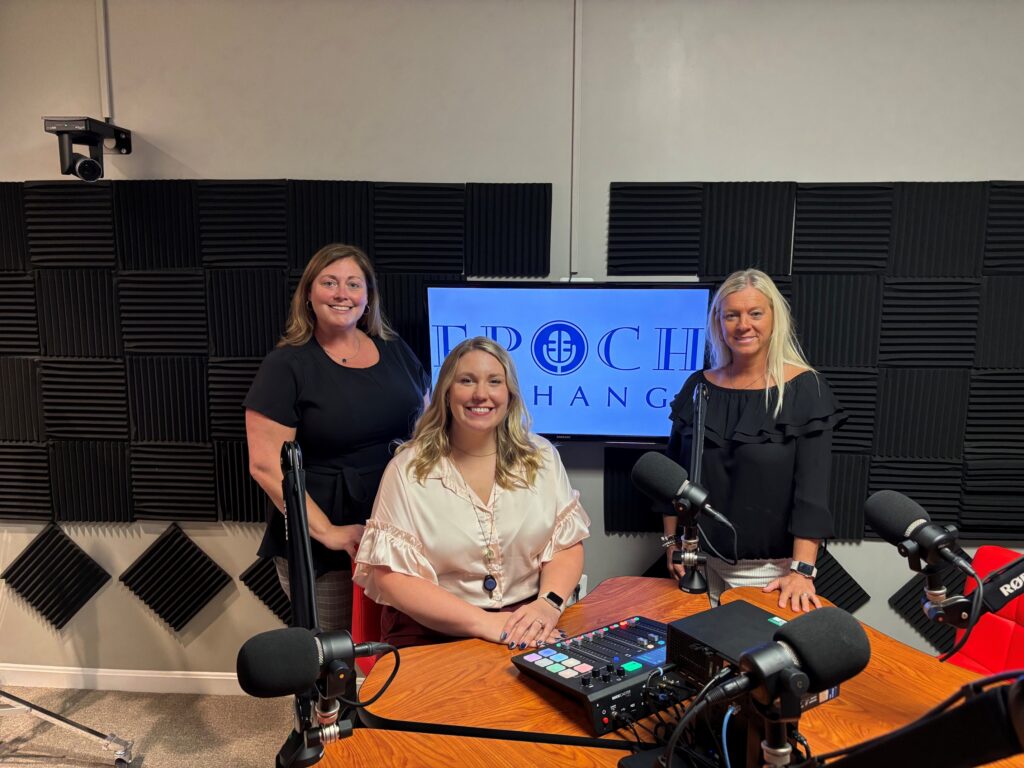
Guest:
Renée Berard
Senior Living Specialist at EPOCH Senior Living
Episode Transcript
Welcome to The EPOCH Exchange, a podcast where we bring together experts and community voices to share insight and guidance about senior living and dementia care. I’m Sarah Turcotte, Area Community Liaison for our Bridges by EPOCH and Waterstone communities.
And I’m Wendy Sage-Matsis, Senior Advisor at Bridges by EPOCH at Nashua. Today, we are excited to welcome one of our very own colleagues, Renée Berard, who brings more than a decade of experience in the senior living industry and a true passion for helping older adults and their families navigate the aging journey. Renée understands that exploring senior living options can feel overwhelming, especially when families are facing unexpected changes or trying to make important decisions about a loved one’s care.
Whether someone needs immediate support or is simply beginning to plan for the future, Renée takes a thoughtful, compassionate approach to helping families understand their options and find solutions that meet their individual needs. What many appreciate most about Renée is the warmth and calm she brings to these conversations.
She truly believes in empowering families with the knowledge and resources they need to make informed decisions, and we are so happy she’s joining us today.
Oh, thank you. What a kind introduction.
It is, and it’s the truth. And in this episode, we’re going to talk about a topic that so many families face, understanding senior living options and knowing when it might be time for additional support.
Families often recognize that a loved one needs more help, but understanding what different senior living communities actually provide can be confusing. We’ll explore the role of assisted living, when specialized memory care assisted living may be appropriate, and how families can begin thinking through the level of support that best fits their loved one’s needs.
We’ll also discuss some of the common questions and concerns families have along the way, and how planning ahead, asking the right questions, and knowing what resources are available can make these transitions feel a little less overwhelming. Renee, thank you so much for joining us here today.
Thank you again for having me. It’s a true pleasure.
Both Wendy and I have had the pleasure of being able to work with you over the years. And I think maybe before we dive into some of our questions, I would love for you to share with our audience, how did you fall into senior living care?
Well, actually, my first job ever when I was 14 years old was in a senior living community. I was a dining server, and it was obviously life-changing. I took on the role really seriously, and I think that I was able to learn about this population and their unique needs, and also the supportive environments that were evolving at the time to care for that older population.
And it’s been sort of a cool thing in my career to watch the senior living environments evolve over time and to get creative and changing with the changing needs of our older adults. So, I’ve been doing it for a really long time.
No, I agree.
It’s been amazing to see how we’ve transformed over the years in the world of assisted living and senior care in general. And I guess a great way to kind of kick us off is, what are some of the challenges or confusion that family members face when they’re exploring these levels of care when it comes to assisted living or memory care?
I think we’re seeing a progression in the knowledge folks have about the senior living options that are out there. But still, the greatest misconception about assisted living generally is that it is just like a nursing home, and it’s not. There are so many differences between a nursing home setting and an assisted living setting, and there are different reasons you might choose either one.
And there are nuances even within those umbrella categories. There are different types of assisted living communities that exist. There are independent living options that really didn’t exist 20, 25 years ago. And so those who are of retirement age now are brand new to this concept.
They didn’t grow into their retirement with it being a consideration. So, I think that the greatest opportunity for overall education is around the types of senior living environments that exist and what their exact functions are. Will you dive in just a little bit, even just touch base on what those different offerings may be and just touch on them a little bit?
I think that we can very generally categorize the varying types of senior living environment to be independent living, assisted living, memory care assisted living, or special care residence, and a nursing home environment. There are some varying iterations of all of those categories, but I’d say those are the four to be mainly educated about as you’re considering your options for yourself or a loved one.
So I’m hearing you like independent living, you’re independent, right?
You need to be independent, taking care of yourself, managing those types of things. But most people are looking into this type of care because their loved one needs some help. So what are some of the services that people are receiving in an assisted living?
Well, it’s important to note that every resident has an individual care plan. So not every resident goes into a community and receives the same set of services. Your neighbor George might have a completely different set of needs than you have. And when you go to an assisted living, you must identify for yourself what you need help with, whether that’s assistance with dressing or bathing or medication management.
If there is a need for socialization or opportunities for community, those are also motivations and reasons a person might choose an assisted living environment. The capacity for care at any particular community is variable, and that’s something to consider as well when you’re looking into what you need as an individual in these assisted living settings.
Do you find that families are waiting longer than need be, thinking they have to meet a certain set of criteria before moving into a community?
Or what are some of the reasons you’re really seeing families resistant to or accepting of knowing that this search needs to begin?
I think a lot of times folks are waiting for a criteria that has been established maybe in their mind or among their family as the impetus to consider an assisted living environment. And that could be a traditional assisted living community where that person doesn’t need specific or specialized memory care support or memory support.
Or those looking into memory care are waiting until their loved one is bad enough for the environment. So I certainly see some individuals hesitant to consider their loved one as like that. And I encourage folks to keep an open mind and to consider that they may be among peers, even if they haven’t reached that criteria that you’ve laid out.
It’s one of the questions we receive a lot. How will I know when it’s time?
What’s the best answer to that question?
There isn’t an exact answer. I think there’s a few components to consider. Obviously, safety is an obvious consideration. Is your loved one safe at home?
Are they able to respond appropriately in the event of an emergency?
Can they ask for help when something comes up that might be dangerous?
Their actual function. So not just are they bathing, but are they bathing well?
Are they eating well?
Have you noticed weight loss?
Those are things to think about when trying to decide, is it time to explore this option?
Of course, cognition is a huge component as well. We see some normal memory decline in aging, but there is a point at which cognition decline is considered abnormal, and looking into a specialized environment to support that will enable the independence of your loved one.
And then finally, it’s quality of life. It’s not just about remaining safe in your environment. Well, they’re okay. They’re getting food, and they’re getting up, but have they stopped attending all of their activities that bring them joy?
Are they unable to get into the community and go to the garden club or go to the men’s group that they’ve always attended?
Are they being isolated from the things that really matter and bring quality of life to a person?
And I think it’s important for our audience members to know what you’re explaining is, is people are coming to the assisted living realm and getting support and just being more independent, right, navigating and being more independent with their day-to-day. But just explain a little bit more of what a day in a life in assisted living would look like, just to give people a feel.
I think that’s the best question you can ask as someone exploring an assisted living environment. Walk me through a day. So in our assisted living communities, we do try to afford as much independence as is safe and functional for an individual.
So if someone needs support or help with their hygiene rituals or routines in the morning, there would be someone to come in and to provide that, either help with either showering or grooming. And then there is typically a group meal in a restaurant setting.
You’d come out, you’d be able to order your meals and dine with your friends in that environment. And then your day should be punctuated with activities that keep you connected and keep you both involved with your fellow residents as well as with your passions.
So those activities might be different for every person and within every community, but there should be some level of engagement in that for every resident. Of course, your meals being sort of the pillars of your day. As it should be. We want people thriving, not just surviving, right?
Exactly. I think we want to switch gears here a little bit to talk about memory care-specific assisted living. And if somebody is experiencing memory changes or different behavioral symptoms, does it automatically mean memory care for you or nursing home care for you?
How can you figure out where somebody might fit in to the continuum of care?
I think a misconception, again, is sometimes that memory care is just more care, and that’s not true at all. There is more care sometimes offered in a memory care environment, but the whole structure is different. The way that we curate the life and the day of a resident in that environment is entirely different.
A great illustration I like to share with families is that in a traditional assisted living setting, you might be provided with a calendar of activities that are going on throughout the day or the week, or even the month.
And you would look through that calendar and be able to say, “Hey, I enjoy gardening,” or, “I enjoy intellectual conversations, so I’m going to attend that lecture.” And there’s a bit of self-motivating that is necessary in that environment. In a memory care setting, most often our residents benefit from a different approach, which is trained in all of our caregivers.
And rather than saying, “Take a look at the calendar and see what you might like to go to today,” we would say, “Cecilia, it’s time for us to go to the lecture. Come with me.” Right?
It’s not meant to be directive, but it’s meant to be invitational and to guide somebody to an activity that we’ve already determined through thorough assessment and intake Cecilia would be interested in. We know she loves intellectual programs. We know she’s going to like the lecture.
Because I think if you ask someone, “Do you want to go to something?” If they have this feeling of, “I might fail,” or, “I don’t know someone”- they’ll be quick to say no. So I think it’s all in the approach and how you get that buy-in.
And it’s different for everybody, as you said. Some people, they sit and they’re waiting. They’re already used to the structure and the routine- and they’re ready. When breakfast is over, let’s head off to the programs.
But that’s not the case for every resident that lives within our community, so I think it’s really important that you touched on some of the special training that goes into staff in memory care. Yeah, I think it’s more about changing the environment for the individual than having the individual have to change to meet the needs of their environment.
It’s like being planted in the right soil. And can you just share why that’s so important to consider this person’s individual approach?
We always say, “When you meet one person with dementia, you meet one person with dementia.” So why is it so important to look beyond that diagnosis?
While I love when there’s an opportunity to introduce a resident to something brand new that strikes a chord, it’s less often that we’re going to completely change who a person is. And so it’s really helpful to investigate the history of an individual. What have they historically been interested in?
Their participation in that event might be different. Perhaps they were a skilled painter, and they can no longer achieve the result that they were used to. They’re a professional painter, and that’s no longer what they’re creating. They can still have conversation about painting or painters or the process of creating an art studio.
They can still admire art in certain ways, and there are ways to curate an environment that make those things feel really accessible. And knowing that that is something that will likely be more successful in sort of trying to get that person to engage is really invaluable, whether you’re doing it in a home environment or in a community setting.
And it just makes me think whether someone who’s listening in is a family member, whether their loved one is in a traditional assisted living or at home, what are some signs that someone might benefit from a more specialized memory care environment?
For me, the social isolation is really the biggest concern I would have about a loved one. Obviously, you want to curate an environment where they’re safe, and they’re achieving reasonable hygiene. And all of those things I think are manageable in a home environment.
But what really is best met in a community setting is in engaging socially, and it really, I think, helps people thrive. It helps people live longer, live well longer- in all levels of care. Most especially safety, too, right?
Some of these folks could thrive in assisted living and go to all the programs, but might think that they have to get to work at 2:00 in the morning. And now it’s no longer the right environment, right?
What can memory care assisted living provide that assisted living is not able to provide?
Because they are two totally different care models. The attention to the memory impaired individual is so apparent in a memory care setting, especially an environment like Bridges, where the whole building is designed for the memory impaired individual.
It’s ingrained into the culture, and every staff member understands that there could be something showing up in front of us that is a part of someone’s dementia and not necessarily, I don’t want to say truthful, but there’s more understanding of the changes in someone’s behavior and motivations, and you’ll feel that among the staff primarily.
There’s also components of a memory care environment that are more physically accessible. The way that you have the apartments laid out is meant to be very straightforward and not confusing.
You can see from one end to the other so that as somebody’s attempting to get to the kitchen or to the library, you can see where you’re going and follow that train of thought if there is a memory impairment that’s stopping somebody from getting to their end goal.
So- Oh, go ahead. How important is it for families to be very truthful and upfront when they’re talking to a community about their loved one?
And I’m especially thinking about behaviors, outbursts, et cetera. And I think, and I’ll just set it up a little bit, sometimes families are afraid to tell exactly what a person is doing these days for fear that they might not be accepted into that community.
Oh, that breaks my heart. So it is exceptionally important to be truthful, and if you’re speaking with an expert in memory care, and you’re going to a community that is specifically trying to care for individuals with memory impairment, I assure you, there is nothing we have not heard.
And it’s important for us to know so that we can work with you to get the greatest end result for your loved one. If you are having behavioral challenges at home, there are different interventions we can try in a new setting, in your current setting.
There are practitioners we can connect you to who might be able to make adjustments with medications. There could be ways for us to collaboratively identify triggers that are causing some of these concerning behaviors or challenges. And a lot of times, the challenges you’re facing at home look entirely different in a community setting.
Most often, I hope this isn’t too tangential, but A lot of times the care partner, whether that’s an adult child or a spouse, is the person taking the brunt of that challenge, and just introducing a new person to that routine can often alleviate some of that challenge.
No, you’re absolutely right, and I think that there are so many things people don’t understand until they have that education, right?
Because there’s a reason why a place like Bridges, where we build routine, the way we train our staff, the activities that we provide all day, these are all great things, but sometimes that can be hard to do when you’re doing it at home.
We have a full team of people trying to make that all happen. A full team of three shifts of people. I often tell that to family members. We’re tagging out at the end of eight 12-hour shifts. You’re doing this all day, every day, so give yourself some grace.
Oh my gosh. And let’s just sit down and talk about what’s going on and what help you need. It doesn’t always mean a move is imminent, but there are other ways that as a community, as a healthcare partner, we support families.
One of the things I’m always sure to share with folks who are caring for a loved one is that we have a team of, what, 50, 60 team members in our buildings that are caring for our residents, and oftentimes it’s one person at home doing that job, doing all of the meal planning and the cooking and the actual physical care, the redirection, and the assurance, and the validation.
That’s a lot on one person. It is. And I think it’s especially hard being the family member caregiver who’s making these decisions, right?
You’re trying to honor your loved one, maybe fulfill wishes that we’ll stay home for as long as possible. And I’d like to touch a little bit on this because it can be really hard getting to that place that your loved one needs more care.
So can you just touch a little bit on families getting to this decision and the guilt that they might feel, but really reassuring them why they’re making this decision?
Absolutely. It’s rare. I think it would be unusual if somebody wasn’t feeling some level of guilt in making this decision on behalf of another person. I think we should, right?
It’s a big responsibility to make that decision- Yeah… for your spouse, for your parent, when you maybe didn’t even think that this would come up in your marriage- in your familial relationship. And that is a ton of pressure. There is, however, I think, a way to lean on the sort of evidence you have that’s brought you to this conversation.
I’m seeing XYZ thing not working, they’re losing weight, or they’re not engaging, or they’re leaving the home when it’s unsafe, and using that as your motivation and your impetus to make this decision rather than the emotional component.
I don’t think you have to completely detach from it, but there is a way to say, “The reason we’ve come to this place is not because I want to abandon you in this way. In fact, I want to continue supporting you, but I can only do that in this journey by making this decision.” Yeah.
Comes from a place of compassion, right?
And so many people get to this place at different breaking points, right?
There’s always a different story for every family. But let’s say a family member does come to this conclusion, right?
And then all of a sudden they think that they’re making the best decision, but then they have other family members who come into the mix and weigh in with their thoughts, and they might not agree that their loved one needs this type of support.
That never happens. So what happens, or what advice can you give to someone who’s trying to do the best for their loved one, but maybe sometimes these things happen, and people are weighing in?
Yes, this does happen. So I would start with getting the objecting person in your family to come to the community you’ve chosen. Come to the environment and allow them to really see what it is, because often it is actually back to our first question that they don’t understand what assisted living is.
Yep. They’re thinking, “My dad doesn’t need a nursing home,” and your dad probably doesn’t need a nursing home, right?
But maybe he’d benefit from the socialization, the meals, the routine, and the care in a memory care setting. So making sure that person’s educated on what you’re choosing generally, and if there’s still objections, you can honor that what they’re seeing in their loved one is true to them.
Your adult child may only see your spouse every few weeks, right?
And their picture into their care and their needs is based on a shorter time, right?
But you’re the primary caregiver, and you’re seeing these things every day, and you’re recognizing that there are moments of connection and moments that are working, right, without that move, but you’re also the one experiencing when it’s not working. And you really have to plan for the times when it’s not working- not the times that it is working.
So maybe illustrating that for a family member, and then sometimes bringing a third person into the conversation can be helpful, too. So whether that is a representative from the community, I can tell you how many Zoom calls I’ve been on with multiple family members to answer questions and assuage feelings.
Sometimes that’s the appropriate person. Other times it’s a more neutral professional, like a geriatric care manager or a social worker- or someone from the Alzheimer’s Association. Those professional mediators. Or who can just sort of bring the conversation to a more thoughtful place, and not with the intention of changing their mind, getting everybody on board with your plan, but just to guide them.
No, it’s really good advice. It is great advice. If there is a family that is kind of waffling between, well, maybe assisted living for now, but we see memory care in the future, what sort of guidance might you be able to offer in that instance?
Well, I’d need to know more about the person. But I do think often if there’s a question of whether or not memory care assisted living is appropriate, it usually is, or it could be. I think it’s better to start with more insurance than less, right?
If there’s going to be an event where you’re questioning, it’s sometimes better to start in the higher acuity setting and getting more support than less.
With that said, there are times when you can make that transition as a first step, but in my experience, I have seen folks choose the assisted living setting when memory care was maybe on the table, but we’re not quite sure we’re there, and what happens is the change of environment into the assisted living reveals additional deficits.
And it’s important to note that it’s not always a progression of the symptoms that you’re seeing. It’s not a worsening of the dementia, but the environment that they’ve been in for so long is no longer there, right, and that’s what’s been holding them up.
And removing those supports reveals that this person has more impairments than was obvious in the home. And so you can expect there to be some level of change in condition when you make this move, whether that is to assisted living or to memory care.
But that’s another vote, in my opinion, for the higher level. And Renee, you have worked, even prior to EPOCH, you’ve been with us for years, but you have supported the Waterstone’s independent and assisted living, as well as the Bridges by EPOCH memory care assisted living.
So you’re helping seniors themselves, family members. I’d really like you to share with the audience while we still have some time, when people are going to explore these places, when they’re going to tour, what are some things that they should be keeping a keen eye to?
What are some questions that they should be asking that should be on the forefront of their mind?
I love this because so many folks come in and ask the same set of questions. The number of times we’ve been asked, “What’s your staff ratio?” And that’s sort of a loaded question. It’s truly kind of difficult to answer that question in a way that makes sense to a person outside of our operation.
And so what I suggest you ask instead is, what does a day in the life look like?
Who would my loved one be engaging with throughout the day?
Can I meet any of those folks while I’m here?
And then while you’re there, keep your eyes open. You’re with one person in the building who should be quite familiar with the environment, but look at the caregivers, look at the nurses, look at the front desk staff or the dining team. Whoever you engage with and whoever you can observe can be information for you on what the culture and the environment is like in that setting.
And that can help you get a good instinct, I think, for what a community feels like. There are times when you’ll walk into a place and you’ll just say, “This isn’t it. This doesn’t feel like that.
This doesn’t feel like a place I could see myself visiting.” And so I think that I encourage everyone to follow their instincts and to really keep your eyes open on what’s going on around you, not just in the tour and with the individual you’re sitting with.
No, I think that’s great. What other advice do you have for families that might be feeling like this is the route we’re headed, just in getting the proverbial ducks in a row?
I think the more connected you can be in the senior living sphere, the more education you’ll have available to you. So depending on what’s brought you to thinking that your loved one might need more support eventually, get involved with a senior center, get involved with the Alzheimer’s Association if there’s a diagnosis.
Get involved with these communities so that as needs come up, you’ll have folks to lean on. One of the greatest joys of my role is not always in the community. It’s sometimes helping someone or connecting somebody with a resource that they need at this stage of their journey.
They may someday choose our community, but it’s more important that they have an elder law attorney on board right now- to establish their guardianship paperwork. There’s a number of things that you might need, and you don’t know that you need them until you do, so you want to be as well-connected as possible.
Do a little bit of networking, if you will, in that sphere. Great advice. It’s always good to have good resources and local connections. Well, Renee, thank you so much for joining us and for helping to make what can feel like a really complicated decision a little easier to understand.
There isn’t necessarily one path that’s right for every person or every family. As you shared, needs are individual, and they can change over time. So having these conversations can give families more time to understand their options and make thoughtful decisions.
So we can’t thank our listeners for tuning in and listening to “The EPOCH Exchange,” and we hope today’s conversation gives you some helpful information and a place to start if you or someone you care about is beginning to explore senior living options. So thanks again, Renee, and thank you both.
Appreciate you joining us on “The EPOCH Exchange.” Until next time.