Listen/watch our EPOCH Exchange podcast episode below:
Released November 2026 | Duration: 28:02
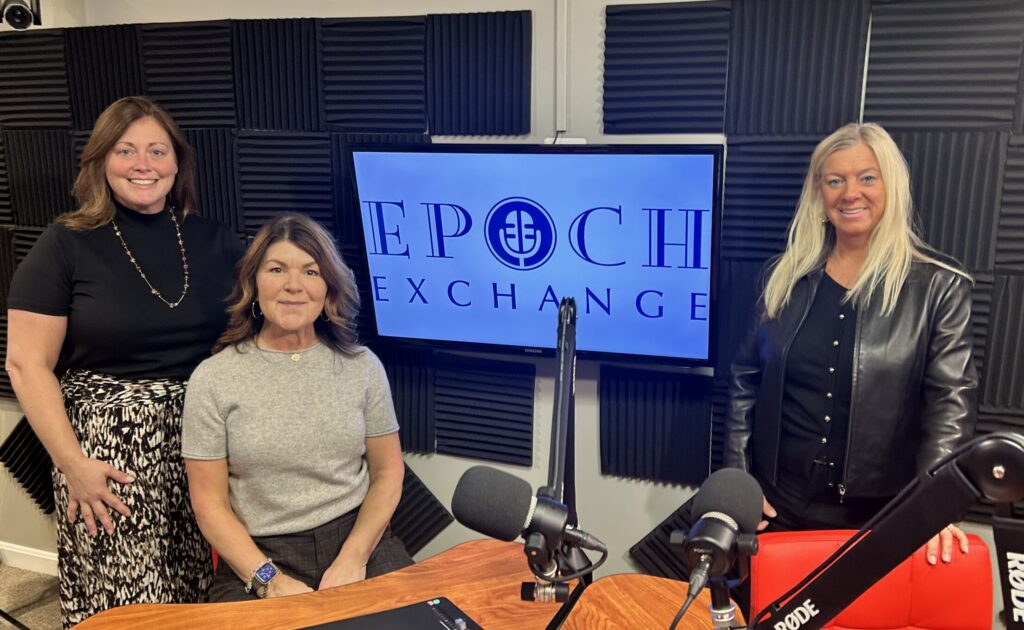
In this episode of the EPOCH Exchange, Sarah Turcotte and Wendy Sage-Matsis welcome Kate Granigan, Chief Engagement Officer at Alder, formerly Life Care Advocates, to discuss how families can better prepare for the changes that come with aging. With more than 25 years of experience as a geriatric social worker, Kate offers practical guidance on planning ahead and finding professional support when needs change.
We discuss:
- Why planning ahead can give older adults and families more choices before an unexpected health concern or crisis arises.
- Important conversations to have about legal documents, finances, healthcare decisions, housing preferences, and future support needs.
- How to approach sensitive discussions with aging parents
- The role of aging life care professionals in helping families navigate difficult decisions and coordinate care
- Practical first steps for families feeling overwhelmed, including how to find trusted support and begin planning without waiting for a crisis.
Guest:
Kate Granigan
Chief Engagement Officer at Alder
Episode Transcript
Welcome to the EPOCH Exchange, a podcast where we bring together experts and community voices to share insight and guidance about senior living and dementia care. I’m Sarah Turcotte, Area Community Liaison for our Bridges by EPOCH and Waterstone communities.
And I’m Wendy Sage-Matsis, Senior Advisor at Bridges by EPOCH in Nashua. Today, we are thrilled to welcome a very special guest, Kate Granigan, someone who has dedicated her career to advocating for older adults, supporting families, and advancing the field of aging life care. Kate brings more than 25 years of experience as a geriatric social worker and is currently the Chief Engagement Officer at Alder, formerly Life Care Advocates. Throughout her career, Kate has been a respected leader and advocate in the aging services community. She previously operated her own successful care management practice for 17 years and continues to shape the profession through her leadership on the board of directors at the Aging Life Care Association.
Her passion for empowering older adults and families to navigate life’s challenges with confidence and compassion is truly inspiring, and we are so excited to have her here today.
We sure are, and in this episode, we’re talking about something that impacts nearly every family at some point, navigating the aging journey and knowing how to prepare for the changes that may come along the way. Whether it’s planning ahead, recognizing when additional support is needed, or suddenly finding yourself making decisions after a hospitalization or health concern, it can be difficult to know where to begin. Today, we’ll explore some practical ways families can feel more prepared, understand their options, and learn about the professionals and resources available to help guide them along the way.
Kate, thank you so much for joining us today.
Thank you. I’m really happy to be here and have this conversation.
Yeah, and it’s an important conversation, and I would love, before we dive into the topic today, would you mind sharing with our audience and listeners, how did you fall into this aging life care realm?
Yeah, it happened by accident, really. I was working as a visiting nurse social worker many years ago and was frustrated by the really reactive ways that I was engaging with families. I was coming in after a fall or an episode or decline and part of the team that was helping them with their Medicare benefit. But it was after something had already happened. And as I say, once the wound healed, and the Medicare benefits were complete, families would say to me, “How do we keep you? You’re really helping Mom. She’s looking forward to seeing you when you visit. She talks with you about things that, quite frankly, she’s not sharing with us, and she’s now getting up and going to the senior center or looks forward to your visits and is getting out of bed when before that wasn’t happening.”
And it just really bothered me because my answer was always, “I’m sorry, you can’t visit with me anymore.” And after a while, and I was giving them the Councils on Aging and the area service agencies and all of these things that felt really okay, but disjointed. And the families, often at a distance or under their own stress with work or families themselves, really, I felt, were struggling. And so after a period of time of doing that, which I was really grateful for as a role, I realized that I needed to do something different, that I needed to figure out a way to say yes when families said, “How do we keep you visiting with Mom as her advocate and as our touchpoint?”
And so I started my own company in my basement with two small children. And just decided that this was something I thought was a need, and I was going to meet it. I didn’t really know at the time that there was this thing called, at the time, it was Geriatric Care Management, and an association that was running through, started in New York about 20 years now, or 25. And it was happening across the country with other professionals that were joining together with like-minded people doing this work.
And so I found that it resonated with me, and it was people who I could learn from and gained mentors and friends that today are still part of my life and my career. And so that was sort of where it started. It’s like when compassion becomes your passion. Yes. They always say that. Find something you love, and it’s not work. And I feel very strongly that that’s been my good fortune. Yeah. And Sarah, I don’t want to speak out of turn here, but I think you and I both, over the past year or so, are pretty much living what we’re about to talk about.
And so aging parents. Yeah. And how, oh, geez, what should they be talking about before that urgent need hits?
Yeah, that’s a great question, and one I’m really also very passionate about. A little bit of a soapbox for me, because when I did start my career, I was finding that at first, no one knew someone like me, now called the Aging Life Care Professional, someone like me existed. They didn’t know this resource and support was available. And oftentimes, if they were coming my way, it was after something had already happened. It was a crisis moment.
And while I was very good, and now my team is very good at navigating those moments, certainly, we’re really trying and seeing more people who are realizing that in that moment, your choices are limited, your opportunities are less. You’re acting sometimes out of necessity rather than choice. And so all those things really impact how that is experienced. So, we’re really working hard to help people think about planning ahead, having conversations earlier and earlier, far before most people even think it’s necessary, and really normalizing that.
And so I think for families, it’s starting just asking the question. I, too, am a caregiver. I have an 87-year-old mom. I’m a long-distance caregiver. Me too. I have two siblings. I’m one of five girls, and two of us live right near her, thank goodness. But we’re in a place of being able to ask those questions, and she’s got the benefit of my learning, certainly, although it doesn’t always work that way when it’s your own family. I’m sure you know that.
But understanding that there are options, and despite the fact that some of the choices may be more difficult, and we may not love facing them, not facing them makes it worse. Well, it’s so easy to put off when things are going well, and we’re not really paying attention. So what are some things that you’re seeing that family members are kind of putting off or not really planning ahead of time that are creating unnecessary challenges for them?
Sure. Everything. Just to be frank, I think there’s a lot of things. We try to think about it in buckets. Our approach as aging life care professionals, I’m a social worker by training. I have a master’s in social work. Our team are other healthcare professionals, nurses, physical and occupational therapists, gerontologists, social workers, all of us. But we’re really trained, and we expand our knowledge and our experience in a holistic approach. So we’re not just looking at what the medical diagnosis or need is, or where the housing should be, or the legal, but we’re looking at all of that. We’re asking questions, and we’re helping people think about all of those areas.
So that’s what I would expect that would be beneficial for families to think about. Think about legal. What kinds of documents are there that identify who should help, should your loved one not have the ability to make decisions, pay their bills, even temporarily, while they’re having a knee or a hip surgery. Who should help make those medical decisions? So that’s a healthcare proxy and a power of attorney. Those are things that you should have done now, and you should visit regularly. So, the legal aspect, certainly, and there are attorneys that are specializing in doing that, elder law attorneys, and there’s resources for that.
So get familiar. A lot of people say, “Oh, we did our documents. The attorney that helped me buy my house also put together my will.” Well, when was that, and is it up to date, and is it even accurate?
Yeah. So really taking time and looking at that. That’s a very concrete thing that you can talk to your aging loved ones about. It’s not threatening, but it’s something that’s critical. Finances, same thing. A lot of older adults aren’t interested or comfortable talking about those things, or their kids. You don’t need to know every dollar and cent in the bank, but knowing who is your financial planner, who is on there, if something were to fall off or something, they noticed something was wrong, who should they reach out to?
And making sure that those connections are made. And then it comes down to things like healthcare. Who are your doctors? Is there a HIPAA release, so that if there’s a need to communicate with a doctor, am I able to do that as an adult daughter or son? And then housing, one you all know very well. Now, where do you want to be?
A lot of people we know, everybody says, “I’m going to age here. I’m going to live at home.” Well, what does that actually look like? Because a lot of people think home is just what they’re in while they’re well and mobile, and those stairs are no issue, and those doorways that are narrow are not going to be an issue. Well, they could be, because of a walker, a wheelchair, a change in status. So, those are things that people can look at now. Yeah.
And if it is the plan, that’s great. Then make those plans. But we always say have a plan B, and that’s another thing we help people look at. If you can’t be here, where else might you want to be? And how do you know? So maybe becoming an educated consumer before you need that is one of the things we really try to help encourage people to do. And that becomes another one of the areas, is social and emotional connections and community. People think their home that they live in now with the neighbors that they can see is going to stay the same, and it doesn’t. We know that.
And people move away, or neighborhoods change, or access changes. People become more isolated, and yet we know isolation is one of the real challenges that people face and can be really detrimental to our loved ones. So those are all the parts and pieces that we help people think about.
And you touched on something In the middle of that about you don’t have to disclose everything- Yeah… and sometimes those conversations are hard.
How do you start the conversation?
Sure. Because none of us want to think about- I know… oh, if and when I- get old- Right… or need care, et cetera. It’s so hard. It is. So how do you start those conversations? It’s probably not a Thanksgiving dinner convo.
I would wholeheartedly agree with that. We say that to people. It’s so funny because so many people are living busy lives, and they talk to mom. If you’re at a distance, you have a weekly phone call or face time. But, in 20 minutes, everything looks okay. So it often is like a Thanksgiving or a Christmas or a holiday where you see mom or dad live, and you say, “Oh, gosh, it’s not what I thought.” Or they were saying things were fine, but they really aren’t.
And so I think, ideally, normalizing those conversations. I always say, I’m getting up there. I have adult children. I have a grandchild. It’s like they deserve– I don’t know what could happen to me tomorrow. And so I think normalizing it, and I always say modeling. If you’re an adult child, what’s your plan? What have you done? And so sometimes it’s saying, “Well, what can we do together? I just heard this podcast. I just went to a webinar, and they were recommending these things. I’m going to do that.” It led me to remind myself, I need to ask you, “What do you have done? Where are your documents? What could we do together to make sure all those things are in order?”
It’s a really great idea. Yeah. Start with yourself- Right. Yeah… and then it’s easier to ask, “Oh, hey- “Oh-… what’s your plan?”… have you done that?”
Yeah. And finances are sensitive. And quite frankly, one of the things as a clinical social worker I am very keen on, and I’m sure you all know, all families aren’t created equal. And I always say, “There is no perfect family,” and if you say you have one, you’re not telling the truth. So- That’s true… we all have our little quirks. Everyone has a dynamic. We all have dynamics. And under stress and strain, we fall back into old habits and roles that may not be helpful.
And so, that’s another argument for having conversations early, not under duress. And if it’s not a comfortable conversation with a family member for whatever reason, because let’s face it, some adult children are not managing their own finances well. So you may not want to assign them power to your finance, but then who? And so I think just being realistic and knowing that it’s okay, that that might not be the right person. But it doesn’t mean don’t address it. Yeah. It just means you need to think through it.
And that’s often where an aging life care professional comes in. Oftentimes, parents, older adults, are more comfortable talking with us about this. We have no skin in the game. There is no emotional baggage, or we have no– whether you choose to do one choice or the other does not impact me personally. And so I’m often a person that someone can have a frank conversation with that helps that dialogue. And sometimes we can just guide that older adult to making some decisions that they can then put in action.
And then they can allot knowledge to their kids. ” We’ve assigned these people. This is what we’re doing. These are the professionals we work with, and they’re the ones you can contact if something should change.” Yeah.
It’s really a gift and giving a leg up and honoring someone’s values and legacy and their wants and wishes. And you guys are doing really great work with that education. And again, it’s just getting yourself there, right- Yeah… and when you have the time to do so. And as you were saying earlier, not every family gets that gift of having the time because they often fall into a crisis situation. Yeah. And when folks or families are falling into a crisis situation, what are you seeing happen? Where are they finding the most challenges when these situations abruptly happen?
Sure. A lot of times it’s a well-meaning family member that believes they have a pulse on the situation, and yet they haven’t really recognized that dad’s dementia has progressed, and mom is covering up for that because she’s as a caregiver. She’s doing the things that maybe are slipping for him. And the crisis comes when then mom has a fall, or Mom is in the hospital, and all of a sudden, Dad isn’t able to take care of himself, and the family has to mobilize around that.
So a lot of times it’s because they haven’t particularly been able to approach some of these topics, or it’s been a challenge to get Mom or Dad to agree to approach those. We always say, adults have the rights, and it may not be what we believe should be happening, but they have the right even to make bad choices. Yep. And so as a family, often the crisis is because those things haven’t occurred for whatever reason.
And I think sometimes what we offer is calm in the chaos. We offer the ability to take that really heightened situation and emotional, very often charged situation, and help them sort of bring that down, prioritize where the focus needs to be. Often, we can really take the ball and run with it, help them with identifying the appropriate resources that are our trusted, embedded resources- helping them navigate healthcare systems and insurances and things they may not be familiar with at all, and that quite frankly, aren’t intuitive, and aren’t always easy, even for us as professionals.
And then we can help guide them, and prioritize, and then often we can take things off the plate of the family so that they truly can be son or daughter at the bedside, or managing their own job and family because something’s prolonged. And so being a trusted advisor and support to families is really a way that we can help them despite the sometimes the very difficult crisis that comes their way that really truly wasn’t anticipated.
How do– Oh, go ahead, sorry. How do most people get connected to you?
Yeah. A lot of different ways, quite frankly. And more and more, thank goodness, people are beginning to not– In my early days, people would say, “Oh, my friend told me to call you, but I don’t even know what you do or why.” Or, “What is a aging life care professional, or what is a geriatric care manager?” And so we’d spend time first educating and then talking about what we could do. Very fortunately, over the decades of time, we’re becoming a little more known.
And so we work a lot with trusted professionals. A lot of folks may hear about us first from their financial planner, a trust or estate attorney, or elder law attorney. They may hear from us, to, through- hear about us through their doctors or their primary care specialists, neurologists, because they’ve gotten a dementia diagnosis. They’ve heard of us through folks like you, where somebody’s touring because mom or dad is clearly needing to make a change, and they’re just not sure how to even begin.
So in the course of seeing you, they also are trying to figure out navigating that move and getting mom or dad to agree, and how do we help them stay safe while we’re on a wait list, and navigate the conversations with my siblings, and all those things. So, we have a vast amount of people who, quite frankly, send their clients or their patients or their family and friends to us, and that’s really how we get introduced.
And when people contact us, first and foremost, we want to be a resource. So we have an initial engagement that is complimentary, and they call and speak to one of our client specialists that they themselves have done the work, and so they keenly relate to what that call is about. And really the first part is just listening, and listening for where their strain and stress is, what’s keeping them up at night, where they may be stuck, and then talking about how we can help guide them.
And in some cases, we may be recommending something different because we’re not the right match. And in other cases, it’s very clear that we’re going to be able to be a support and have impact. And, at that point, we help them sign on and meet one of our team, and then that person becomes their person. Yeah. Great. And it’s really beautiful work that you’re doing because it really does, I think, help take the pressure off of having to navigate so many different avenues that a caregiver has to navigate, but also just the experience and the knowledge. Most caregivers have never had this experience, so it really takes the pressure off of, what did the doctor say?
What does that mean? What does that make our plan? And I think, it’s just really reassuring, because I would love for you to share, you touched on the resources. I think that there can be a misconception of resources and what’s available for families, and sometimes they’re offered a resource that’s not the best fit, or it’s just a shot in the dark, and they reach out, and they’re not getting any type of help. So I would love for you to touch on that a little bit. Sure. Yeah, I think that first, it’s very confusing.
There is no one source of truth for the resources out there, which is challenging when you’re trying to find the best match and the right match and fit for your family. And so, we have many, many members of our team out there in the world, touching these resources that people need but may not know it, or they may not know how to vet those resources. They may not know how they’re paid for. There’s a lot of misconceptions about that.
And so really, our resources are ones that we’ve used for decades with our clients, and they’re tried and true. They’re people who we trust to refer our clients to because they’ve shown time and time again to be able to meet their need with compassion and care. They understand the delicate nature of what we’re offering, and they are very responsive to us and to our clients, and that’s really critical for us. It’s important to note that we do not get referral fees. We work for our clients.
Our clients are paying us directly for our support and guidance as a consultant, much like you’d pay an elder law attorney or another consultant. And so we’re working for the client only. And that’s a big difference that a lot of people don’t understand. There are quote unquote “free resources” that they can use, and yet those folks are not– Which is fine, because everybody has a different need and a different financial position and ability. So, I don’t suggest that’s not something people can consider.
I think what they need to understand is what that is versus what you’re getting when you’re hiring somebody that is a clinical trained professional with an objective view that is working only for them and not giving a referral because they’re going to get a fee back. Yeah. And so that is really a distinguishing factor in the aging life care space. And so, I think helping families trust that you don’t need to know everything, and this is your first time down this path with your 80-year-old dad. We’ve walked this path with 80-year-olds and their families for years and years, and we can get you to the answers quickly and efficiently.
And not all resources are created equal. And so we need to give them– We do a clinical assessment, so we’re sure that we’re sending them to the right place at the right time. And I was going to say, your team are trained professionals, aging life care professionals. They’re nurses, they’re social workers, they’re PT, OT, the list goes on. And it’s a resource that you’re looking through this clinical lens, how is this resource going to support this family?
And I think that’s so important. I agree. And also, there’s so many things that come up for a family in need. And you touched on the basics, and we all can probably name off the first three or four, the insurance and PT, OT, but what about some of the down and dirty stuff? Transportation, how are you going to get to and from appointments? What else are families not thinking about that you guys have access to, and you’ve vetted those resources?
Yeah, that’s a great statement, because the list is long and growing every day, and our job is to make sure that we have an up-to-date pulse on these resources. If they’ve changed, we want to know it. We’re constantly using our team. One person is working with the family, but they’ve got a deep bench of people that are finding the obscure resources that you wouldn’t even know you needed. Yeah. We’ve done things like help people get mobile pet sitters or baths. We’ve been able to help people fly across the country with a transport nurse. We’ve helped people organize their belongings with move managers. The list goes on. We attend doctor’s appointments with our clients, if that’s one of the things they would benefit from, and we report back to the family and to the communities they live in to make sure that all the important information, medication changes, protocols, and the like, is communicated.
So we really become one source of contact for that family, and they trust that we are going to know and find. If we don’t know it, we will find it. And what we are very fortunate to do, because we’re not beholden to Medicare or other insurances or other sort of limiting ways that we work with our clients, we get to be incredibly creative. We are able to support them and all those needs, and we will find.
If there’s a resource out there, we’ll find it. And our job is to do whatever it takes, as long as it’s within our ethics and our code of best practices, which we abide by through the Aging Life Care Association. That is another big piece that families should understand, that if you’re looking for help like this, you should be looking at that association because by being a member, we have to have certain criteria and certifications, but also, we’re bound by the ethics- that we’ll be in their best interest.
So important. It really is. And this is really just great advice, Kate, and I really want to make sure that before we wrap up, that you were able to share everything. I feel like we could talk for a whole hour- Yeah… and unfortunately, we’re limited on time. But just some practical advice, because most of the families who are reaching out, I first also want to share, this doesn’t have to be for a crisis situation. Aging life care professionals are also finding meaning and quality of life for people as they age. Yes.
So I want to touch on that, but also just, besides the quality of life, if someone is feeling overwhelmed, where do they begin? So if we could wrap up on those two pieces- Yeah… that would be great. Sure. Yeah. Where they begin is just, I think, first taking a deep breath and knowing you’re not alone, that there is help out there. I think that’s key. And then reaching out, just making a goal to do one thing today.
If you’re hearing this, do one thing. Make one phone call, make one plan, and follow through. Get an accountability buddy that’s going through this, and use that- Right… as a way to move forward. And one other thing. I would say it absolutely doesn’t have to be in a crisis, and I would really hope that people are listening to this and thinking, “Don’t let it be a crisis.” Reach out sooner, get some knowledge, have a contact.
A lot of folks work with us, we call them our planning clients. Some of them are solo agers, they don’t have family at all. And we become that contact, and the best time to talk to us about that is when you’re well. Because we want to know you well, we want to hear your wishes, and we want to make sure we can support you in making sure that happens all through this process. So I’d say start today. Reach out, make one contact, make a plan, have one conversation, and we’ll be there to help if we can.
One small step. This was really, really so great, Kate. Thank you so much for being here, sharing your advice and insight to the families and caregivers that are listening in today. Yeah. Thank you. Everybody needs a Kate. Yes. Thank you, Kate.
My pleasure.
She’s wonderful. They sure do. And thank you all for listening in to “The EPOCH Exchange,” and until the next time, we’ll see you soon.