Listen/watch our EPOCH Exchange podcast episode below:
Released May 2026 | Duration: 29:04
In this podcast episode, Sarah and Erica are joined by Wendy Kaufman and Holly Davis, Executive Director and Wellness Director of Waterstone on High Ridge. Together, they paint a picture of what the continuum of care looks like at their wonderful community.
We discuss:
- What a continuum of care means, and how independent living, assisted living, and memory care can support residents as their needs change over time.
- How Waterstone on High Ridge helps residents age in place while maintaining friendships, routines, dining experiences, and community connections.
- The differences between independent living and assisted living, including support with activities of daily living, medication management, nursing oversight, and individualized service plans.
- Signs that a resident may benefit from memory care, including safety concerns, wandering, increased anxiety, confusion, or difficulty managing the day.
- How couples with different care needs can remain connected in one community, with support and flexibility from the community team.
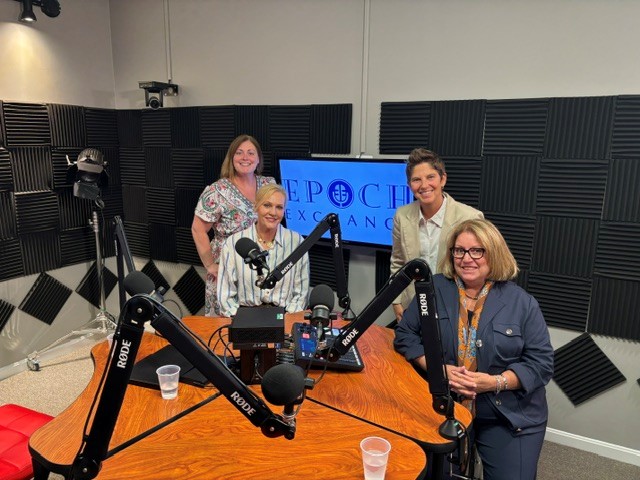
Guests:
Wendy Kaufman and Holly Davis
Executive Director and Wellness Director of Waterstone on High Ridge.
Episode Transcript
Welcome to the EPOCH Exchange, where we bring together experts, caregivers, and community voices to share insight and guidance about senior living and dementia care.
I’m Erica Labb, Director of Team Member Engagement and Culture at EPOCH Senior Living.
And I’m Sarah Turcotte, Area Community Liaison for our Bridges by EPOCH and Waterstone communities. Today, we’re talking about the continuum of care, what it means, how independent living, assisted living, and memory care can differ, and why having those levels of support within one community can be beneficial for older adults, couples, and families planning for the future.
We are joined today by Wendy Kaufman, Executive Director of Waterstone on High Ridge. Wendy brings 25 years of experience in senior living and oversees daily operations at the community, helping ensure residents have the support they need to feel healthy, engaged, and secure. We’re also joined by Holly Davis, Wellness Director at Waterstone on High Ridge. Holly is an RN and oversees all nursing care at Waterstone on High Ridge.
Holly has over 15 years’ experience as a nurse, including opening the community with Wendy in 2022. The dynamic duo, welcome to the show. Thank you.
Well, thank you very much for having us.
Yeah, so happy to have you here. We’ll jump right in. Yeah. So, as we know, all of us are aging. It sure beats the alternative, but as we age, our needs change, and a community like Waterstone on High Ridge, which offers independent, assisted living, memory care, can provide flexibility and peace of mind by allowing residents and families to really plan for different levels of care over time.
So, could you just tell us a little bit about Waterstone on High Ridge, and the different levels of care that are offered there?
Well, Waterstone on High Ridge is in Stamford, Connecticut. It’s in a very nice area, North Stamford, about 50 miles from New York City, so we have a very robust clientele. And currently, we have 88 independent living apartments, 34 assisted living apartments, and 22 memory care apartments in their own memory care neighborhood. And as I said, the bulk of the community is our independent living folks.
So, those are the folks that really drive their car right into the garage, move into their two-bedroom, two-bath apartment, and they choose their own day. They can go down to meals. They don’t have to go out for our meals. They can go out to eat.
They can go out and play tennis. Some of them are still working. So, it’s independent living, it’s just that. Some of the independent living folks have aged in place, so they may not be driving, they may give up the car and use our town care car service. We have black car service, and choose to have all the meals, because it gets tiring to make meals day after day after day.
Yeah.
So, you rely on Dave, our Head Chef, to make his wonderful meals.
I’ve had the pleasure of eating there, I have to say, like to die for. It is. To die for.
He’s a Michelin-trained chef. Yes, it shows. Yeah.
The menu is prepared similar to what the Stamford Yacht Club might be having.
Wow.
And he’s worked in New York City, so he’ll do soft shell crab or veal chop. That’s what you can plan on day by day, but if you want macaroni and cheese, you can get that, too.
Yeah.
So- Best of both worlds, truly. Yeah.
It really, it is. So, we also have our assisted living neighborhood, which they’re all connected, so it’s not like you go from one building to another building, and it’s modern farmhouse. So, you have that modern farmhouse feel throughout. So, you’ve got the beams, and you’ve got the glass, and you’ve got the charm in independent living, and it flows through all three neighborhoods.
So, if your parent or you should be needing those different neighborhoods, it’s not much of a change. You don’t want to move twice in your lifetime. You want to move once, right?
Mm-So, and then in assisted living, it’s the same dining team, everything’s the same kitchen. You get the veal chop, and the soft shell crab in assisted living, and in Bridges. So, you may have the meat cut off the bone up in Bridges, but you still get the veal chop that everybody has grown accustomed to when you’re in IL, or independent living.
Right. So, talk a little bit about the difference for our listeners and viewers of between the independent and the assisted. What comes into play once you switch over to assisted? I don’t know who wants to answer that one.
I think you guys are really sharing everything that Waterstone encompasses in the services, right? It’s like this continuum of care, right? And it’s really allowing your residents and seniors living there to truly age in place. And as you were sharing, everyone’s journey is different. So, just talking about what that continuum of care really looks like to somebody.
So, we’ve had somebody that moved in, a superintendent of schools in Stamford, and a very popular woman, moved in the ’90s.
She moved into one of our beautiful one-bedroom deluxes. But slowly, she had a couple falls, so the son would come in, and he’d say, “Wendy, I want to look at assisted living.” And we’d look at the better apartments in assisted living, and she had a couple more falls. Coming downstairs for meals was more of a challenge.
The family had to put some care in place to make sure she got down safely and was cared for correctly. And then as soon as the right apartment opened up, I knew it. I called him. It took two minutes for them to decide, because it was all windows, it was a corner unit, and it was right on the first floor.
So, her travels to meals, which were her most important thing, were easy. So, she moved to assisted living, and she took a good portion of her furniture. Not all, because it’s a little bit smaller.
And now the CNAs and Holly have taken over, and she’s doing well. She’s doing very well. Right.
And you know- And what are the services that your team are providing?
So, in assisted living, we’re governed by the Connecticut Department of Health. It’s under the Assisted Living Services agency. So there’s nursing 24 hours and there’s CNAs 24 hours as well.
So the emphasis is on the residents in assisted living being chronic and stable. So, what does that look like?
It looks like there’s less skilled nursing care and more of an emphasis on the activities of daily living, meaning bathing, dressing, toileting, escorting, transferring. So all of those would be devised under a service plan. And they can sort of increase as time goes by- They can increase, if needed.
Wow. Okay.
The service plan is specific for that resident. We try to individualize as much as we can, while maintaining their autonomy, I always say. We do want them to be independent and to feel like they are independent.
And you already know them, right?
We do, right. I mean, that’s kind of the beauty for the resident is-
Yeah. you met them as an independent person, so you know them.
Yeah.
What would be important to their dignity and-
Well, they don’t lose their friends. Right.
So, this resident recently was invited to go to the city, so one of the independent living residents drove his car and took her to see something at the Met. So you maintain those friendships that you have created over the past. She’s been there four years, so she’s got some good friends, and that’s really important because we tend to lose friends as we get a little bit older, and it’s more difficult to go out and see them, but not at Waterstone. You’ve got almost 170 people that you have maintained friendships with, or just dining friends.
And, I think that is really the reason why we’re so successful, is because of these deep friendships. And you don’t have to be from Stamford. A lot of people are coming from Westchester and other parts of Fairfield County, and it’s all about the socialization, and I think that’s what is the big draw. The meals are important, obviously, and the ambiance is, but the socialization.
Even if one of our residents from assisted living or independent living move up to Bridges, they may recognize their friends because they were dining with them in the other neighborhoods.
So we try to kind of match them up a little bit. And, you remember her from downstairs, and eventually they all become friends again.
Wow.
Yeah, and I love how no matter the weather, you have this place where you can see friends, because so- there’s so much isolation for seniors, and no matter what stage you’re in as far as your aging or your cognitive abilities, you still have that.
Those friendships, that social connection, that connection with community, which brings so much joy, and you don’t have to-
Mm-move again, to your point-
Yeah. and lose all that and start all over. It’s like, “Here’s a team to just sort of be there to-
Right. to boost you.
I find that a lot of the residents will say to me, if they’re moving from IL to AL, they’re like, “Oh, yes, I’ve seen you. Oh, I’ve seen your staff. I’ve seen your nurses.” They’ve been there a long time.
Yeah.
So it’s not just their friends, but it’s also seeing the same faces of the team members that are there, that really-
The longevity is wonderful. yeah. The retention of our team.
We introduce Holly. If I know a family is looking at assisted living and, or even Holly sees me touring a family from independent living, I’ll bring her right in. Because you want a nurse when you need a nurse-
Right.
But then you don’t want a nurse. Right.
And so she’s there when you need them, but they’re in the background if you don’t.
Yeah.
Sure, yeah. So, talk a little bit about that handoff. So a family’s moving in, presumably most of the time to independent. How are you letting them know about all the services? Are you doing that upfront, so they know it’s coming? Can you talk a little bit about that, how you introduce the continuum?
Well, most people come aware of it.
Okay.
They are somewhat aware of it. It’s funny, you don’t want to know about assisted living until you need assisted living. So we’ll let them know that the services are available, we’ll let them know of our staffing, and they will ask about our staffing levels. And obviously, most families do look at independent living and assisted living. Most do not look at Bridges until there is a real significant cognitive decline in the resident. So, we kind of read the resident. We read the family. If they start shutting down when we discuss clinical services, we may change our topic to dining.
Because families, it’s a tough topic to throw clinical services at somebody when the resident hasn’t even admitted that they’re having trouble with medications or showers.
Right.
So, we have to kind of guess, read the families, and then get to know the resident. Once the resident moves in, we may have Holly do an assessment even beforehand to get a reading on where they are in their journey. And by then, you probably have, sorry to interrupt you, but more of a relationship and a trust.
True, true. Yeah.
That- Yeah. And you look at the resident, how are they managing their day currently?
Right.
In assisted living, can they open that door and have some idea where they’re going? Are they safe behind the closed doors?
Right.
Just to some extent. So you just look at all those- Right. like really, what is the assistance that they currently need.
Well, it’s a big change. Any senior who’s considering moving into an independent living setting or a senior and family considering assisted living, it’s a big decision, but I think it’s helpful for families to know and have an understanding and the education before there’s an urgent need.
So what would you share with families, just some pieces of tips or education of why it’s so important to get this type of education on the continuum of care before there’s a crisis of some type?
Well, I always say to a family, knowledge is power. So, if Mom does have that fall, and it turns out she can’t be in that apartment alone at night anymore because the next fall could do her in, knowledge is power.
Sure.
And if they know me, they know Holly, they know that the apartments are a little smaller over in assisted living.
The dining room is a little bit smaller. It’s a smaller version of our independent living community, but it’s the same. And so, I try to, like I said, we try to read the family and know what knowledge they are really looking for. And I think if they do start to trust us, and they like what they see, they’ll ask for more information, and they’ll probe more.
Sure.
I’d like to just take a moment to dive into each of these levels of care and support that you’re offering right at the Waterstone, and just starting first with independent living. What is independent living? I’m sure people have these ideas or maybe even misconceptions. Can you give us an idea, or how would you describe what independent living is?
Well, you are truly independent. There is a concierge that you can call if you’re not feeling great, and we will call 911. There is a pull cord in the restroom if there’s a problem. But we are providing housekeeping, meals, the black car service, a whole life enrichment program, an entire gym, a pool. We’ve got personal trainers.
Oh, sorry to interrupt. Yeah.
The goal of independent living is to stay in independent living, and that’s why that gym is so prominent in our daily life. It’s when they’re not so independent anymore is when the red flags come up. If someone’s not getting their mail, if someone’s not showing up for meals, that’s when I have to do some research and see what’s happening.
Sure.
And the restaurant manager is very good. He’ll tell me, “Oh, Mrs. Smith hasn’t been down in days,” or, “Mr. Smith has been coming down without Mrs. Smith, and he brings a sandwich up.” And I’ll figure, what’s going on?
So, he is like my detective, and he lets me know when something needs some research. But independent living, you run your own day. Yeah.
You can wake up at 9:00, wake up at 7:00, wake up at 1:00. It’s what you wanna do. We encourage them to get out of the apartments because we’re offering a continental breakfast. We’re offering lunch, it’s included in the rent, and then obviously, a five-star meal for dinner.
And events and like-
Oh, happy hour and-.
We try to do. We’re planning our Great Gatsby dinner event-
Ooh.
In the summer, and we’re doing a luau.
We get a huge Mother’s Day brunch. We try and do events that bring the families in, too. Because the families, they need sometimes something fun to look forward to.
And so they’ll say, “Oh, come and look at the flowers,” because we have 12 acres of property, and we do a really good job with our landscaping. So even just walking through the acres and acres of property is something to do on a cooler afternoon.
And you provide many opportunities for learning and wellness. I know when I’ve been to your community, there’s. You mentioned the gym, but even on the menu, you can order healthy food. So you’re promoting independence and wellness at all levels, which is empowering, probably, for your residents.
Well, and even with the residents that, as much as I’d like to see a resident doing something every day or being out, I have to respect them, too. Because if you were sort of a homebody for the past 70 years, you may not be changing at Waterstone.
But I try to, and Vinnie, our Life Enrichment Director, and the whole team, try to get them out. And we work on it. We talk about it, we have morning meetings, and we discuss who’s moving in successfully and who’s not. So, we might find out, well, they do like the flowers.
I have a garden that’s being prepared as we speak, and so maybe one person will just come out for meals and the gardening. So, we try to figure out what it is that they like and what they’ll come out to.
Meet them where they’re at. Nice to have the options, though. Nice to have all these different lifestyle options to fit all the different colorful people that might be residing there, all while just having that reassurance that if I do need something, it’s readily there and available.
And so now you’re saying, so now we’re kind of keeping an eye on folks, and if there are changes, and we identify that someone is now more apt to be successful in assisted living, just sharing what a day in a life looks like, because I know there are some similar things happening for your assisted living residents, but much more support.
Yes, a lot more support, again, would be with all activities of daily living. That would include medication management, which is a huge part of what we do.
Sure.
So, if we’re managing their medications, we’re doing that from getting the order to recording it on the MAR.
It’s just the full spectrum of that. And then making sure they take their-
And making sure, right.
And it could be either a nurse giver, a CNA, or a med reminder, depending on what the regulations are for that particular medication. And again, I say, like in the assisted living, it can be as much care as you need or as little.
We do try to maintain their independence. We can certainly be there just cueing. It can be just someone who can’t bend over and tie their shoes and needs med management, or it can be for somebody who really doesn’t have bed mobility at the moment. Right.
So, most of them are moving in with us, I would say, at a fairly good level of functioning because if you look at that community and all that we offer, it’s nice that the residents are still enough function so they can get out and enjoy all that with the assistance of all the ADLs, okay.
Yeah.
And then at that point, the activities folks are coming in and inviting.
And inviting. Okay.
Exactly.
So, the care plan would say, for example, 2:00: escort to fireside chat. Mm-
4:00, bring to the one-day university. So, we really, really try to promote a care plan that is individualized for the resident. But again, as far as the oversight of the care, 24 hours a day, there’s eyes on. We’re always checking in on our residents.
So, if somebody falls, you know right away. The residents are wearing-
Okay, yeah.
The difference is that residents are wearing the pendant.
Yep, okay.
So, they activate the pendant wherever they are, and we respond immediately.
Right.
And that would be a nurse assessment, et cetera.
Yeah, no, that’s really great support. Yeah.
And I think it’s important to know that, especially in the Waterstone setting, that they’re able to get the support but still have access to the amenities and spaces that they may have been used to in independent living. Right.
And like you were saying, fostering those relationships and friendships that were made, even though they’re now living in a part of the community where they’re receiving more support, they still have those accesses.
Yeah, to find food and-
Yeah. Well, and even if you’re an artist, you have access to the art room.
Yeah.
You have access to the art shows and the art gallery. Right.
So, it doesn’t mean just because you’ve moved to assisted living that that hobby of yours has to go away. I mean, even the gym, the personal trainers go throughout the community. The personal trainers touch on every single resident.
Wow.
And, just thinking of this, so now this support is great, but I also know within our settings, there are many seniors, I mean, let’s face it, cognitive impairment does happen. There is forgetfulness as we age, and some people do or may develop dementia or cognitive impairment that needs more support. I mean, people can live in assisted living with mild cognitive impairment-
Mm-mm-
Or early-stage forgetfulness until they need more comprehensive support.
So I think it’s important for families if their loved one is in this assisted living setting, what are some of the signs that you’re seeing that a resident may be better supported in a memory care environment versus the assisted living when they’re making that change from assisted living to Bridges?
Well, safety first.
Yeah, absolutely.
Safety first. So Holly and I are the same.
There’s some red flags. If the person starts wandering at night consistently, they’re walking out the door, they’re doing anything that could put themself or somebody else in harm. Those are the huge red flags. But then you just look at how is that resident managing their day?
Are they really, really able to even get to the elevator, and have some sense of where they’re going. Some way, they’re not getting lost in the community. We see sometimes residents starting to just fail in that sense. They’re being very repetitive, going to the AL desk and saying, “I’d like to do this,” but then they’re forgetting that they did it, and it’s going back and forth.
Or the security guard will text me at night and saying, “So-and-so came down for breakfast-” Breakfast. Yeah, right. at 2:00 in the morning. And he ran and got a couple granola bars and escorted them back and let the nurse know.
Yeah.
But the security guard, believe it or not, is one of my, again, one of my detectives, that lets me know something’s up.
I love that. Yeah.
And then you have the nurse there that can assess and do a little bit of triage about, is this an acute issue, like you’re dehydrated or whatnot?
Or is it just a one-off?
Yeah.
Or is this something that we need to start preparing now?
Right.
A lot of the residents with cognitive decline, they have some awareness and a lot of anxiety and apprehension occurs. They become very tentative about their day and how to manage it. So the great thing about our memory care community, it’s small, it’s very intimate, but there’s always a presence of somebody, whether it be a resident or a staff member. So that alleviates that fear.
They feel like they belong. They feel like they’re in the right place. They don’t- And if they walk out of the apartment, there’s someone there. Yeah.
There’s a sense, right, and there’s an energy, and it pulls them to where, oh, and then they’re not, that fear. Because it’s a fear that they have, and it makes them just so afraid. And-
Yes, they get lost. Yeah.
Yeah.
They really do. And sometimes, a resident may even have a private aide with them during the day. And is that really the way a person wants to live?
Right.
So up in the memory care, they have their smaller apartments, but the rest of the space is their home.
Right.
It’s their living- It’s secure, but they can walk freely. That’s one thing people think, when we talk about memory care, oh, there, it’s secured, it’s-
Locked down. Locked down.
It’s not locked down.
It’s not. I say behind that door-
Yeah.
There is more freedom probably than people realize.
Last week they went to the Bruce Museum in Greenwich. It was wonderful-
Wow.
To see them go. And the Bruce Museum has just been redone, and it made me feel good inside that we could support them with this.
Yeah, right.
That the great opportunities in the area are open to them as well.
Yeah, yeah.
Talk a little bit about couples and how your continuum of care can support people that are coupled but that maybe have different needs. How does that work?
Well, we moved in our first couple, our first month that we were open, one moved into an independent living apartment, and the wife, spouse, moved into our Bridges neighborhood. And they’re both on the fourth floor, so he was able to visit whenever he wanted to and also had a view of her room, so he could keep an eye on her. It’s not easy.
We recognize it right when they move in, and it’s very common that one couple is in a different place than another couple. So, we’ll know right upon them moving that this is something that the couple is looking at.
And how do you support that decision, and how do you support them with.
A lot of meetings.
A lot of meetings, right. A lot of phone calls, a lot of texts. A lot of just letting them know it’s okay.
Yeah.
It is okay. You’ll be under the same roof. We had a resident that moved her husband up to our Bridges neighborhood, then decided, “No, this isn’t working.” So she moved into our assisted living herself, moved him back down to our assisted living, decided this isn’t working.
It’s not working, yeah. She moved back into independent-
She moved into independent, then moved back to-. and he moved back to Bridges.
Wow.
And she’s an amazing lady, and she wants nothing but the best for him.
Kudos to you all for just doing that. Yeah.
Even sometimes you know, because you’re the experts, right, you know what’s going to work and what’s not, but allowing for them to try. Try something.
Yeah, exactly. well, they’re, we’re a family. We see them more than their family does, so I have to respect that. And I see how much she loves him and how she’s trying to make this work.
Yeah.
And it’s so painful for her. So we have to figure out a way. It may not be the right way, but he was safe. Right.
And then we even have some families now on a waiting list because we sometimes don’t have an apartment, and they may have to stay in the independent living neighborhood. And I have to wonder sometimes, is this the safest thing?
So, we just have to keep an eye on it, and we offer spousal support groups, and Our memory care neighborhood, if they wanna come up and take a look at an event that’s going on up there, we have all sorts of specialized things that go up for our Bridges residents. It’s not a secret place. That’s what makes it so special is that they are receiving the same great quality program opportunities that you would in independent or assisted living.
It’s all in how you’re adapting it to make it possible. I even think about the food. We didn’t even get to talk about the proactive brain health food that you have for independent assisted living or the Bridges residents, but they are getting the same quality and same caliber at every level when it comes to programming, the dining, and the care experience. And I really think that’s what makes you guys so unique and special at the Waterstone communities.
It’s true. Yeah.
Wow. As we come to a close, thank you so much for all this information. Just sort of final thoughts for our viewers and listeners on next steps for folks exploring these sort of options, particularly independent and assisted. But what do you advise for them to think about as they explore this option?
Well, we do experience stays. We have a guest suite, and so someone can actually stay a weekend. We arrange for them to have meals with other residents. Just come and take a look around.
It’s not scary. It’s not. It’s really not scary, and I’ve been in this a long time. I sometimes take for granted that people. I’ll be at a doctor, and he’ll say, “What do you do?” “Oh, I work at Waterstone.” He doesn’t know what it is. I assume everybody knows what this is.
Yeah. Sure. So come in, take a look, do some research. We have a very positive reputation in the community. Look at our reviews.
Reviews. Yeah.
Talk to another family member. Just do some, again, knowledge is power. Yeah.
Do some research. And any place like a Waterstone would have families that are willing to talk to you. So if you call them, and you say, “I’d love to come in for lunch to learn more,” and say, “I’d like to speak to a family,” they’ll give you phone numbers of people that you can call.
We have a welcome committee, so they can actually join one of our meetings or even one of our lunches.
Wow.
I’d like to sign up for a guest opportunity. For a weekend.
Yeah. Sounds great.
You wouldn’t have to ask me twice.
No, this was really great. I really appreciate you guys sharing just your expertise and what you’re doing every day to make Waterstone so special and supportive to the residents that live there, and-
Yeah. if any of our listeners, please reach out to any Waterstone or Bridges communities to learn more, and we appreciate you being here today.
Yeah, thanks everyone. Thank you for having us.
Thanks for being part of the show. Yeah.
Until the next time. Till next time. Bye. We’ll see you on “The EPOCH Exchange.”
Take care, everyone. Thank you.