“Brain games for seniors” is a common search phrase, but it can sound limiting, even patronizing. Most good brain games are not age-specific. Sudoku, chess, crosswords, Wordle, Bridge, trivia, card games, digital puzzles, art, music, and strategy games can challenge the brain at almost any age.
For older adults, the goal is not to find activities that are watered down or labeled “senior-friendly.” The real goal is to choose games and activities that are enjoyable and appropriately challenging. The bonus comes if you can play games that are varied enough to exercise different mental skills. A beneficial cognitive routine might include memory, language, attention, processing speed, planning, creativity, and social interaction.
Research suggests that structured cognitive training can improve certain cognitive abilities in older adults, and long-running studies such as ACTIVE have found benefits from targeted training programs. The National Institute on Aging describes ACTIVE as showing that healthy older adults can make significant cognitive improvements with appropriate cognitive training and practice.
Do Brain Games Actually Work for Seniors?
Brain games can be useful when they are challenging and varied, and you enjoy them consistently. The strongest research evidence is not for every puzzle or app, but for structured cognitive training programs, especially speed-of-processing training studied in the ACTIVE trial.
Everyday games may still support mental engagement, but they should be viewed as one part of a broader brain-health routine.
The most important point is that not all “brain games” are the same. A relaxing crossword, a competitive Bridge game, a fast-paced visual training app, and a painting class all challenge the brain in different ways. That variety is a strength because a mixture gives your whole brain a workout. Think of it like exercising a range of muscles in the gym.
The ACTIVE study tested cognitive training in older adults, including memory, reasoning, and speed-of-processing training. A 2026 Johns Hopkins summary of long-term findings reported that computer-based cognitive speed training was linked to a lower likelihood of receiving a dementia diagnosis decades later.
That doesn’t mean a puzzle a day prevents dementia. It means that targeted, progressively challenging cognitive training may have measurable long-term benefits. For everyday life, brain games are best understood as a way to keep practicing the skills the brain uses all the time: focusing, remembering, adapting, planning, and solving problems.
Why the Best Brain Games Are Not “Senior Games”
The phrase “brain games for seniors” can accidentally imply that older adults need a separate, simplified category of games. That is not the case.
A better way to think about it is this: a brain game becomes useful when it tests the brain. For one person, that might be a difficult crossword. For another, it might be learning a new card game, taking a music class, playing chess, using a cognitive training app, or joining a trivia group.
The best brain games for older adults usually have three qualities:
- They are genuinely engaging.
People are more likely to keep doing activities they enjoy. - They become more challenging over time.
If a game always feels easy, it may become more of a habit than a workout. - They exercise different skills.
Memory, attention, language, speed, creativity, and strategy all matter.
This is why the best approach is not to choose one “perfect” game. It is to build a mix of activities that keeps the mind active in different ways.
The Science Behind Mental Challenge and Brain Health
The brain can continue adapting throughout life. Challenging mental activity may help strengthen cognitive skills, especially when the activity is novel, effortful, and repeated over time.
For many years, people assumed the brain became fixed after early adulthood. We now know the brain remains capable of change across the lifespan. Research on cognitive training and aging suggests that older adults can improve trained cognitive abilities through structured practice.
This adaptability is often discussed through the idea of neuroplasticity, or the brain’s ability to reorganize and form new connections. Our brains are especially adept at forming these connections when we are children, but we never lose this ability.
In practical terms, that means the brain benefits from effort. Learning a new game, trying a harder puzzle, remembering new rules, or practicing a new skill can all create useful cognitive demand.
That demand is the difference-maker. A familiar activity can still be enjoyable, but the brain gets the most challenge when something requires attention, learning, recall, or strategy. This is why variety and difficulty are so important.
The Best Brain Games for Seniors
The best brain games for seniors are not necessarily games made only for seniors. They are activities that challenge memory, attention, language, processing speed, creativity, and problem-solving in enjoyable ways.
1. Word Games and Crosswords
Crosswords, Wordle, Scrabble, Boggle, spelling games, and word association games can all challenge language, recall, and flexible thinking. These games are especially useful because they often combine memory with problem-solving.
To make word games more effective, increase the challenge over time. Try harder crossword levels, timed word games, themed vocabulary challenges, or group word games that add a social element.
Good for: vocabulary, recall, attention, pattern recognition, language flexibility.
2. Number Puzzles Like Sudoku
Sudoku and other number puzzles are popular because they require logic, pattern recognition, and sustained concentration. They are also easy to scale. Beginners can start with simple puzzles, while experienced players can move to harder grids or timed challenges.
The reasoning process is the key brain activity here. Sudoku asks the brain to hold possibilities in mind, eliminate options, and make decisions based on changing information.
Good for: logic, working memory, focus, pattern recognition.
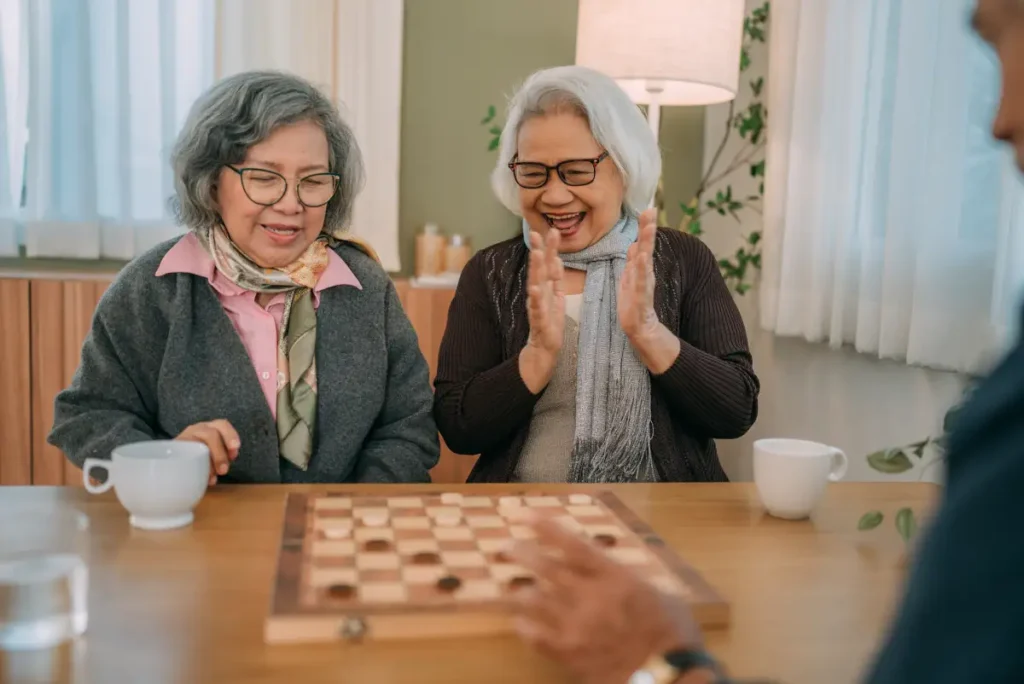
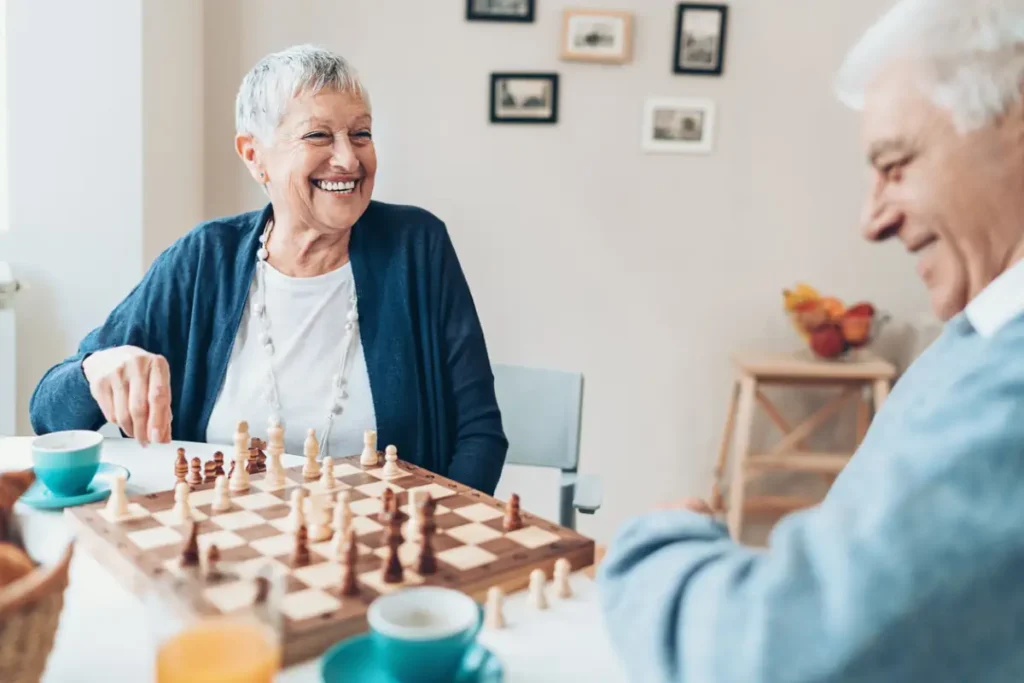
3. Strategy Games Like Chess, Checkers, and Mahjong
Strategy games are excellent mental workouts because they require planning ahead. Chess, checkers, Mahjong, Go, and similar games ask players to evaluate options, predict consequences, and adjust when the situation changes.
These games also offer an important benefit that many solo puzzles do not: social interaction. Playing with another person adds conversation and unpredictability (and a challenge, depending on the player!).
Good for: planning, executive function, working memory, attention, social connection.
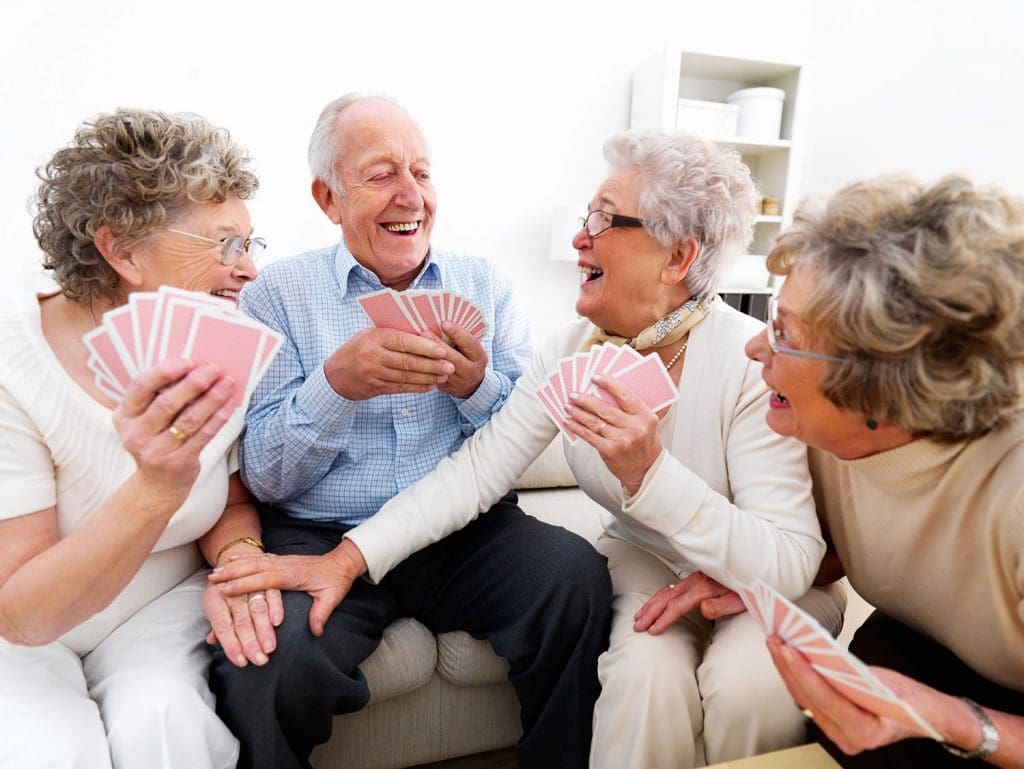
4. Card Games Like Bridge, Rummy, Poker, and Canasta
Card games can be especially powerful because they combine memory, strategy, probability, and social engagement. Bridge, for example, requires players to remember cards, communicate with a partner, plan ahead, and adapt to other players’ choices.
Even more casual card games can still challenge attention and recall. The value comes from staying mentally engaged rather than simply going through the motions.
Good for: memory, strategy, attention, social connection, decision-making.
5. Trivia and Quiz Games
Trivia games challenge recall, but they also encourage curiosity and exposure to new information and subjects. They can cover history, music, geography, sports, literature, movies, food, science, or local culture.
Trivia is also a natural group activity. A weekly trivia night can combine memory practice with laughter, conversation, and community.
Good for: long-term memory, recall speed, language, social connection.
6. Digital Brain Training Apps
Some digital brain training apps are designed to adapt as the user improves. That adaptive difficulty can be useful because the activity stays challenging rather than becoming repetitive.
However, it’s important not to overstate the evidence for every commercial app. The strongest long-term research is tied to specific structured cognitive training interventions, such as speed-of-processing training in the ACTIVE study, not to every game marketed as “brain training.”
Digital games can still be worthwhile when they are enjoyable, challenging, and used as part of a broader mix of activities.
Good for: processing speed, attention, reaction time, working memory.
7. Jigsaw Puzzles and Visual-Spatial Games
Jigsaw puzzles, tangrams, pattern-matching games, and visual logic puzzles challenge the brain in ways that word and number games don’t. They require visual scanning, spatial reasoning, patience, and attention to detail.
These games can also be calming. For many people, they offer a balance of concentration and relaxation, with an almost therapeutic quality.
Good for: visual-spatial reasoning, focus, patience, problem-solving.
8. Creative Brain Games: Art, Music, and Storytelling
Not every brain game looks like a puzzle or something with a ‘right’ answer. Painting, drawing, writing, music, crafting, photography, and storytelling can all challenge the brain in novel ways. Creative activities often involve memory, planning, sequencing, decision-making, and emotional expression.
Learning something new is especially valuable. Taking a beginner art class, learning a song, joining a writing group, or trying a new craft can challenge the brain in fresh ways.
Good for: creativity, planning, memory, emotional expression, fine motor skills.
9. Social Games and Group Activities
Social connection is one of the most important parts of a mentally stimulating lifestyle. Group games such as charades, Pictionary, trivia, card nights, book clubs, and discussion groups combine cognitive challenge with conversation and connection. Maybe of the games already listed here can be done socially.
Isolation can reduce opportunities for everyday mental stimulation, so it’s important to seek out activities to do with others. A game played with others often requires listening, responding, remembering, interpreting tone, and adapting in real time.
Good for: communication, memory, attention, emotional engagement, social connection.
10. “Real-Life” Brain Games
Some of the best brain games are not marketed as games at all. Planning a garden, learning a recipe, organizing family photos, studying a new language, volunteering, taking a class, or navigating a new walking route can all challenge the brain.
These activities connect mental effort to real life, often with a tangible, useful result. The brain is not just solving a puzzle. It’s learning, planning, creating, and connecting.
Good for: practical problem-solving, planning, memory, learning, confidence.
Brain Games Work Best Alongside Healthy Habits
Brain games can support mental engagement, but they’re not a complete brain-health plan on their own. Research on cognitive aging often points to the value of a broader lifestyle approach that includes physical activity, sleep, nutrition, social connection, and management of health conditions.
Diet is one example. The MIND diet, a combination of Mediterranean and DASH-style eating patterns, has been associated with slower cognitive decline in observational research. Check out our article on brain-healthy eating tips.
At the same time, it ‘s important to be balanced. A 2023 randomized trial tested the MIND diet in older adults at risk of dementia, which shows that researchers are still working to understand how diet interventions affect cognition over time.
The takeaway is simple: brain games are helpful, but they work best as part of a lifestyle that supports the whole person.
How Can Seniors Start a Brain Game Routine?

Start with 20 to 30 minutes of mentally engaging activity most days, but focus more on consistency and variety than on a perfect number of minutes.
Follow three guiding principles:
| Step | Action | Why It Works |
|---|---|---|
| 1. Mix It Up | Rotate between apps, board games, and art. | Exercises memory, speed, and language domains. |
| 2. Scale Difficulty | Move to advanced levels once a game feels easy. | Triggers neuroplasticity through productive struggle. |
| 3. Play Together | Host a weekly trivia or card night. | Combines cognitive exercise with social connection. |
The routine does not need to be rigid. In fact, flexibility is helpful. The more varied the activities, the more ways the brain is challenged.
Active, Mentally Stimulating Senior Living at Waterstone
At Waterstone Senior Living, cognitive wellness is part of daily life.
Residents have opportunities to stay curious, connected, and engaged through programs such as book clubs, art classes, games, discussions, social events, fitness activities, and lifelong learning experiences.
We believe brain health is about creating an environment where residents can keep learning, participating, creating, and challenging themselves in ways that feel meaningful and fun!
Experience a vibrant retirement lifestyle where wellness is part of daily life.
Learn more about how Waterstone Senior Living supports whole-person well-being by scheduling a tour. You can fill out the form at the bottom of the page.
FAQs: Brain Games for Seniors
Do brain games prevent dementia?
No brain game can guarantee dementia prevention. However, research suggests that certain structured cognitive training programs, especially speed-of-processing training, may reduce the risk of dementia diagnosis over long-term follow-up. Everyday games can still support mental engagement, especially when they are challenging and part of a broader healthy lifestyle.
What are the best brain games for seniors?
The best brain games for seniors are games that feel engaging, appropriately challenging, and enjoyable enough to do consistently. Good options include crosswords, Sudoku, Wordle, chess, Bridge, Mahjong, trivia, card games, jigsaw puzzles, art, music, and digital cognitive training.
Are brain games only for seniors?
No. Most brain games are not age-specific. A game becomes useful when it challenges memory, attention, language, strategy, creativity, or problem-solving. The phrase “brain games for seniors” is useful for search, but the activities themselves can benefit adults of many ages.
How often should seniors do brain games?
A good starting point is 20 to 30 minutes most days, but consistency matters more than perfection. It’s also helpful to rotate activities so the brain is challenged in different ways.
Are digital brain training apps worth it?
They can be, especially if they adapt to the user’s skill level and become more challenging over time. However, not every app has the same level of evidence behind it. The strongest research support is for specific structured cognitive training programs, particularly speed-of-processing training studied in the ACTIVE trial.