Retirement can be a wonderful opportunity to focus on what makes you happy. With more time in your schedule, you may finally be able to revisit old interests, try something new, or build a routine that feels more relaxed and rewarding.
Still, the transition can take time. For many men, work has provided structure, purpose, and regular social connection for decades. When that routine changes, it can feel difficult to know what comes next.
That’s where hobbies can step in. The right hobby can help you stay active, keep learning, meet people, and feel more connected to everyday life.
The CDC reports that about 1 in 3 U.S. adults feel lonely, and research on adults ages 50 to 80 shows that loneliness and isolation remain common later in life. A 2025 AARP survey found that 42% of men aged 45 and older report feeling lonely, a percentage higher than for women. Hobbies are on way to fend off this loneliness, offering a chance to do get together as part of a group around a shared interest.
Of course, hobbies are not “male” or “female.” The best hobbies for retired men are simply the ones that match your interests, energy level, personality, and goals. Whether you want to work with your hands, spend more time outdoors, get moving, or meet new people, these ideas can help you get started.
Why Hobbies Matter After Retirement
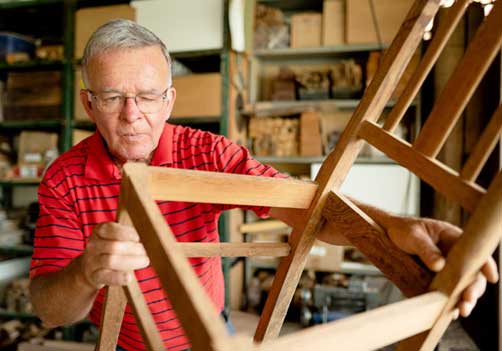
Hobbies give you something to look forward to, a reason to keep learning, and often a natural way to connect with others. They are more than simply something to ‘fill your time’, but activities you look forward to that hopefully provide some structure, too.
This can be especially important after leaving the workplace. A career often comes with built-in routines, goals, conversations, and a sense of usefulness. Retirement creates more freedom, but it can also leave a gap, a space that needs to be filled with new sources of purpose and enjoyment. All the freedom in the world doesn’t count for much if you don’t know what to do with it.
A good hobby doesn’t have to be impressive or time-consuming. It only needs to be something you enjoy enough to return to.
Creative and Hands-On Hobbies for Retired Men
Some retired men enjoy hobbies that involve building, making, fixing, collecting, or creating something tangible. These hobbies can be especially satisfying because they offer both focus and a visible result.
Woodworking
Have you always been interested in building and creating? Woodworking could be the perfect hobby for you. You can create objects for function and decoration — like a chair, cutting board, bowl, shelf, or sign. There’s no limit to what you can do with woodworking once you learn the basics.
Woodworking can also be adapted to your space, tools, and comfort level. Some people enjoy larger projects in a workshop, while others prefer smaller carving, sanding, or refinishing projects.
Cooking
For many people, there’s no better way to spend your time than getting creative in the kitchen. Finding recipes that interest you and cooking them yourself builds independence and confidence, and you get a delicious result at the end.
Cooking can also become a social hobby. You might try recipes with a friend, cook for family, join a class, or explore a new cuisine you have always wanted to learn more about.
Collecting
Curating a collection can be a great hobby because it gives you something ongoing to research, organize, and enjoy. Collections can include stamps, books, coins, sports memorabilia, records, tools, watches, art, or anything else that interests you.
You may even find gatherings, clubs, or online groups for people with similar collections. Attending those events to show off your collection and learn from others is a fun way to meet people interested in the same things you are.
Ancestry and Family History
Are you interested in where your family is from? Tracing your ancestry can help you see how far your family tree expands. You may even discover branches you never knew existed.
Family history can become a meaningful long-term project. You can research records, organize old photos, interview relatives, build a family tree, or write down stories for future generations. It is a hobby that combines research, storytelling, and personal meaning.assing time. At Waterstone, we aim to create real opportunities to focus and learn, knowing this is fundamental to your well-being.
Social Hobbies for Retired Men
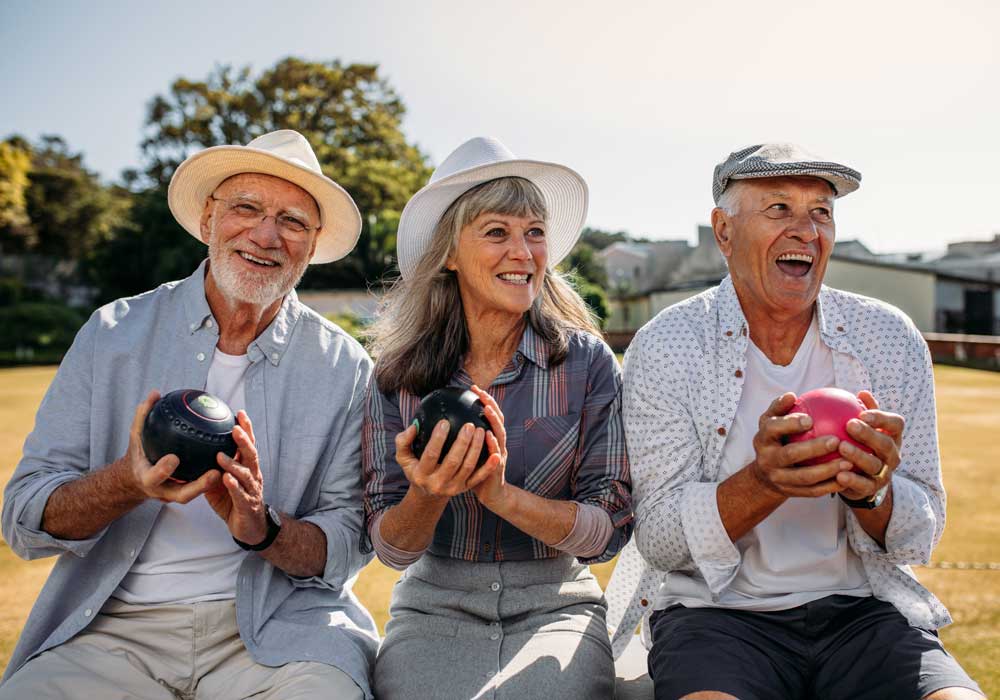
For many retirees, the most valuable hobbies are the ones that make connection easier. You don’t have to be naturally outgoing to benefit from a social hobby. Sometimes it’s enough to share an activity with other people.
Reading or Joining a Book Club
If you have a to-be-read pile that’s grown over the years, now is your time to tackle it. Reading is a good way to unwind, learn, and get lost in a good story. But, of course, reading itself is a solitary activity.
You could consider joining a book club so you can meet new people and spend time talking about the books you’ve read. Book clubs can be especially helpful because the conversation has a natural focus. You don’t have to make small talk from scratch; the book gives everyone something to discuss, it is the focal point of why you are meeting. That being said, many people form friendships that exist outside of the book club, starting from this shared interest in literature.
Board Games
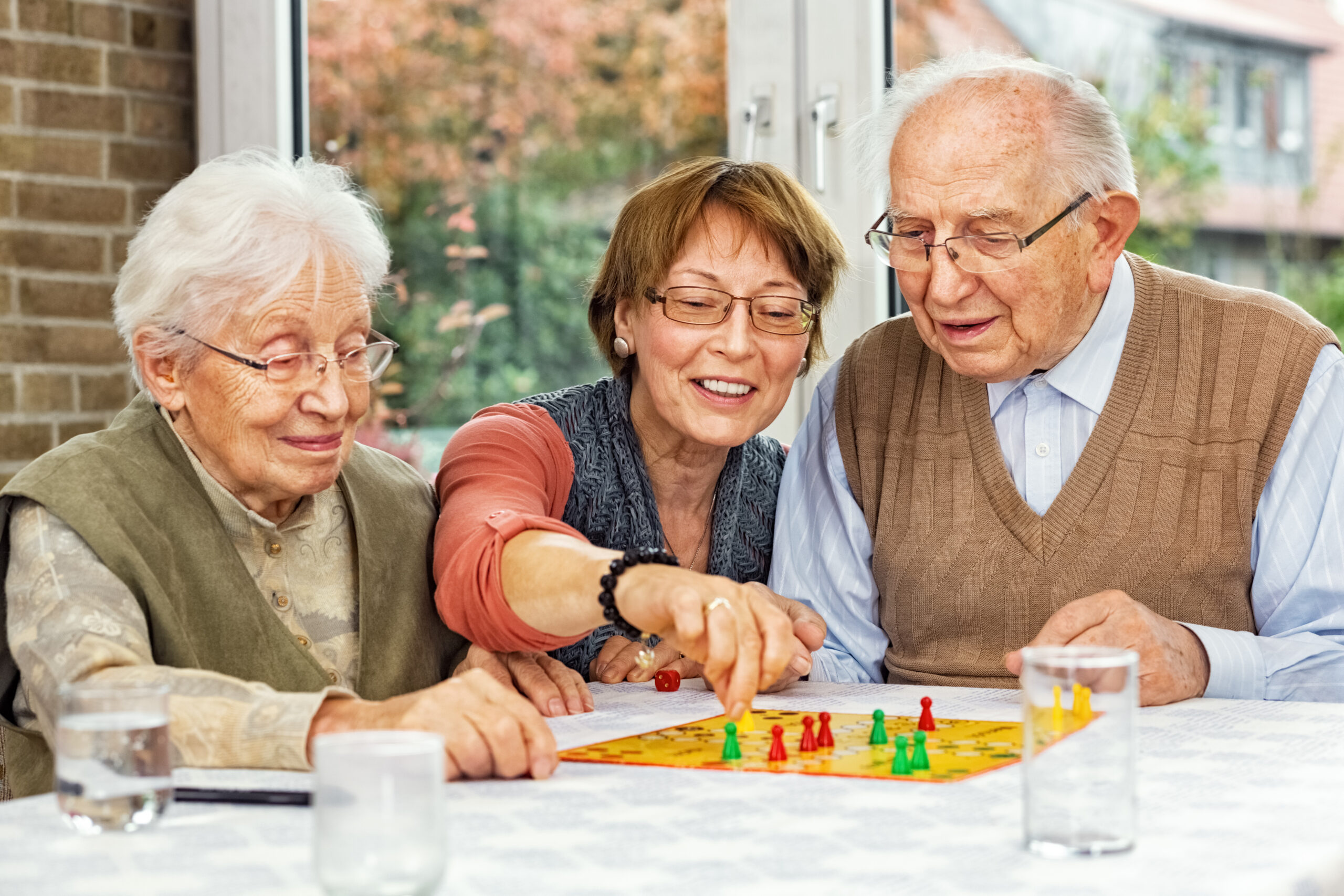
While there are classic board games like chess and checkers, you’ll find there are all types of board games you might enjoy. Many involve strategy, teamwork, problem-solving, trivia, or a bit of friendly competition.
You and a group of friends can have hours of entertainment from a good board game.
Popular board games include:
- Monopoly
- Trivial Pursuit
- Clue
- Backgammon
- Battleship
- Scrabble
- Chess
- Ticket to Ride
Board games are a great option if you want a hobby that is social, mentally engaging, and easy to return to week after week.
Volunteering or Mentoring
Many retired men find meaning in sharing what they know. Volunteering, tutoring, mentoring, or helping with a local organization can create a sense of purpose while also keeping you connected to people in your community.
This can be especially rewarding if your career gave you skills you still enjoy using. You might mentor students, help a nonprofit, volunteer at a museum, support a veterans’ organization, coach, or lend your expertise to a community group.
Volunteering does not have to feel like work. The right opportunity should match your interests, schedule, and energy level.
Active Outdoor Hobbies for Retired Men
Active hobbies are a great way to support your health while doing something enjoyable. The key is choosing an activity that fits your current fitness level and feels good enough to keep doing.
Cycling
Finding ways to make fitness one of your hobbies is a fun way to make sure you exercise regularly. Cycling is a low-impact activity where you can decide the intensity.
This activity provides a lot of health benefits for older adults, including:
- Increased cardiovascular function
- Strengthened muscles
- Improved flexibility
- Enhanced coordination and posture
- All exercise can improve our brain health
Cycling can be done alone, with a friend, or as part of a local cycling group. A stationary bike can also be a good option if you prefer to ride indoors, or when it is too cold during the winter months.
Birdwatching
Birdwatching connects you with nature and combines learning about local wildlife with light physical activity. You can research birds in your area and learn how to identify what they look and sound like.
This can be a solo or group activity. If you want to expand your social circle, you can seek out local birdwatching groups or nature walks to join.
Golfing
Golf is one of the more popular hobbies for retired men, and for good reason. It keeps you active, gets you outside, and offers a built-in social element.
Who doesn’t love the fresh air and the sight of the putting green right before tee off?
Beginners can start with lessons, a driving range, or a relaxed round with friends. You don’t have to be highly competitive to enjoy the rhythm of the game.
Camping
Do you love the great outdoors? Spending time in nature can be a great way to relax and recharge. Finding local campgrounds to pitch your tent and go for a hike in the woods can help you feel one with nature in no time.
However, camping isn’t limited to sleeping in a tent. You can look into renting an RV and enjoying the outdoors while knowing you have the comforts of the RV to come back to at night.
Camping can also pair well with other hobbies, including hiking, photography, birdwatching, fishing, and cooking outdoors.
Fishing
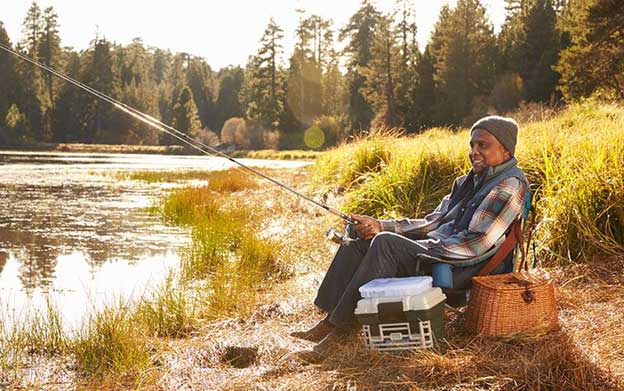
You can combine fishing with camping, but if sleeping outdoors isn’t quite to your liking, it’s perfectly fine to spend a few hours fishing by a river, pond, lake, or coastline.
Fishing requires skill and patience, and it puts you in the serene presence of water. You can learn all about the fish local to your area and enjoy the peace and quiet of waiting for a bite on the line.
Fishing can be quiet and reflective, or it can be social if you join a friend, family member, or local fishing group.
Hobbies That Support Lifelong Learning
Retirement is a wonderful time to keep growing. Learning something new can help keep your mind active and give you the satisfaction of making progress over time.
Challenging your brain with new information, skills, and ideas may help support cognitive health as you age. Research on later-life learning has found that older adults who participate in educational or training activities tend to show better cognitive function over time, suggesting that continued learning may help preserve mental sharpness for longer.
Consider the following:
- Learn a new language
- Brush up on your second or third language
- Study your favorite period in history
- Take a class on music or art
- Explore the latest technologies in a class
- Visit local museums on a range of subjects
There is really no end to the type of learning you can engage in. The point is to keep challenging yourself. Furthering your education and expanding your mind with new learning opportunities can help you continue to grow and flourish, and preserve your cognitive functions for longer.
How to Choose the Right Retirement Hobby
The best retirement hobby is one you will actually enjoy. Start by asking what you want more of in your life.
If you want more movement, try cycling, golf, walking groups, tai chi, swimming, or fitness classes. If you want more connection, consider a book club, board game group, volunteer role, mentoring opportunity, or class. If you want more quiet focus, woodworking, reading, fishing, ancestry research, or collecting may be a better fit.
You do not have to choose one hobby forever. Try one activity, give it a few weeks, and see how it feels. Retirement gives you room to experiment.
It can also help to think about whether you prefer hobbies that are:
- Active or relaxing
- Social or independent
- Creative or practical
- Outdoors or indoors
- Familiar or completely new
There is, of course, no wrong answer. The goal to find something that works for you.
Enjoying Your Hobbies at Waterstone Senior Living
Waterstone creates all kinds of opportunities for residents to enjoy an active and engaging retirement. With clubs, social programming, wellness opportunities, creative spaces, events, and outings, residents always have something to look forward to.
At Waterstone, residents can continue exploring the hobbies they already love while discovering new ones. Whether your ideal retirement includes quiet time with a book, a fitness class, a round of golf, a creative project, or a lively discussion with neighbors, the right community can make it easier to stay engaged.
What’s more, our Activities Directors are receptive to new ideas. If you want to try something new, you can make suggestions for new classes or clubs. Our activity calendars always reflect the interests of our residents.
Get started enjoying your free time after retirement. Schedule a visit to see what life here can look like.
All of our Waterstone Senior Living communities feature fantastic programming. with plenty of opportunity for engagement in hobbies. Check out our communities in Boston, MA, Lexington, MA, Stamford, CT, Wellesley, MA, and White Plains, NY.
FAQs: Hobbies for Retired Men
What are the best hobbies for retired men?
The best hobbies for retired men are activities that support enjoyment, purpose, health, and connection. Popular options include woodworking, golf, fishing, cycling, cooking, reading, book clubs, board games, volunteering, mentoring, birdwatching, ancestry research, and lifelong learning.
Why are hobbies important after retirement?
Hobbies are important after retirement because they can provide structure, purpose, enjoyment, and social connection. After leaving the workplace, hobbies can help fill the space once occupied by work routines.
How can retired men meet new people?
Retired men can meet new people by joining clubs, taking classes, volunteering, participating in group fitness activities, joining a book club, attending community events, or choosing hobbies that naturally involve others, such as board games, golf, or mentoring. Of course, at Waterstone, there are plenty of ways to make friends through activities and shared meals.
What are active hobbies for retired men?
Active hobbies for retired men include cycling, golf, walking, swimming, tai chi, yoga, martial arts, hiking, fishing, and fitness classes. The best active hobby is one that matches your current fitness level and feels enjoyable enough to continue.
What are relaxing hobbies for retired men?
Relaxing hobbies for retired men include reading, fishing, birdwatching, cooking, woodworking, collecting, genealogy, puzzles, music, painting, and gardening. These activities can offer calm focus while still keeping the mind engaged.