Art programs in senior living can do more than fill the calendar. They give residents a place to create, learn, socialize, express themselves, and build meaningful routines around something they enjoy.
At Waterstone of Westchester, the art studio is one of the most active and beloved spaces in the community. The room is bright and light-filled, and residents treat it like a place worth going to.
As Maddie, the Life Enrichment Director, describes it, “it feels welcoming the moment you walk in.”
The location helps. The studio sits apart from the main community flow, so residents leave the common area and head downstairs with purpose. Maddie notes that this small detail changes the mindset; you’re choosing time to create.
In senior living, creative programming may include art classes, open studio time, gallery displays, music, lectures, cultural outings, crafts, and other opportunities for residents to keep learning and expressing themselves. The best programs are flexible enough for lifelong artists and welcoming enough for beginners.
What Makes the Art Studio at Waterstone of Westchester So Popular?

The studio works because it removes the typical obstacles. Residents can start creating without needing to bring supplies. Waterstone provides the basics for a resident to work alone, as well as the materials used in class projects.
Maddie also sees a common theme in why residents continuously show up.
“A lot of people finally have time,” she says. “They had work, kids, and other responsibilities for years. Now, our residents have the time and space to pursue their interests.”
She sees excitement and creative energy in lifelong artists who now have more time to commit to art. She also sees enthusiasm in residents who “have never picked up a brush in their lives,” but feel drawn to try regardless.
How Do Creative Activities Support Healthy Aging?
Creative work keeps your mind active and your hands engaged. It gives you a reason to practice and improve.
Art asks you to make choices. You plan, notice details, adjust, adapt to guidance, and try again. You work through complicated steps to bring to life what you envision. That process supports attention, problem-solving, and fine motor coordination.
In other words, it’s an all-brain workout. A growing body of research suggests that regular creative activity may support cognitive health, emotional well-being, and continued engagement as people age.
A recent Psychology Today article highlighted two findings from newer research:
- Creative activities were linked to brains that appeared years younger than expected.
- Even short-term creative learning improved brain efficiency and slowed biological aging.
You can think of it this way: your brain thrives on new things, complex challenges, and imaginative work. Getting creative offers all three, making it an underrated form of brain training.
And that is only part of the picture. Creative work also gives people a way to express themselves and connect with others. Even more simply, there is the innate value in art as entertainment. If you enjoy the process, that is enough.
For residents, that might look like learning a new watercolor technique, finishing a jewelry project, attending an art history lecture, visiting a museum, or simply spending an hour in the studio with neighbors. Each experience offers a different way to stay curious and connected.
This all matters because aging well means more than staying healthy and passing time. At Waterstone, we aim to create real opportunities to focus and learn, knowing this is fundamental to your well-being.
What Art Classes Are Offered at Waterstone of Westchester?

Classes offer structure and access to expertise without limiting residents.
Maddie explains that there is a weekly rhythm.
“Our art teacher leads a project each week,” she says.
Residents can follow that project, but the class also leaves room for personal work.
Maddie describes a second layer that keeps the studio active.
“The teacher is there as an expert,” Maddie says. “People bring their own projects and ask for guidance, even if they are not doing the set project.”
Residents can work on skills like watercolor or sketching while they learn in the same space as a project to make wind chimes or Valentine’s Day cards.
Westchester also offers a jewelry-making class. The class draws residents who enjoy hands-on work. Participants always get to take something wearable away from the class.
How Do Art Studios Help Seniors Socialize?
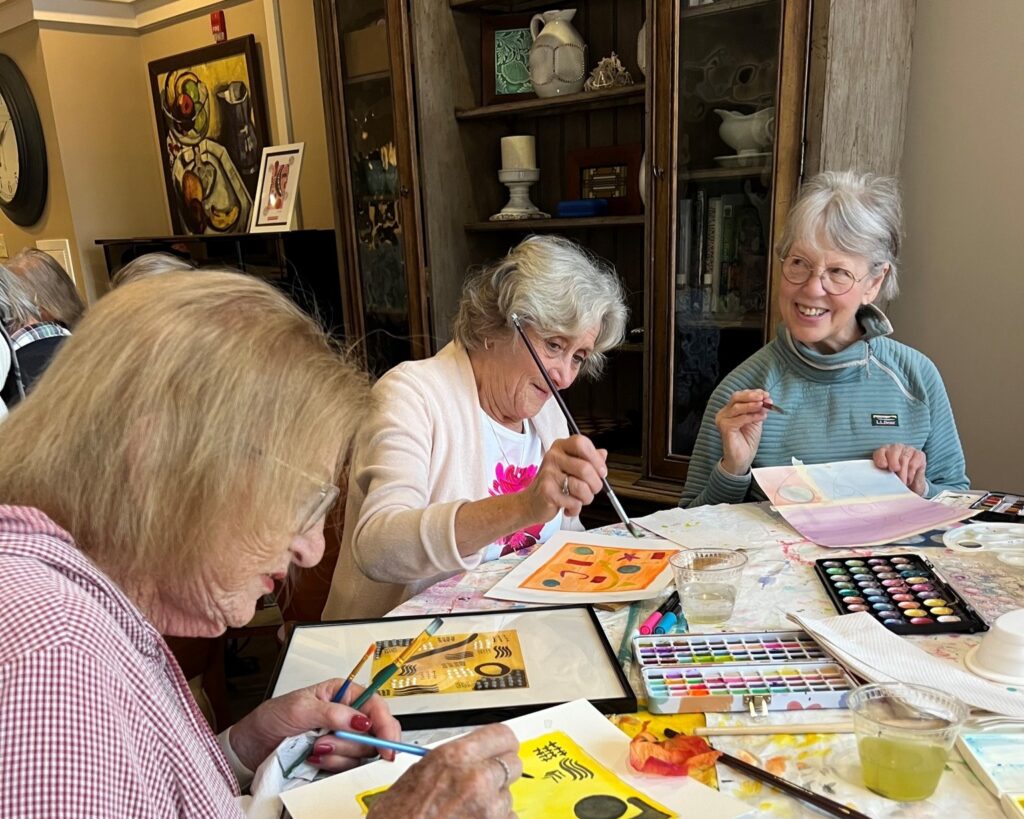
Art can make socializing feel easier because the activity itself gives people something natural to focus on and talk about.
The studio makes socializing easier because nobody has to force it. People can talk while they work, or they can work quietly and still feel part of the room.
Maddie has a phrase for this.
“It’s like parallel play,” she says. “You’re together, but there’s no pressure.”
Residents share space and connect at a slower pace than they might at a formal event, where they may feel forced to mingle. She also notices how the culture grows over time.
“The regulars have become kindred spirits,” Maddie says. “More experienced residents share tips with beginners. People comment on each other’s pieces. Praise comes easily because the work is right there on the table.”
How Does Resident Artwork Enrich the Community?
The gallery area sits in a central part of the community, so residents can’t miss it. Maddie calls it “a conversation starter” and says the changing displays help the building feel dynamic.
Westchester features resident art whenever it can. Maddie notes that it is “nice to give credit” to resident artists, especially as many residents may not be aware of a neighbor’s hidden talents.
One recent exhibit featured a resident with a graphic design background. Maddie was impressed with this gentleman’s abilities, and his neighbors evidently agreed.
“There has been interest in buying a piece!”
The community also invites local artists to present and exhibit. This brings outside influences into the building, so residents see new work and ideas. In this way, the community evolves and changes throughout the year, always with fresh art to appreciate.
How Does Westchester Support Learning Beyond the Studio?

Westchester supports residents who want to learn about art, not just those who make it. Maddie schedules talks and lectures by respected art historians, and she plans museum outings to New York City and the surrounding areas.
In May and June, Westchester will host presentations on Monet and Michelangelo. Residents enjoyed a trip to the Met and will soon visit The Frick Collection.
Once again, these outings and activities promote socialization and learning — all part of an approach that facilitates artistic engagement in many forms.
Maddie also emphasizes that the calendar reflects who lives in the building.
“Residents shape their experience here,” she says.
When Westchester residents show a strong interest in art, Maddie builds more arts programming. She takes the same approach with other interests, too.
Why Do Creative Programs Matter in Senior Living?
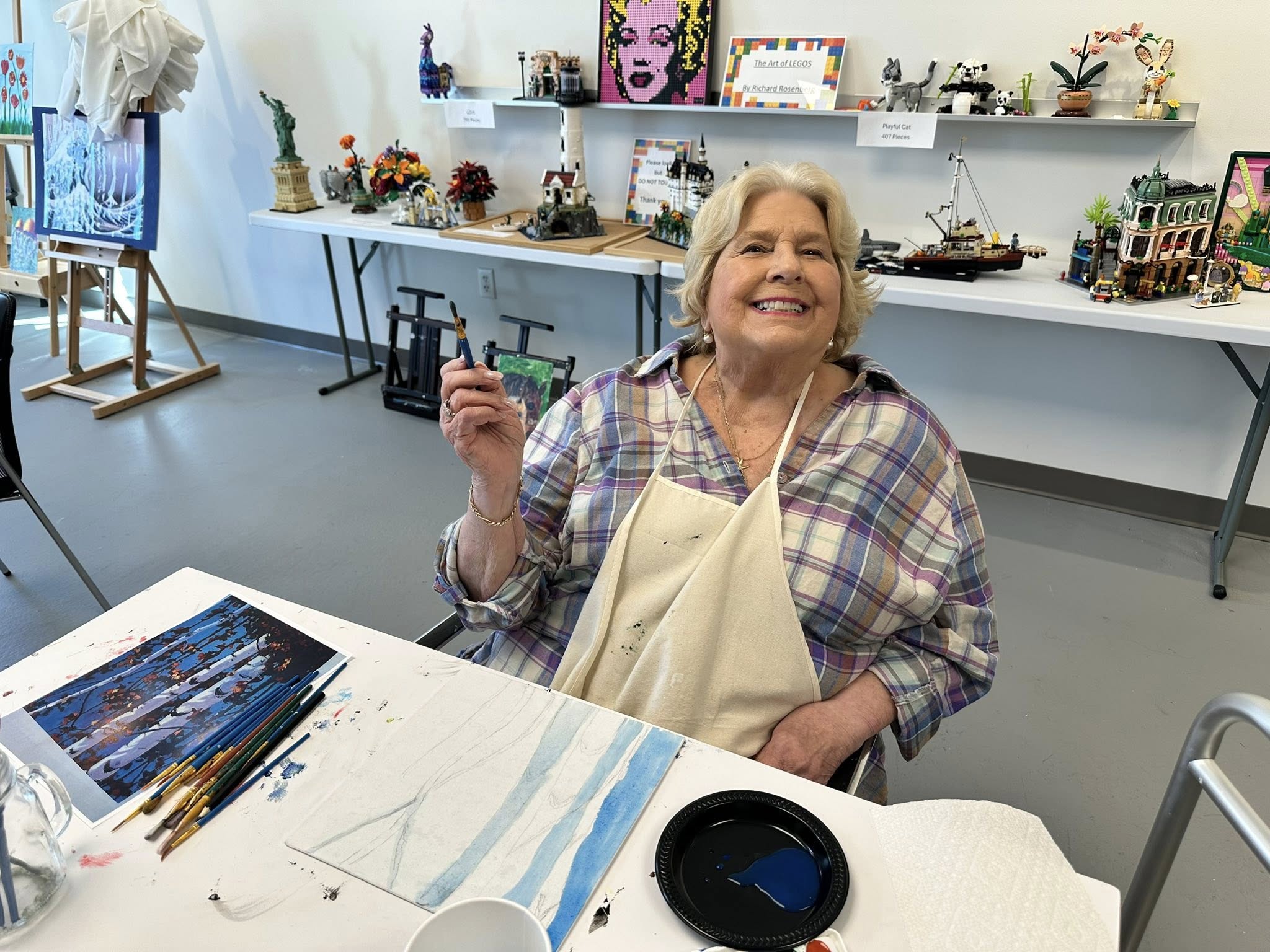
Creative spaces shape how a community functions day-to-day. They do three practical things.
First, they create a reason to leave your apartment that is not a meal or an appointment. That sounds small, but it changes the rhythm of the week. People build routines around these purposeful visits to the studio, and residents check in on each other if they miss a meet-up.
Second, they support identity and expression. Many residents arrive after a life full of roles and responsibilities. Creative work gives you a new role where you are in charge. You are a maker, a learner, a creator, a newbie, or a professional, fine-tuning your craft.
Third, creative spaces make social connections easier. Not everyone wants mixers. The studio gives people a shared purpose, which lowers pressure. Maddie called it “parallel play.” You can be around others without performing socially. At Westchester, many friendships have started this way.
Westchester works because the studio, the gallery, and the programming reinforce each other in a neat virtuous cycle. Residents create work, talk about it, learn more about it, and see it valued in shared spaces. That cycle gives real purpose to community life.
For seniors and families comparing senior living communities, creative programming can be an important sign of how much thought goes into daily life. A well-used studio, active gallery, and resident-shaped calendar all point to a community where people are encouraged to keep exploring who they are.
Visit Waterstone of Westchester to Explore Creative Senior Living
If you want to see how the arts fit into daily life at Westchester, come visit. A tour makes it easy to picture what participation looks like.
During your visit, you can:
- Step into the art studio and see how the space is set up
- View the gallery area and current displays
- Learn how classes work, including guided projects and independent work time
- Hear about upcoming lectures and museum outings
You will leave with a clear sense of how creative programming supports the culture of the community.
Schedule a visit to learn more about life at Waterstone of Westchester.
All of our Waterstone Senior Living communities feature art studios, galleries, and creative programming. Check out our other communities in Boston, MA, Lexington, MA, Stamford, CT, and Wellesley, MA.
FAQs: Art Programs in Senior Living
Why are art programs important in senior living?
Art programs in senior living give residents opportunities to create, learn, socialize, and express themselves. They can also help support cognitive engagement, emotional well-being, fine motor skills, and a stronger sense of purpose.
What types of creative activities are good for seniors?
Creative activities for seniors may include painting, drawing, watercolor, jewelry making, flower arranging, crafts, music, writing, art lectures, museum trips, and open studio time. The best activities are flexible enough for different interests and ability levels.
Do residents need art experience to join classes?
No. At Waterstone of Westchester, residents don’t need previous art experience to participate. Some residents are lifelong artists, while others are trying creative activities for the first time.
How can art help seniors socialize?
Art can make socializing easier because residents can talk while they work, ask questions, share ideas, or simply create alongside others. This shared activity can make connection feel more natural and less pressured.
Are there art-related outings and lectures at Waterstone of Westchester?
Yes. Waterstone of Westchester supports art appreciation through lectures, presentations, and museum outings to New York City and the surrounding areas.
Does Waterstone of Westchester display resident artwork?
Yes. Waterstone of Westchester features resident artwork in its gallery area whenever possible. The changing displays help celebrate residents’ talents and keep the community feeling fresh and dynamic.